When I became a wrestling fan, it was in the heyday of larger-than-life characters like Hulk Hogan, the Ultimate Warrior and the British Bulldog. Not only did these superstars have otherworldly personas, they had spectacular physiques. While Lex Luger wasn’t known for being the most charismatic performer, his physical presence couldn’t be denied. In the 1980s he was a force to be reckoned with in the National Wrestling Alliance and World Championship Wrestling (WCW), and when he came to the World Wrestling Federation (WWF) Luger was a top babyface (i.e., good guy). After his stint in the WWF, Luger went back to WCW and became World Champion and eventually joined the rebellious New World Order. Luger had a stellar career but he wasn’t without his vices. His autobiography reveals all of the ups and downs he went through, including the death of the “First Lady of Wrestling,” Miss Elizabeth. I found it to be a captivating read up until the final couple chapters where the book turned into what felt like an infomercial for Christianity. While I’m glad religion helped Luger turn his life around, his heavy-handed use of Bible verses came off as preachy instead of inspirational. Nevertheless, Wrestling With The Devilwas an enlightening and entertaining read that wrestling fans should check out.
Synopsis
Pro wrestling sensation Lex Luger was leading a thrill-ride life, with fans screaming his name and money pouring in faster than he could spend it. One of the most memorable figures in the sport’s history, Lex was the ultimate all-American muscleman. The three-time world champion could slam anything that got in his way—and he believed he was invincible.
But outside the ring, Lex was self-destructing. He lived a secret double life that was taking him down and ripping his family apart, culminating when his mistress died from a much-publicized drug overdose. Without realizing it, Lex was fighting for his very life—and the enemy was a host of his own demons.
Yet it wasn’t until he was at his lowest point that Lex Luger began to discover what true strength is all about. That strength would get him through the greatest challenge of his life: a paralyzing spinal cord injury.
In this stunningly honest memoir, Lex Luger reveals behind-the-scenes stories from the world of pro wrestling, recounts his dramatic struggles with personal failings, and shares how—through unexpected faith, grace, and redemption—today he’s standing stronger than ever and fighting the battles that matter the most.
Last week I read Moonrakerby Ian Fleming and watched the film of the same name. The book was better than the movie – big surprise – but neither were spectacular. The novel was a straightforward old-school thriller that, unfortunately, lacked mystery. It’s plot was more cohesive and believable than the film’s, but it didn’t keep me guessing. While I’ve yet to read them all, Fleming’s Casino Royale is still my favorite in the series and coincidentally it’s also my favorite Bond film. But back to Moonraker the movie. The opening scene, where Bond is fighting another man in mid-air for a parachute, is one of the greatest in cinematic history (check it out below). And the movie’s theme, written by Hal David and sung by Shirley Bassey, is one of the most beautiful songs I’ve ever heard. For your viewing and listening pleasure, I’ve also included the opening title sequence from Moonraker below. The bottom line is this: If you’re a James Bond fan, you should read the book and see the movie. Just don’t expect either of them to blow you away.
Writing a Killer Thriller by Jodie Renner, a well-respected freelance fiction editor, is a worthy addition to any writer’s library. Filled to the brim with useful information for aspiring and published authors, the book is broken into nine parts:
What’s a Thriller, Anyway?
Design a Killer Plot
Create Compelling Characters
Hook’em & Keep’em With Tension and Intrigue
Bring Your Characters to Life on the Page
Sustain the Suspense
Revise for Success
Wrap-Up & Checklists
Other Related Info
Renner’s advice, while sometimes repetitive, is spot on. And her use of book excerpts to illustrate points, as well as quotes from industry experts, made for an engaging and enlightening read. Writing a Killer Thrillerwas a quick, powerful book that provided me with a behind-the-scenes view of what goes into writing a top-notch thriller. If you’re a writer, make sure to add it to your reading list today.
Placeboby Steven James is a very good thriller that’s worth your attention. I recently completed the book and was impressed by many elements of the story. I found Jevin Banks to be an extremely likable protagonist who matured as the story progressed, and the supporting cast was equally memorable. James’ ability to jump between characters, even those who aren’t in the same room during a scene, impressed me. Character hopping can be a hard thing to pull off without disorienting the reader, but James handled it extremely well; and by doing so, he ratcheted up the suspense during tense moments and sustained a brisk pace throughout the novel. The plot itself was an interesting one that despite being sometimes bogged down by moments of expository scientific dialogue, made me think critically about the pros and cons of the pharmaceutical industry. And being from Philadelphia, I loved that a good portion of the novel was set in the City of Brotherly Love. It seems every book and movie takes place in New York City, so whenever someone wants to shake things up and pick a different locale, I’m all for it. Overall, Placebo was a highly enjoyable read that I blew through in just a few days, and I highly recommend it.
Stay tuned for my interview with Steven James, as well as my review of his upcoming novel Singularity, the second book in the Jevin Banks series.
Synopsis
While covertly investigating a controversial neurological research program, exposé filmmaker Jevin Banks is drawn into a far-reaching conspiracy involving one of the world’s largest pharmaceutical firms. After giving up his career as an escape artist and illusionist in the wake of his wife and sons’ tragic death, Jevin is seeking not only answers about the questionable mind-to-mind communication program, but also answers to why his family suffered as they did.
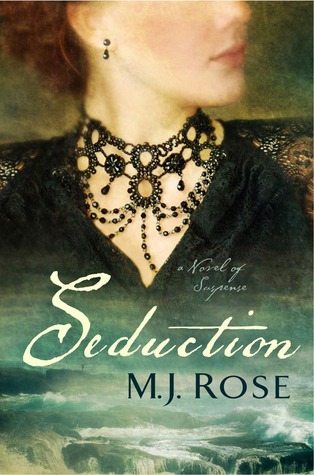
I recently read my first book by M.J. Rose, Seduction, and its compelling, suspenseful narrative kept me turning pages from start to finish. Rose’s ability to effortlessly switch between two storylines, filled with rich dialogue and palpable characters, kept me coming back for more. I was completely invested in Jac L’Etoile’s story arch, and I love how it intersected with Victor Hugo’s. Seduction was bursting with historical detail that kept me engrossed in the characters’ world, and the conclusion left me completely satisfied. If you’re trying to decide what to read next, I highly recommend you check out Seduction.
Below is the book’s synopsis, and make sure to read my interview with M.J. Rose to learn more about the author.
Synopsis
A gothic tale about Victor Hugo’s long-buried secrets and the power of a love that never dies . . . In 1843, novelist Victor Hugo’s beloved nineteen-year-old daughter drowned. Ten years later, still grieving, Hugo initiated hundreds of séances from his home on the Isle of Jersey in order to reestablish contact with her. In the process, he claimed to have communed with Plato, Galileo, Shakespeare, Dante, Jesus—and even the devil himself. Hugo’s transcriptions of these conversations have all been published.
Or so it has been believed . . .
Recovering from a great loss, mythologist Jac L’Etoile thinks that throwing herself into work will distract her from her grief. In the hopes of uncovering a secret about the island’s mysterious Celtic roots, she arrives on Jersey and is greeted by ghostly Neolithic monuments, medieval castles and hidden caves. But the man who has invited her there, a troubled soul named Theo Gaspard, hopes she’ll help him discover something quite different— transcripts of Hugo’s lost conversations with someone he called the Shadow of the Sepulcher. Central to his heritage, these are the papers his grandfather died trying to find. Neither Jac nor Theo anticipate that the mystery surrounding Victor Hugo will threaten their sanity and put their very lives at stake.
Seduction is a historically evocative and atmospheric tale of suspense with a spellbinding ghost story at its heart, written by one of America’s most gifted and imaginative novelists. Awakening a mystery that spans centuries, this multilayered gothic tale brings a time, a place and a cast of desperate characters brilliantly to life.
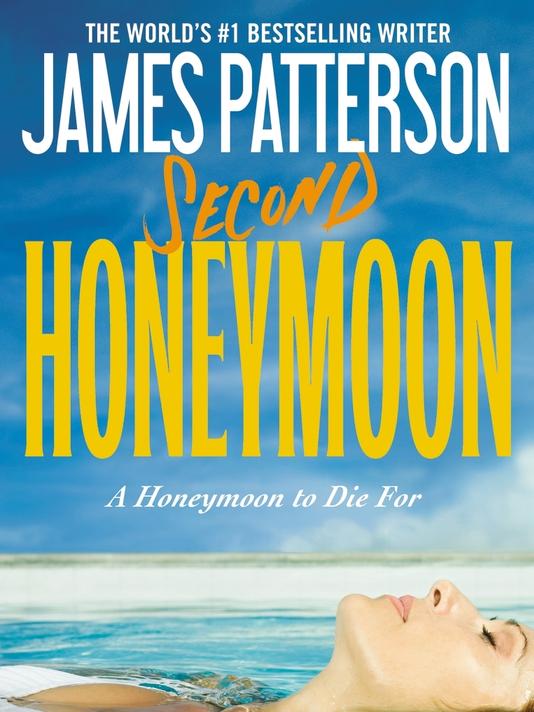
For those of you that read my review of Honeymoon, you may be surprised. I thought SecondHoneymoon, the sequel to the aforementioned book, was excellent. Both of the story’s plotlines were engaging, filled with interesting twists, and unlike a multitude of thrillers, believable. The character development was handled well, and I felt as if I was in John O’Hara’s shoes a few times in the novel. My only complaint is the way point-of-view was handled. As I learned at ThrillerFest, novels where the point-of-view of the narrator changes a lot can be jarring to the reader. From time to time, I found myself wondering who was narrating the beginning of a chapter. A few sentences in I figured it out, but this could have been avoided with less jumping around. Nevertheless, Second Honeymoon is a tightly-woven tale that will keep your attention from cover to cover and leave you satisfied. I highly recommend you give it a go.
Synopsis
A walk down the aisle, a resort hotel, a drink on the beach…for these unlucky couples, the honeymoon’s over.
A newlywed couple steps into the sauna in their deluxe honeymoon suite—and never steps out again. When another couple is killed while boarding their honeymoon flight to Rome, it becomes clear that someone is targeting honeymooners, and it’s anyone’s guess which happy couple is next on the list.
FBI Agent John O’Hara is deep into solving the case, while Special Agent Sarah Brubaker is hunting another ingenious serial killer, whose victims all have one chilling thing in common.
As wedding hysteria rises to a frightening new level, John and Sarah work ever more closely together in a frantic attempt to decipher the logic behind two rampages.
The Soundtrack of My Lifeby Clive Davis is a fascinating look into the life of, perhaps, the greatest music producer and executive of all time. While some readers found this book to be nothing more than Davis patting himself on the back, I beg to differ. To me, it was an exciting journey through a charmed life that included fascinating stories about everyone from Alicia Keys to, my favorite, Barry Manilow. Yes, it is long, so don’t pick this up expecting a quick beach read. But if you love music as much as I do, and you approach it with an open mind, I think you’ll agree that The Soundtrack of My Life is a worthwhile read.
Below is an excellent interview Clive Davis did with Wendy Williams to promote the book.
The Innocent is Taylor Stevens’ second novel, and I enjoyed it more than her first, The Informationist. To me, the premise of this novel was more interesting than the first, and since the author grew up in a religious cult, it was partially autobiographical. The Innocent featured plenty of reflective thought and internal narrative by the main character, Vanessa Michael Munroe; while this sometimes slowed down the pace of the story, it provided me with a greater understanding of the character and her motives. Some people have complained that this book didn’t have enough action, but I care more about a compelling story than a high body count, so this wasn’t an issue for me. If you liked The Informationist, you’ll enjoy The Innocent; it’s a worthy addition to a promising series.
Below is the synopsis for The Innocent. Stay tuned for my review of Stevens’ newest novel, The Doll, as well as my interview with the author.
Synopsis
Eight years ago, a man walked five-year-old Hannah out the front doors of her school and spirited her over the Mexican border, taking her into the world of a cult known as The Chosen. For eight years, followers of The Prophet have hidden the child, moving her from country to country, shielding the man who stole her. Now, those who’ve searched the longest know where to find her. They are childhood survivors of The Chosen, thirty-somethings born and raised inside the cult who’ve managed to make lives for themselves on the outside. They understand the mindset, the culture within that world, and turn to Vanessa Michael Munroe for help, knowing that the only possibility of stealing Hannah back and getting her safely out of Argentina is to trust someone who doesn’t trust them, and get Munroe on the inside.
Stuart Woods is one of my favorite authors for a variety of reasons. He comes up with terrific characters names. For example, Felicity Devonshire, Arrington Calder, and, of course, the best belongs to the star of his ever-popular book series: Stone Barrington. Woods is also a gifted writer; his sentence structure is varied and infused with inspired word usage, and Woods’ ability to vividly describe a romantic scene is unrivaled.
Like many writers who’ve achieved great success, Woods has been accused of becoming lazy, churning out book after book, focusing on quantity instead of quality. While I’ve noticed a distinct dip in his ability to create a novel that keeps me guessing from start to finish, I still find myself enamored by his characters and impressed with the fluidity of his prose. Yes, he may not be writing at the level of Harlan Coben anymore, but spending time with Stone Barrington, Dino Bacchetti and Holly Barker feels like coming home and catching up with old friends. Which brings us to my thoughts on Woods’ latest novel, Unintended Consequences.
Unintended Consequences kept me entertained from cover to cover. Speaking of which, this book’s cover is beautiful – easily the best I’ve seen this year. A good portion of the novel is set in one of my favorite cities, Paris, where Stone Barrington finds himself ensnared by mysterious circumstances. Unlike Dan Brown’s Inferno, where the lead character also had amnesia, Woods deftly handled Barrington’s challenging situation without leaving the reader feeling betrayed. Unintended Consequences moved along at an incredibly brisk pace without resorting to the pedestrian vernacular that is commonly found in similar books. As a writer, I appreciated this, as well as the palpable new characters – my favorite being the sophisticated Marcel duBois.
I blew through Unintended Consequences in less than a week because it was an easy, captivating read. While it wasn’t a convoluted mystery, it didn’t need to be. It told an easy-to-follow story from start to finish and whet my appetite for the next Stone Barrington adventure. Not only did I get to spend time with some of my favorite characters in fiction, I learned a few new words along the way. What more could I ask for? It didn’t blow me away, but after reading the last page, I felt satisfied. And, for me, that’s what’s most important – feeling that my time was well spent. If you like thrillers, give this one a shot. It may not be Stuart Woods’ greatest novel, but it’s a worthy addition to a formidable series.
Synopsis
Stone Barrington is no stranger to schemes and deceptions of all stripes—as an attorney for the premier white-shoe law firm Woodman & Weld, he’s seen more than his share. But when he travels to Europe under highly unusual circumstances, Stone finds himself at the center of a mystery that is, even by his standards, most peculiar. Two unexpected invitations may be the first clues in an intricate puzzle Stone must unravel to learn the truth . . . a puzzle that will lead him deep into the rarefied world of European ultrawealth and privilege, where billionaires rub elbows with spooks, insider knowledge is traded at a high premium, and murder is never too high a price to pay for a desired end. It soon becomes clear that beneath the bright lights of Europe lurks a shadowy underworld . . . and its only rule is deadly ambition.
To paraphrase Dante Alighieri: abandon all hope, ye who read this novel. While Dan Brown is capable of writing a strong book, this isn’t one of them. I thought The Da Vinci Code was terrific, but Brown’s latest novel is marred by garrulous writing and repetitive dialogue. It’s also overflowing with unnecessary historical facts that do nothing but distract the reader from the sloppy narrative. The worst offense is the author’s explanation for Robert Landon’s amnesia. It’s so laughably bad that it makes the first two thirds of the book seem superfluous. Inferno’s only redeeming quality is the villain’s fascination with overpopulation and transhumanism; these topics are discussed at length and are fascinating. Unfortunately, you have to trudge through a swamp of mediocrity to get to them. While I enjoy Dan Brown’s work, Inferno was largely disappointing and I can’t recommend it. I only hope that Robert Langdon’s next adventure is one worth taking.