Below is part three of my interview with rock legend John Waite, whose new album Best is now available to buy on iTunes and his official website. Make sure to read part one and part two of my interview with John.
Below is part two of my interview with rock legend John Waite, whose new album Best is now available to buy on iTunes and his official website. And make sure to read part one and part three of my interview with John.
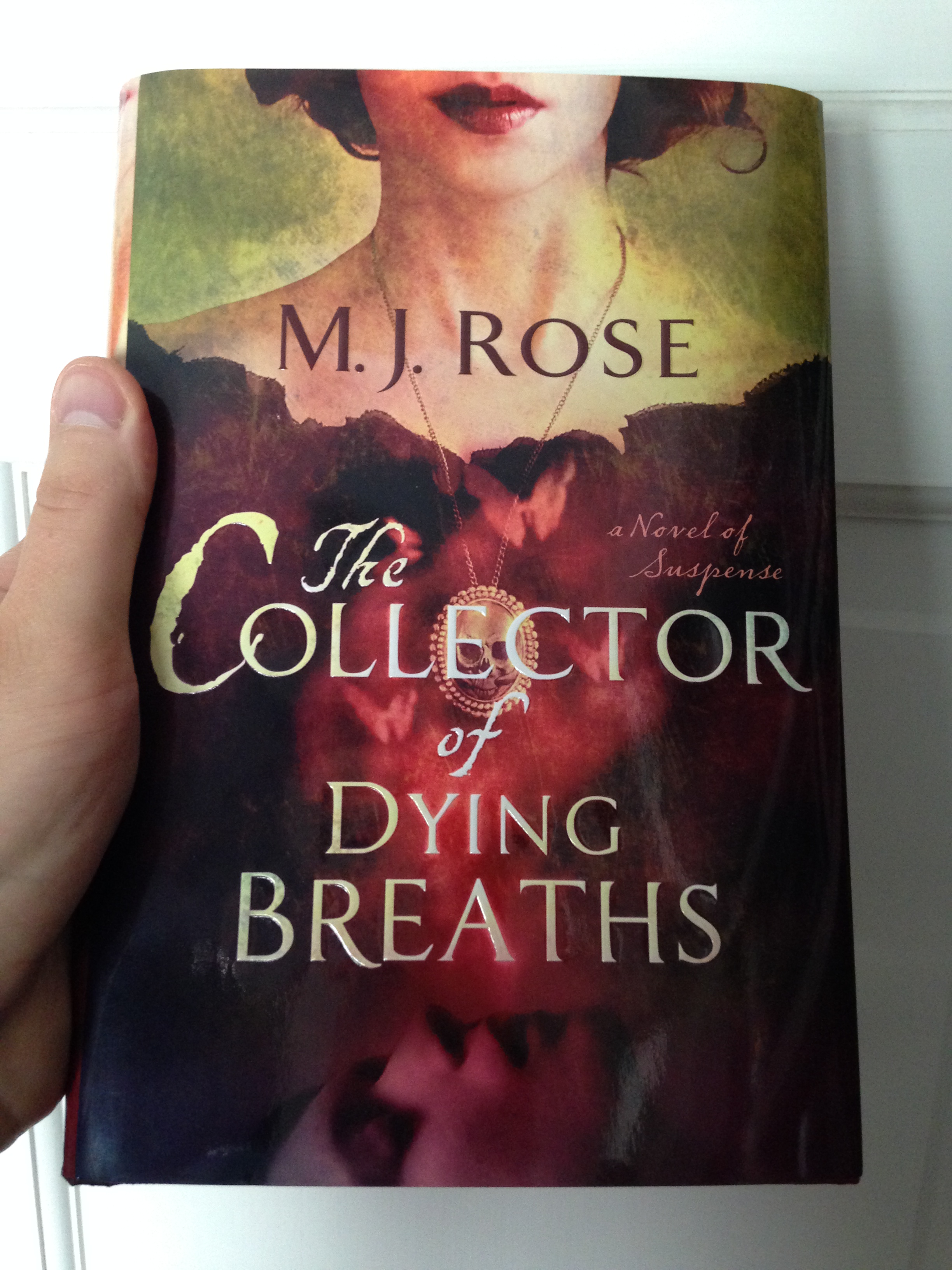
A few days ago I received a copy of The Collector of Dying Breaths by the immensely talented M.J. Rose, and I look forward to reading it soon. So far, this book has received excellent reviews on Amazon and Goodreads with people calling it “a richly detailed and imaginative novel” and “as beautifully evocative as previous entries in the [Reincarnationist] series.”
The following is the first of a three-part interview with rock legend John Waite. This year marks his 40th in the music industry and during that time he’s had quite the career. Whether it was being the lead singer of The Babys or Bad English or topping the charts with his #1 smash hit “Missing You,” John Waite’s voice has remained unmistakable and his music endures. I hope you enjoy the first part of this interview. You can read part two here and part three here. And don’t forget to pick up a copy of John Waite’s new album, “Best,” on his official website.
Earlier tonight I interviewed one of the most underrated musicians of all time: John Waite. Over the past four decades he’s served as the lead singer for two stellar bands – The Babys and Bad English – and his solo career has produced numerous hits, including “Missing You,” “Change” and “How Did I Get By Without You.” But John Waite is much more than hit maker: He’s an artist whose vocal, lyrical and musical abilities are second to none. He’s celebrating 40 years of unforgettable music with the release of Best, an 18-track snapshot of his illustrious career. What makes this album special is in addition to featuring a handful of hits, there are several deep cuts from albums that didn’t get the attention they deserved – Temple Bar and When You Were Mine – as well as live cuts from 2013’s Live All Access. Best also features three re-recorded hits: “Back On My Feet Again,” “Isn’t It Time” and the iconic “Missing You.” There are two versions of “Missing You” on this album but it’s OK because they’re markedly different. The duet with Alison Krauss has a country vibe and their chemistry together is magnificent, while the newly re-recorded version is a heartfelt modernization of a classic that 30 years later still sounds as fresh as it did in 1984. If you’re a hardcore or casual fan of John Waite, Best is an excellent way to celebrate his impressive career. I highly recommend you pick it up when it’s released on May 12.
Stay tuned for my interview with John Waite, which will be posted in multiple parts over the next several weeks.
Below are John Waite’s thoughts on Best and his track-by-track commentary. This information was compiled by Ken Sharp and originally appeared on John Waite’s official website: johnwaiteworldwide.com.
THE STORY:
I suppose the idea for Best came to me last December. I was in Beverly Hills just walking in the rain. There was an exhibition of the photography of Richard Avedon and I’d always been interested in his work so I thought I’d check it out, get out of the rain for a while and then get a glass of wine. I remember a huge white wall with at least 60 different photos–all figurative stuff, all different. It was a very ‘60s approach. I write, play and sing music but I’m also very interested in art. I don’t really see the difference in the different mediums; literature, painting, acting, etc., it’s all expression. I saw the pictures presented that way and considered what its counterpart would be musically and BEST came out of that. I didn’t want to do the obvious thing and simply put out a “Greatest Hits” record as anyone can do that through iTunes. Just download a play list and hey, “presto.”
This collection is called Best because it’s my best. It’s me putting together my favorite work and it’s totally subjective; I had no one to answer to but myself. It was, I have to say, great fun. I re-sang “Missing You” and “Back On My Feet Again” as the lyrics and melodies had been written literally hours or at most a day before recording the originals so long ago. I always felt I could “do” them better and bring something to them that I’d missed, update the production and make them more vital. And besides, a retrospective was a nice way of looking at my work. I wanted to connect the dots as much for myself as for anyone who might hear it.
I set about the task at hand on my return from England on New Year’s Eve. I’d been making lists over the holidays and decided to simply follow my heart. There was no way I could exclude “Bluebird Café” or “Suicide Life.” I also wanted to add live tracks from my great live band–Tim Hogan (bass), Kerri Kelli (guitar) and Rhondo (drummer)–and I remembered I had a steaming unreleased version of “Every Time I Think Of You” from last year that was so real it bordered on ‘60s soul music. My duet with Alison Krauss on “Missing You” was important to me on a profound level as it showed my love for country, bluegrass and in fact, Alison, whilst “Rough and Tumble” was pure blues rock .There are 18 songs on Best. It’s been a long career and this is the story – Best yet actually. The story is far from over.
THE SONGS:
Back On My Feet Again(newly re-recorded)
We had written all of the songs for the record and we thought we had a great record. There was a song that the record company insisted on us doing called “Yesterday’s Heroes.” It was really a song about being a failure. I don’t know what they were thinking. There was this guy called Roger who worked in the A&R department and he was saying, “This is a great song and you need to cut it.” I kept saying “no.” Our producer, Keith Olsen, kept making excuses for me. The band cut the track when I wasn’t there, as they were trying to appease the record company. I kept telling them that I was not singing that song. I was not going to sing those lyrics, as they were a piece of shit. On the last day of recording, I was getting out of bed and I was getting a cup of coffee and lighting a cigarette—a Marlboro Light, it was—and I sat down in my dressing gown and I wrote “Back on My Feet Again.” I wrote the lyric out and I sang over the top of this other song with a completely different melody and a whole new set of words on it. The next day I came in and put the “Hey babe, I’m back on my feet again. Here I am…” Everyone was really speechless. They had cut this song that wasn’t that good and now we had this.
Isn’t It Time(newly re-recorded)
It was like a Philadelphia soul song. Our producer came up with the song and said, “Hey, I’ve got these guys that I work with and I’ve got a great song.” With “Isn’t It Time,” you have to really appreciate that we did an absolute number on it, all the backing vocals and I changed the melody.
Rough and Tumble
I thought it was just a great name. It was quite a poetic track on one level; it’s quite sexual on another level and it’s quite spiritual on another level – if there’s a difference. “Rough & Tumble” just seemed to me to encapsulate my life and my music at the time. I thought it was a great title – some song titles just say “use me,” it’s got music in it and besides the syllables work. “Rough & Tumble” made it to number one of the Classic Rock charts in America.
Missing You(newly re-recorded)
“Missing You” is an amalgam of three different people. In his book, Remembrance of Things Past, Marcel Proust says that when he imagines a country girl he also imagines the country. You can’t separate the girl from the river and the trees and the grass because everything is the same experience. I was writing about these women, I was writing about New York, and I was also writing about distance. Each girl played a very large part in that song. I’ve never got bored singing it. It took ten minutes to write it, and maybe that’s why. It came out of nowhere, and was made up on the spot. It’s very genuine. It’s almost like a blues song. It’s about denial. The lyrics are good. It came off the top of my head. It was the last thing I wrote for the record, and it always gets that same response, where people just stop breathing for a second; it’s that big. My marriage was in a mess. It was kind of over, and I was torn. I was living in LA trying to finish the record, then I’d be living in New York, and my life was just a mess. When I hit the chorus, I didn’t know I was going to sing, “I ain’t missing you.” Somebody said the other day, if I had just sang, “I’m missing you,” it would have been just crap. Then he said, “You put denial in there, and it’s what every man goes through; denial.” So it made it extra twisted and kind of clever.
If You Ever Get Lonely
There was a song floating around Nashville called “If You Ever Get Lonely” and my manager kept telling me that it was a great song. I kept telling him “no.” The chorus was great, but the rest of it was really pretty much like one of those things that come out of Nashville, where someone writes a verse, and one person writes a chorus, and everyone writes a different part. It actually sounded like a Cat Stevens song or something. I got what he was saying about the chorus, though. After one of the days in the studio with Kyle Cook, who is from Matchbox 20, we talked about the chorus and how it had something and how the rest of the song was not working. We started going back and forth with different lyrics and the whole thing happened in about five minutes.
Better Off Gone
“Better Off Gone” was the first thing me and Kyle (Cook) wrote together. We literally came up with it between “hello” and “how you doin’?”! We were both playing acoustic guitars. I was watching his hands and he was watching mine. It was a great start to four songs for the Rough & Tumble album. I wrote “Evil,” “If You Ever Get Lonely” and “Love’s Going Out Of Style” in quick succession. Great guitar player and nice guy. He played on the American and European gigs too.
Suicide Life
The album When You Were Mine was originally called Suicide Life. The record company politely requested the title be changed as it might scare people off. They had a point. Try to imagine explaining that title in every radio station you went into. Good idea actually. It’s my best album. It was really ahead of the curve. I’d spent a lot of time in Nashville trying to find the heart of country, the honesty in the songwriting. “Bluebird Café” is on that CD as well as “Imaginary Girl.” “Suicide Life” wasn’t country but I was casting about for subjects that had meaning. Hollywood Boulevard east of Musso and Frank’s restaurant slowly turned into a wasteland–space cadets, runaways, hookers, rough trade, junkies, the works. It felt if you kept walking into the darkness you could fall off the edge of the world! I was staying in Hollywood and found myself wandering around there after dark. The back stories on those people are probably simple but what happened to them isn’t. It’s one of my best. Wrote the music with Shane Fontayne.
Change(live)
I remember getting a cassette in the mail of “Change” by this group called Spider. I played it on by little tape recorder and thought, “Christ, that’s a great chorus” but I didn’t dig some of the lyrics so I rewrote some of the words. I thought it would be a great single. It was timely. It sounded a little bit like The Babys but it had something else. I thought it was a very good song but it needed a tweak or two and I gave it those tweaks. The crowd goes nuts when we play it. I still open the show with that song.
Every Time I Think Of You(live)
We tried to repeat the success that “Isn’t It Time” had by using the same situation. That’s something that Steve Marriott and Paul Rodgers showed me from a distance is you can sing hard rock and flip the coin and sing a ballad and it’s still believable.
Head First(live)
I’d already called the album Head First so I felt, “Why don’t I just write a song called ‘Head First’?” I made up all these lyrics about what was in my head and it didn’t make any sense at all and for a couple of days we called it “Sunday Afternoon.” As for the music, Tony came up with the revolving piano line for “Head First” and then Wally came up with the guitar line over the top playing it as a one line thing. We recorded it in a room as big as a broom closet. We’d gone from using cathedral style huge recording rooms to something the size of a drum booth in a tiny mix room at the Record Plant in Los Angeles.
Evil(live)
“Evil” is almost like “Miss You” by The Stones. It’s very New York City. It sounds like somebody’s really out of their mind and it’s sexy because of that. It’s very seventies and very Studio 54.
Saturday Night(live)
I co-wrote “Saturday Night” with Gary Myrick who was a real Texas blues guy but he played extremely unorthodox guitar. All you have to do with me is make a noise and I’ll give you a lyric. I’m very responsive like that. We decided to play some flat out fuckin’ rock and then I took the music away to work on the lyrics. Bruce Springsteen’s guitar player, Nils Lofgren, had a song where he sings about dancing in the streets (“Secrets in the Street”). I thought about Nils dancing in the streets at dawn coming home and that appears in the song, (recites lyrics), “Ain’t it just like me to be dancing in the streets.” But I was thinking about Verlaine, the poet, and that thing where you’re a moment away from making something rhyme. Expectation. Ten Seconds to Midnight. And I was thinking about (Johannes) Vermeer (Dutch painter) when things are pre-dawn and you’re with somebody and it’s a really beautiful moment. Then Gene Vincent gets name checked in the song, (recites lyrics), “and just like Gene Vincent, I’m longing to groove…” and he was a flat out rock icon. I put them all in the same tune. It was a time to really throw down if you were gonna throw down. I was living in New York City and was just coming out of my shoes. It was a very creative time.
Bluebird Café(unplugged)
I was raised on Western music. Cowboys and Indians to rock and roll was a natural move. The acoustic guitar came before the electric and so did the storytelling. “Bluebird Café” is probably the best thing I’ve done. Donny Lowery had the line, “young hearts can fly, restless and wild.” I had nothing. It was such a great line. We quit for a beer at a local bar. Maybe that would help. Out of nowhere came this super pretty Iranian waitress. We were flirting with her. How could you not? She was playing The Ace of Clubs that night with her band and I could tell how much it meant to her. Pure Nashville. A light went off over my head and I thought, “why not the Bluebird Cafe?” All those young hopeful singer/songwriters on “open mic night”! Me and Donny went back to the studio and I killed it. It’s my best. I’ve said in the press “if Willie Nelson covers it I’ll kiss his feet.” I’m only half kidding; an older voice singing about a young girl making her way in Nashville….
I’m Ready(unplugged)
I wrote “I’m Ready” in my cottage in the Lake District at night towards the end of a bitter cold winter. It’s folk. The acoustic guitar is “first” in everything for me when it comes to songwriting. I don’t think it could have been written anywhere else. It’s a song about reincarnation, finding the same girl over and over through different lives. It had to go on the record. It’s just me alone.
In Dreams
The film company, Morgan Creek, sent me a video of a scene from Quentin Tarantino’s new movie called True Romance. Tony Scott was directing and the cast was “A” list to say the least. I was working with the songwriter MarkSpiro at the time so I thought it just might be an easy thing to “knock out.” It was the first time I’d actually written something for a movie. It came together very quickly at Mark’s home studio. The demo is the “master.” The vocal is what happened winging it. Mark and I work well together and he’s still a close friend. As for me and Tony Scott, we wound up shooting the video for “In Dreams” in Monument Valley with me on top of a mesa and Tony dive bombing me in a helicopter shooting at 360 degrees. It was a life memory. Not only to be on top of that mesa and close to God but to work with Tony. I liked him enormously. I still think about him. He’s missed.
The Hard Way
I was spending more time in Nashville. It was still pretty much undiscovered. Rodney Crowell and Vince Gill were putting out killer stuff and there was such a feeling of “trueness” to everything. I would sit outside the Ryman auditorium and just stare at it. I could never go in for some reason. How I met Jeffrey Steel is a story in itself. He was playing down the street from me in Santa Monica and Debby Holiday invited me down. It was a songwriters circle. Jeff was really outstanding on stage and off–great guy. We made a loose arrangement to work together the next time I was in Nashville. I had the title of “The Hard Way,” a basic plot of two people with different expectations facing in opposite directions, a guitar lick and even a rough bit of melody. But for the life of me I couldn’t do anything with any of it. Me and Jeff met up in a writing room one morning, coffee-d up and jumped in. I remember a train whistle blowing from far away. The south. He was on! I’d come to the table with the best I had to offer that wasn’t finished. I took him very seriously. Jeff immediately got it and took over. I just stood back. He was great. Within an hour it all made sense, was complete and didn’t sound like anything I’d heard before. He’s one of the “real ones” in Nashville. Good song. It’s almost country.
Downtown
There was an old upright Steinway at Sony Music on 5th Avenue. Totally beaten and out of tune. It looked like it had been through a war. It had a poignant tone to it and it always moved me. Glen Burtnick and I would spend hours just talking about the song we would be thinking of writing and suddenly it would just happen. “Downtown” was a song about a long walk in the city and the movie that plays memories back in you’re mind as you remember the past. It’s a difficult song to talk about. It was so personal. I can’t add anything; it’s complete.
Missing You(duet with Alison Krauss)
I recorded this album Downtown that had a lot of my favorite songs on it. We tried to rework the songs a little differently but when it came to “Missing You” I couldn’t think of anything to do with it but a duet. My favorite female singer is Alison Krauss so I called her up and she said yes. I was in Nashville at the time so she just came down one afternoon and away we went and we got it in an afternoon. I went and sang on her record after that and then I played The Opry, which was a very big deal for me.
I met Ken Sharp, the New York Times best-selling music biographer, on KISS Kruise III and I recently finished his latest book: Nothing’ to Lose: The Making of KISS (1972-1975). It was fantastic and easily the most in-depth biography I’ve ever read. If you’re a KISS fan, a lover of pop culture or just someone who’s interested in fascinating origin stories, I highly recommend you read the book.
Below is my interview with Ken. We discuss Nothin’ to Lose, his love for KISS and we even talk about how John Waite brought us together, among other interesting topics. It’s a great interview and I hope you enjoy it.
How did you get into KISS? What’s your first memory of becoming a fan?
There was a neighbor down the street and he played guitar. I remember being at his house one day and he put on this record, which was KISS Alive! I believe it had just come out and he was showing me the cover and playing it. And I was blown away by the aggression and the melodic hooks and the fact that he was playing his electric guitar along with it. I think it was the whole package that inspired me, not only to become a KISS fan but also to start playing guitar. So, it was definitely a good introduction to the band and to the world of playing guitar.
When did you first meet KISS?
The first time I met them was in December of ’76. I was backstage at a show on the Rock and Roll Over tour at the Spectrum in Philadelphia – I have a poster that was signed by them, it was amazing.
My mom was the first woman professional boxing judge in the world so she had contacts at the Spectrum and I begged her to call someone there to see if she knew someone that could introduce me to the band. She was able to coerce someone that she knew. She put me on the subway. I went to the show myself and I met someone around four in the afternoon and they brought me backstage, and I basically just waited in the backstage area till the band came. Not only did I meet them, I got to watch them do the soundcheck without makeup – this is all completely true. And I got them to sign autographs. I didn’t get pictures and I kind of regret that, but obviously they were without makeup so that wasn’t gonna’ happen.
I met Bill Aucoin that night, and I befriended Carol Kaye who was a publicist for KISS in the ’70s. She worked at a place called Press Office in New York, and she invited me up one day to visit her and the day I went to see her Paul came into the office. So I met with Paul and got autographs, and another time when I came back in the ’70s I met Gene. I got to hang out with him, so that was a pretty amazing experience. I was young and impressionable so it really blew my mind. I first interviewed them, probably, in the early ’80s. But in terms of meeting them, I met them in ’76.
I was mainly interviewing a lot of people that worked with them. Gene found out about that and he and Paul made themselves available. It was something that came together because of that – because of my idea of, hey, let me start interviewing as many people that worked with them. Whether it was Vinnie Poncia, who produced Dynasty and Unmasked or people that worked on the road crew and things like that, and it started there.
In addition to writing about KISS, you have books about John Lennon and Elvis. How did you get involved in the music business and in writing?
It’s interesting. I went to Temple University and got a degree in Communications and I got a chance to work as an intern at a local Philly radio station called WYSP. And from there I befriended people at the station and the music director, Mark DiDia. He was a really good guy, and later turned out to be a really powerful guy in the business who worked with Capital Records and Geffen in real high-up positions and now he’s working in management.
I was part of the hard rock show called the Metal Shop and I played a character on there called “Killer Ken” (laughs). And I wasn’t much of a killer but we had to take on these roles and I was about to do some interviews for that show and Mark DiDia really didn’t like doing interviews. He knew I was passionate about music so he had me interview people like Glen Tilbrook or Ozzy Osbourne or Bob Geldof, when Live Aid happened. I interviewed Yoko Ono over the phone. So, that basically started it up.
I also started contributing articles to the music magazine Goldmine, and from there it kind of took off and has since resulted in me working on a lot of book projects. Obviously, my latest book being Nothin’ to Lose, but beyond KISS I’ve done books on everyone from John Lennon to Elvis to Cheap Trick to the Raspberries, people like that. That’s kind of how that fired my interest.
Speaking of Nothin’ to Lose, how did it come to be?
Well, I’ve always been really fascinated with the beginning of things with artists. I’m a huge Beatles and Elvis fan – they’re actually my favorite artists – and I’ve always been really fascinated with Elvis’ early days. He was signed to a local label called Sun Records and played all the juke joints down south, and I was always really fascinated with those formative years. And the same thing with the Beatles – when they played Hamburg or were starting out in Liverpool, and I thought the same thing about KISS. I thought, wow, there’s never really been a book that’s really gone into great depth about that and let me see if I can do it. I started putting together some new interviews and things like that, and tracking down some people. I put 25,000 words together and I sent it to Gene with my proposal. He thought it was a good idea and it took off from there.
How was it working with Gene and Paul for this book? Did they give you complete creative control or did you have to get their approval on the final manuscript since they were listed as co-authors?
Yeah, they were absolute princes about everything. Initially I was made a little worried that perhaps there’d be a lot of censorship but there was absolutely nothing like that. They wanted the story to be told, and they wanted it to be told not just with their voices but with the voices of the rest of the band, as well as all the different people that worked with them, whether it was producers, record company executives, publicists, concert promoters, costume designers, journalists, or engineers. It’s a wide swath of people that are telling their story and I think that’s what makes it unique and different. A lot of people know the story and I can’t reinvent what happened to them but what I can do is re-contextualize it and present it in a manner that creates a much larger tapestry so people can get a greater understanding of what happened. And there are even things that happened to the band in their career that they weren’t privy to. They weren’t there for every event that happened and there were things that happened, business-wise or with concert promoters, that they weren’t privy to, and them reading about it in the book was an eye opener.
They were absolutely complete gentlemen and certainty made themselves available all the time for interviews and things like that, and they really let me take the lead to shape what I was able to accomplish.
This is the most detailed KISS book I’ve ever read, and perhaps the most detailed music book I’ve ever read.
Yeah, some reviews said, “I’m surprised he didn’t interview the custodian at Electric Lady” (laughs). The reason why is because I couldn’t track him down. I’m just joking. I certaintly could have stopped a lot earlier (laughs). I interviewed over 200 people for the book. I could have stopped after 75 people, but it’s kind of like when you’re working on a song, you kind of know when you’re done. It was at that point that I felt like I’d exhausted people from that era. But there’s always going to be people that pop out of the woodwork after a project is done. There have been a few people that popped up since I worked on the project but overall I think I did a pretty admirable job of digging up plenty of people from that time period to present the most complete portrait of the band. It was satisfying to track down all of these people. I almost had to be a detective in a way.
From start to finish, how long did it take to complete Nothin’ to Lose?
Probably about four years, I would say. Yeah, it was a lot of work, and people have asked me in interviews or otherwise, “So, you’re obviously starting on the follow-up?” That’s actually not true. I thought about it, but to throw myself back into that and shut out the world for a few years at a time to do that, I’m not sure I’m ready to do that. But I’m working on other projects that are not KISS-related. But it was a really time-consuming and exhausting project, and I feel really satisfied with the results.
Nothin’ to Lose is filled with comments from nearly every person that came into contact with the KISS during this era. Some of this content is pulled from previous interviews and articles but a good portion of it was gathered first-hand by you. How did you go about speaking with so many musicians, producers, and everyone in between, about KISS?
Having been a part of the music business since the early ’80s and dealing with publicists, I did what I had to do to track down people, and one person would lead to another. It certainly wasn’t a case of someone presenting me with a list of 200 people to talk to. It was a really a case of being a detective and tracking down people, especially people outside of the norm. It really required a lot of legwork and a lot of hours of endless digging through a variety of sources to track people down and gain a lot of confidences. There were people that may have been not initially wanting to talk or not interested, and I had to persuade them that this wasn’t a hatchet job the band was doing – it was really me trying to capture the essence of what the band was doing at that time as best as I could.
I would say 90% of the interviews in the book were done first-hand by me, and I pride myself on that. But there are a few instances where I had to tap into interviews from the past.
Speaking of interviews, Ace and Peter’s thoughts are featured throughout the book. Are all of these comments from previous interviews or did you speak with them for this book?
I went to both of them requesting interviews and they were both working on their own book projects, so it’s understandable why they couldn’t participate. But I wanted to give them as much of a voice as I could. I interviewed them before – quite a few times – and they’re a part of it. Their input is not as great as Paul and Gene’s but they’re certainly not ignored. What’s interesting to me is before the book came out people saw that Gene and Paul’s names were on it and they thought it was going to be a complete bashfest of Ace and Peter. But that was completely not the case.
This was a much more positive story because this was a period of time when everyone was getting along and they were aligned with the same ambition. If I jump into doing a part two, the next period, where the band broke through – from ’76 to ’79 – that was a pretty difficult period for the guys in the band. While they achieved huge heights of success, the excess and divisions started to form. The problems with Ace and Peter, with drinking and drugs, came to the fore. So, while a book about that era would be interesting, it would be a bit more depressing than the era that I covered.
How did it feel to become a New York Times best-selling author with Nothin’ to Lose?
That was an amazing feeling. It’s kind of a like a one-hit wonder breaking into the top 10. People can forget about them but they can always say they made the top 10. If it’s only one time for me, I’m fine with that. It was quite a surprise and certainly one that I celebrated. I’ve done over 15 books and I’ve never had one make the New York Times bestseller list, let alone in the top 10. So to break in at number nine was really, really satisfying. I certainly have to give Paul and Gene the major props for that because with them being kind enough to go out and do some book signings, I’m sure that certainly helped us. It was quite a surprise and definitely something that put a smile on my face.
Knowing how long Nothin’ to Lose took to complete, if Gene and Paul came to you asking for a second book would you be open to it?
Yeah, possibly. But it was so much work, and I’m the world’s worst typist. I type with two fingers. So, you can imagine, to transcribe interviews – that in itself is torture. An interview that is an hour could take me five or six hours to transcribe (laughs). And by the time I’m done, my fingers are numb. Just that amount of work was difficult. If I could have someone transcribe my interviews then I could begin work on the narrative, and that would certainly make things easier. But still, it would require such a huge amount of work. I’m shocked I was able to pull this book off because I was still working a full-time job at that time.
I really did work hard to track down as many photos as I could that were previously unseen or rare. I really wanted to make every image count as best as I could in the book, and that was also a difficult proposition working with ’73 to ’75 because it’s an era that’s less documented than ’76 onward, obviously, as the band became more popular. So that was a great challenge, but I’m real pleased with the images in the book and there’s an additional 22 images in the e-book version.
You also wrote KISS: Behind the Mask and KISS Army Worldwide: The Ultimate Fanzine Phenomenon with Gene and Paul. Do you have a favorite among the three?
Not because it’s the newest book, but I think I would say Nothin’ to Lose because I think it hangs together really well. I love that period of time of KISS’ career. It was for me, from a selfish point of view, a way to live vicariously through those times by doing this book. In a way, the book was for me as much as it was for other KISS fans. I would definitely say that Nothin’ to Lose, by far, is my favorite book out of all the KISS projects.
When you and I met on KISS Kruise III, you were wearing a Babys t-shirt and we chatted briefly about John Waite, a fantastic musician and vocalist.
(laughs) Yeah, I love that Babys shirt and I even wore it during my meet and greet photo with KISS (laughs). I’m a big fan of the Babys and John Waite, who I recently interviewed for a Goldmine cover story.
Speaking of John Waite, I saw a couple videos online of you jamming with his band on guitar last fall. How did that come about what was it like being on stage?
Talk about an amazing moment. I got to play three songs with him at a private show in the valley in California. And I got to play two Babys songs with him – “Midnight Rendezvous” and “Head First.” Then we ended with a cover of “Money,” which was a song the Beatles used to do and, actually, the Babys covered it. I came up with the idea of doing that. When we were doing the soundcheck I started playing that riff and John just started singing along and we ran through it, and I didn’t think anything else of it. Then, later that day, I saw the set list and saw that they added “Money” as the encore.
My god, I saw the Babys only once in 1980 and it was, probably, one of my top three concerts of all time – them at the Tower Theater in Philly for the Union Jacks tour. It was such a spectacular show. And for me to be able to be on the same stage, even for just a small period of time, playing guitar on classic Babys songs with John Waite – one of my musical heroes – was certainly a mind-blower (laughs). I’m not sure I’m worthy of it, but it was great.
What’s your connection with John and how did you two meet?
The first time I met him was in 1982 for his first solo album Ignition, and I met him at the location where I’d later work as an intern: WYSP. It’s really interesting how that all ties together. I found out that he was doing an interview that day and he was opening a show at the Tower – that was his first solo tour – for 38 Special. I had front-row tickets and went with a friend, and we waited in the lobby of the radio station. Eventually the elevator opened and there was John Waite with a guy from Chrysalis Records and he couldn’t be nicer. We took a bunch of photos with him, and that was the first time I met him. The first time I interviewed him was probably two years later.
Do you have any upcoming projects you’d like fans to be aware of?
I’m finishing up a book on 60 session players in LA known as The Wrecking Crew. They played on all the popular records from the ’60s, everything from “Good Vibrations” to “Be My Baby” to “I Think I Love You.” It’s an oral history about that whole music explosion in LA and Brian Wilson of The Beach Boys did the forward, and Glen Campbell, who’s part of The Wrecking Crew, did the afterward. It’s a really cool book with a ton of color photos throughout. It’s probably the most visually appealing project I’ve done. I’m working on that and I have a few other ideas in mind.
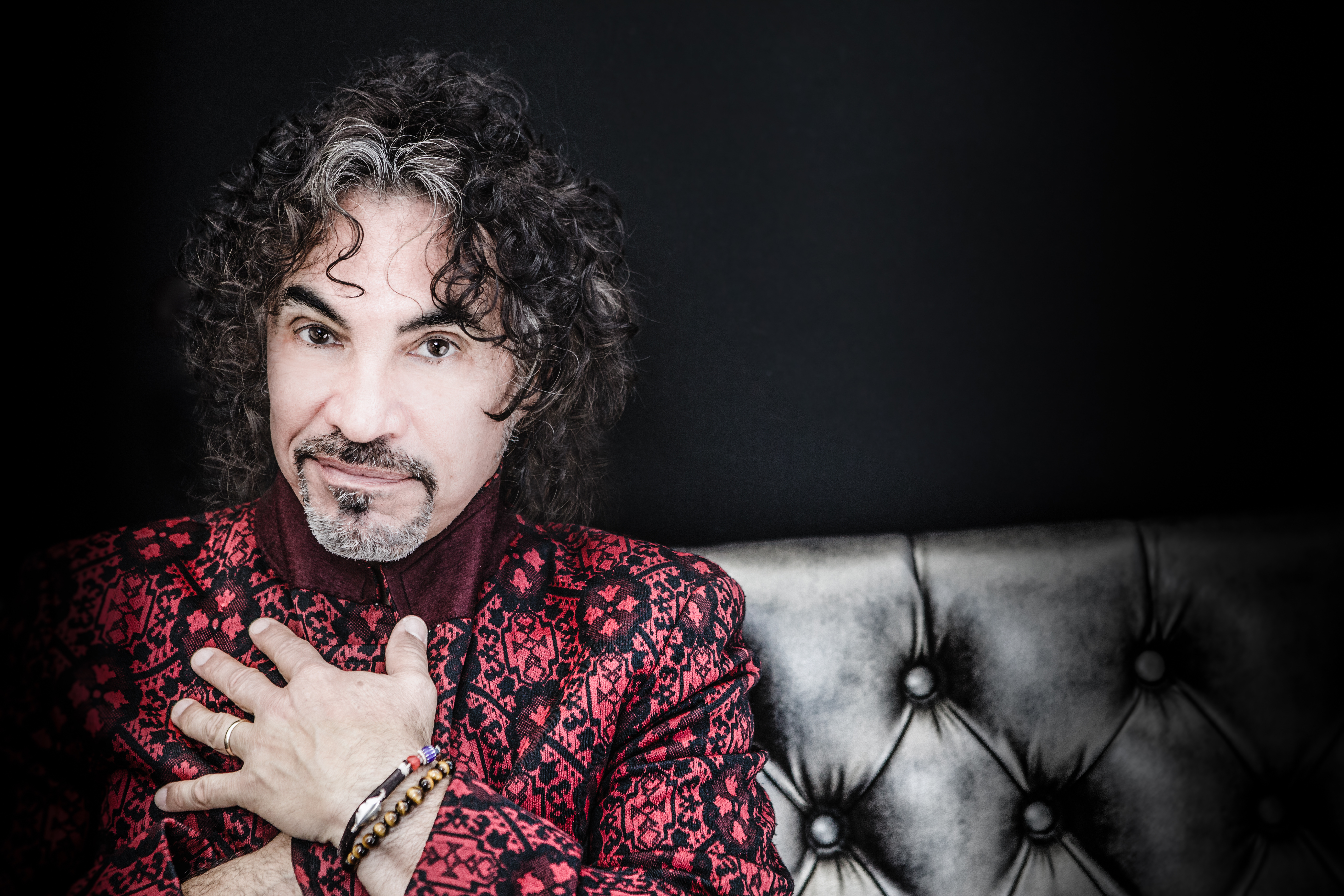
I recently had the opportunity to interview the incredibly talented John Oates, one half of the 2014 Rock & Roll Hall of Fame inductees Hall & Oates. In addition to having a stellar career with Daryl Hall, John has created a strong catalog of music as a solo artist. On March 18th, he’s releasing three five-track EPs – Route 1, Route 2 and Route 3 – as part of his latest music project entitled Good Road to Follow. You can learn more about this on the official John Oates website.
Below is my interview with John and two behind-the-scenes videos about Good Road to Follow. Enjoy!
Congratulations on being a 2014 Rock & Roll Hall of Fame inductee. You and Daryl were first eligible for induction in 1997, yet you weren’t nominated until now. Hall & Oates came in as one of the top five acts that people wanted inducted in the official Rock & Roll Hall of Fame fan poll. How does it feel to receive this honor from both the public and your peers?
To me it’s like a lifetime achievement award. I’m happy that the fans and public were finally allowed to vote and I’m sure that had a lot to do with us getting admitted.
The 2014 Rock & Roll Hall of Fame inductee list is a diverse one. In addition to yourselves, there’s KISS, Nirvana and Peter Gabriel, just to name a few. Are you fans of these artists and are you looking forward to performing with them on stage at the end of the ceremony on April 10?
I am honored to be part of this particular “class.” All of these artists have unique and qualified talent and all are deserving to be in the Hall of Fame. As to performing, I have no idea of what or who will be involved.
Speaking of performances, I attended your concert at the Tower Theater in October 2013. As always, it was excellent, and you performed one of my favorite songs, “Las Vegas Turnaround” from the Abandoned Luncheonette album. You mentioned writing the song while sitting on the step of your apartment on Quince Street in Philadelphia, which is right around the corner from where I live. What was the inspiration for this song and how did it come together?
Two young ladies were walking by and they stopped to talk. One of them told me they were flight attendants – “airline stewardesses” – and were about to do a “Las Vegas Turnaround.” When I asked what that was they told me it was a quick trip from Philly to Vegas, then right back again. I had never heard that expression and it seemed like a great title. I wrote the song around the idea of flying. “Gambling fools to the holy land Las Vegas.”
I’ve always had a soft spot for many of the Hall & Oates tracks where you sang lead, especially “Mano a Mano,” “Possession Obsession” and “Keep on Pushin’ Love.” When working on an album together, how do you and Daryl decide who should handle the lead vocal?
Some songs just work better for Daryl’s voice and his sound has become the trademark of our biggest hits, so when I wrote certain songs like “Maneater” or “Out of Touch” it seemed like the best thing to do was have him sing it.
What is the songwriting process like for you? Do you sit down and say, “I’m going to write a song,” or does inspiration strike and you start taking notes?
The rules are: “No rules.” Anything from the most mundane to the most profound can be the fuel for inspiration. The difference between songwriters and others is that songwriters are always somehow tuned into the world, situations, emotions, and experiences that other people may not be aware of. Then it’s down to the ability to articulate those things both musically and lyrically into a song that people can relate to and that touches their souls or makes them want to shake their booty, or maybe both.
Whether it’s your work with Daryl Hall or your solo albums, you clearly have a diverse taste in music. Which albums or artists have influenced you the most over the years?
I was lucky to be a kid at the birth of rock and roll, but I was also aware of the music that came before me, the big bands, jazz, etc. My first guitar and lyric hero was Chuck Berry. Elvis was well…Elvis. The traditional american folk and blues artists were very important to me as well: Mississippi John Hurt, Doc Watson, Blind Blake, Sonny Terry and Brownie McGhee, Jim and Jesse, as well as the newer folk interpreters like Dave Van Ronk and Joan Baez. My tastes extended to the historical performer like John Jacob Nile. Then 60s R&B was very important: Curtis Mayfield and The Impressions, The Stax/Volt recordings with Booker T and the MGs, Motown, and of course, East Coast doo-wop and Philly soul.
Your first solo album, Phunk Shui, is a terrific collection of pop, rock and soul music. One of the songs on the album, “Love in a Dangerous Time,” was re-recorded for the Hall & Oates album Do It for Love. What’s the story behind this song and do you prefer one version over the other?
I wrote that song with Arthur Baker and Tom Farragur. It was about a changing world as I saw it…AIDS, violence and turmoil. I prefer my solo version because the music is more ominous and less pop.
You followed up Phunk Shui with 1,000 Miles of Life, a rock album with country undertones, and Mississippi Mile, a stripped-down bluesy affair. What inspires you to shift direction from album to album?
I don’t see it as a shift. I see it as an evolution and the maturation of me as a solo artist. 1,000 Miles of Life was my first album that I recorded in Nashville and I wanted to take advantage of all the amazing musicians. Also, the songs were very introspective and I knew that their playing style and sensitivity to lyrics would bring out the best in these particular types of songs. Mississippi Mile was more of an “homage” to the music that I loved as a kid and re-working some of my old favorites into my personal style. That album was basically recorded live in the studio, also in Nashville.
Your most recent musical endeavor is called Good Road to Follow. As part of this project, you released five musically diverse singles in 2013, and in 2014 you have a trilogy of EPs coming out. What should fans expect from the EPs?
It will be released on March 18th as a package with three discs. Each disc has five songs assembled based on style as best I could. Since the project began as a series of singles there was no thought about flow and style. I just wrote the best songs I could with a wide variety of collaborators, both as writers and producers. The discs are entitled: Route 1, Route 2 and Route 3.
What made you want to take this unique approach to releasing music?
I have been moving beyond the concept of an album in the traditional sense. The world has accelerated and listeners’ desire to create personal playlists seems to be setting the standard. However, after hearing a bunch of my digital singles there was a lot of demand for an album, so I had to figure out a way to assemble all this diverse music. I did the best I could and all three EPs are the result.
So far, my favorite song from Good Road to Follow is “High Maintenance.” It’s easily the best pop song I’ve heard in quite some time. With this single, as well as the others, you’ve collaborated with a variety of artists. What has it been like working with such a diverse group of musicians on this ambitious project?
I am proud of all the songs on Good Road to Follow. It’s just different flavors. Everyone who worked on this project did it for the love of the music and I was blessed to be able to share this musical experience with all of them. In a way, I had to be kind of an artistic “traffic cop” since I was the only one who knew what the entire body of work sounded like. So, I had to be careful to keep the sonic landscape somewhat coherent but at the same time allow the people I was working with freedom to bring their own creativity to the project. It has been an amazing experience and I can’t wait for people to hear it.
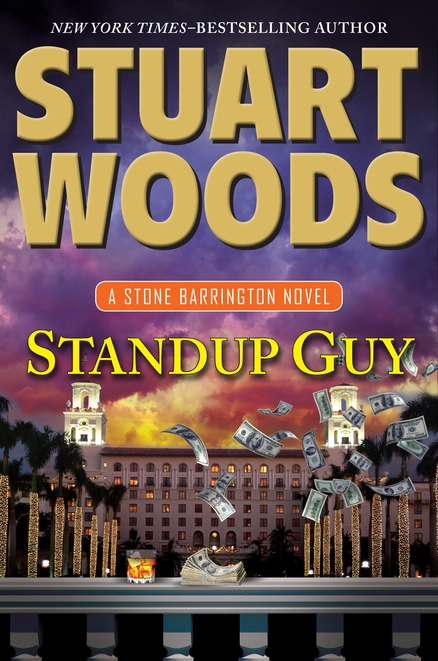
Stuart Woods is one of the first thriller writers whose work I fell in love with. His characters have fantastic names like Felicity Devonshire, Vance Calder and, my all-time favorite, Stone Barrington. I’m constantly impressed by the fluidity of his prose, as well as his wonderfully descriptive romantic scenes. There have been countless occasions when I stopped reading one of his books to recite a passage to a friend because I was so impressed by the use of adjectives, verbs and metaphors. Simply stated, he’s a terrific writer everyone should read. Speaking of which, Stuart Woods has a new Stone Barrington novel available: Standup Guy. Make sure to pick up a copy after reading my interview with the author below.
After graduating college, you started out working at several advertising agencies. What made you realize advertising wasn’t for you, and how did your time in the industry influence your future writing?
I found the advertising business to be a wonderful preparation for writing professionally. I always advise young people who want to write for a living to find a job in advertising, journalism, PR – any profession that requires you to sit down and write a thousand words a day, whether you feel like it or not. Advertising did that for me, and in addition, I had to satisfy some very demanding bosses – some of the best writers in the business – who wanted persuasive writing and every word to count. I left because I felt I had gone as far as I was going to go in that business, and because I had wanted to write fiction since I was a child, and leaving advertising forced me to finally write the novel I had been thinking about since I was ten.
Your first novel, Chiefs, earned you an Edgar Award. How did it feel to be honored by your peers for your first novel?
I didn’t know the Mystery Writers of America were my peers, since I had never heard of the award, though I was very happy to receive it. I thought I had written a novel about how small towns worked, but I was delighted that they found it to be mysterious.
Chiefs was turned into a TV miniseries with a stellar cast of actors, including Charlton Heston, Danny Glover, Billy Dee Williams, and John Goodman. Did you have an active role in the creation of the miniseries, and did it live up to your expectations?
I didn’t write the screenplay, but the producers were kind enough (and smart enough) to send me every draft of the screenplay and solicit my comments and suggestions. I made a lot of those, and they even accepted some of them, particularly in casting. Heston’s character, Hugh Holmes was based on James S. Peters, a father of my home town, and I interviewed him at length about the town’s history. I loaned the tapes of that interview to Heston, and he used them to create his character and his accent. I was delighted with the miniseries; I thought it true to both the plot of the novel and its intent. I played a small part in the mini-series, and they made me travel to New York to read for it. I had a two-minute scene with Billy Dee Williams, a fine actor who, for some reason, could not remember his lines. We rehearsed at length, shot it, then rehearsed some more and shot it a couple of more times. He finally got his lines right, whereas I was perfect throughout. I thought, “This acting thing isn’t so tough; after all I knew my lines.” Then I saw the series at a screening: Billy Dee was wonderful, and I came off as a blithering idiot. I thought, “Maybe there’s something to this acting thing, after all.”
I thought your standalone thriller, Under the Lake, was one of your best. It’s very different from your other work but just as captivating. It even attracted the attention of Stephen King, who lauded the book by saying, “it scared the living hell” out of him. More than 25 years later, what’s your opinion on the novel?
I reread it when someone was writing a screenplay (ultimately unproduced) from it, and I liked it a lot. I tried to get Simon & Schuster to use King’s comment, which was one line in a fulsome letter he wrote about the book, and they wouldn’t. They wanted to say, “It scared the living heck out of me.” (!)
For the past several years you’ve been providing fans with a steady flow of Stone Barrington novels. Do you plan on revisiting any of your other series or writing any new standalone thrillers?
My publisher persuaded me to write only Stone novels in a new contract (he offered me money, and I can be bought). I think he meant that he wanted the words, “A Stone Barrington Novel” on every cover. I tricked him by including all the other series characters in the various novels. Anyway, my readers who write to me like Stone best.
Having written 28 Stone Barrington novels, how do you keep your books fresh?
I have a fevered imagination and a rich fantasy life, which helps with the sex scenes.
Your memoir about sailing, Blue Water, Green Skipper, was re-released in 2012. How did the fans of your thrillers respond to Blue Water, Green Skipper when it was, once again, made available to the public?
I’ve had a great deal of mail about the book from readers – most of them, yachtsmen, and they were all warm in their praise. Reading it allowed me to revisit a happy time in my life. One day, I’ll write a full-blown autobiography, and I’ve reserved the right to plug the old book into the new one. I don’t think I can write about that time of my life any better.
Many popular writers, including James Patterson, have increased their productivity by collaborating with other authors on novels. Some readers don’t care for this practice because they feel having a co-author dilutes the end product, while others are perfectly fine with it. What’s your opinion on the matter, and would you ever collaborate with another author on a book?
I’ve never done that, though my publisher says he would like it. I’ve instructed my widow-to-be to call my agent as soon as I’m dead and hire a few writers, and I’ve explained to her that Jim Patterson makes more money than God.
Since you’re working on and releasing multiple books a year, how do you go about keeping track of all the characters and details from novel to novel?
My characters exist for me in an alternate universe; I know exactly what’s happened to them, though they know nothing about me. Apparently, they don’t read. I seem to have a gift for keeping their stories in memory.
What are you working on now and what’s next for Stone Barrington? There are two Stone novels completed and awaiting publication, and I’ll finish another this week. Standup Guy is coming out on January 7th.