Three Books To Read This Spring

Advertisements

My to-read list is massive and I’m sure yours is too. Since deciding what to read next can be hard, here are my three recommendations for what to read this spring.

KEEP QUIET by Lisa Scottoline

My girlfriend, Stephanie, and I meeting Lisa Scottoline at her book signing for Keep Quiet on April 19.

My girlfriend, Stephanie, and I meeting Lisa Scottoline at her book signing for Keep Quiet on April 19.

This past Saturday my girlfriend, Stephanie, and I attended Lisa Scottoline’s book signing for her new novel, Keep Quiet, at the Barnes & Noble in Cherry Hill, NJ. Lisa’s mother just passed away last week, so I wasn’t sure if she was going to have the book signing. But after cancelling a few dates on her book tour, Lisa persevered and decided to do her last two book signings. I wasn’t sure what to expect, but Lisa, using her infectious humor, found a way to leave everyone smiling by the end of the event. Yes, she spoke about “Mother Mary” passing away, but she also made sure to inject several funny stories about her mother that had the crowd in stitches. And Lisa remembered many fans, including myself, by name and embraced us with hugs and well wishes. For my money, no author is as warm and loving to her fans as Lisa Scottoline.

But let’s get to the book. Keep Quiet is next on my to-read list and as you can see from the synopsis below, it sounds like it should be an intriguing and compelling read. I can’t wait to crack it open and based on the early reviews, it’s one of Scottoline’s best books in recent years. Keep an open eye out for my review of the book in the coming weeks.

And, if you haven’t already read it, you can check out my interview with Lisa Scottoline here.

Keep Quiet Synopsis

New York Times bestselling and Edgar Award winning author Lisa Scottoline is loved by millions of readers for her suspenseful novels about family and justice. Scottoline delivers once again with Keep Quiet, an emotionally gripping and complex story about one man’s split-second decision to protect his son – and the devastating consequences that follow.Jake Buckman’s relationship with his sixteen-year-old son Ryan is not an easy one, so at the urging of his loving wife, Pam, Jake goes alone to pick up Ryan at their suburban movie theater. On the way home, Ryan asks to drive on a deserted road, and Jake sees it as a chance to make a connection. However, what starts as a father-son bonding opportunity instantly turns into a nightmare. Tragedy strikes, and with Ryan’s entire future hanging in the balance, Jake is forced to make a split-second decision that plunges them both into a world of guilt and lies. Without ever meaning to, Jake and Ryan find themselves living under the crushing weight of their secret, which threatens to tear their family to shreds and ruin them all. Powerful and dramatic, Keep Quiet will have readers and book clubs debating what it means to be a parent and how far you can, and should, go to protect those you love.

EVERYTHING TO LOSE by Andrew Gross

Everything to Lose by Andrew Gross comes out on April 22.

Another one of my favorite authors is Andrew Gross, who I also interviewed last year. You can check it out here. He has a new novel coming out tomorrow entitled Everything to Lose. I’m reading it right now and will be reviewing it soon. I’m happy to report that it’s very entertaining and, in my opinion, better than his previous book, No Way Back. I highly recommend you order a copy of Everything to Lose and give it a shot. I think you’ll be pleasantly surprised. You can buy the book here.

Everything to Lose Synopsis 

A determined, (down on her luck,) mother caring for her handicapped son becomes entangled in a murderous conspiracy to keep a twenty year old secret buried in this blistering thriller, set during the tragic aftermath of Hurricane Sandy, from Andrew Gross, the New York Times bestselling author of 15 Seconds and No Way Back.

While driving along a suburban back road, Hilary Blum, who’s just lost her job and whose deadbeat husband has left her alone to care for her son with Asperger’s, witnesses a freakish accident. A car ahead of her careens down a hill and slams into a tree. Stopping to help, she discovers the driver dead—and a satchel stuffed with a half a million dollars.

That money could prevent her family’s ruin and keep her special needs son in school. In an instant, this honest, achieving woman who has always done the responsible thing makes a decision that puts her in the center of maelstrom of dark consequences and life-threatening recriminations—a terrifying scheme involving a twenty-year-old murder, an old woman who’s life has been washed out to sea, and a powerful figure bent to keep the secret that can destroy him hidden.

With everything to lose, everything she loves, Hilary connects to a determined cop from Staten Island, reeling from the disaster of Sandy, to bring down an enemy who will stop at nothing to keep what that money was meant to silence, still buried.

CARNAL CURIOSITY by Stuart Woods

Carnal Curiosity by Stuart Woods debuted at #1 on The New York Times Best Sellers list.

My first interview of the year was with the legendary thriller writer Stuart Woods, famous for his Stone Barrington series that has been going strong for decades. The newest installment in the series, Carnal Curiosity, just debuted at #1 on The New York Times Best Sellers list. Once I’m done Lisa Scottoline’s Keep Quiet, this one’s next, so stay tuned for my review. Based on how enjoyable Woods’ recent novels have been, I also recommend you pick up a copy of Carnal Curiosity.

Carnal Curiosity Synopsis 

Stone Barrington seems to have a knack for being in the wrong place at the wrong time. When Manhattan’s elite are beset by a series of clever crimes—and Stone is a material witness—he and his former partner Dino Bacchetti find themselves drawn into the world of high-end security and fraud, where insider knowledge and access are limited to a privileged few, and the wealthy are made vulnerable by the very systems meant to keep them safe. As Stone and Dino delve deeper into their investigation, they learn that the mastermind behind the incidents may have some intimate ties to Stone . . . and that the biggest heist is still to come.

Author Interview: Stuart Woods

Advertisements

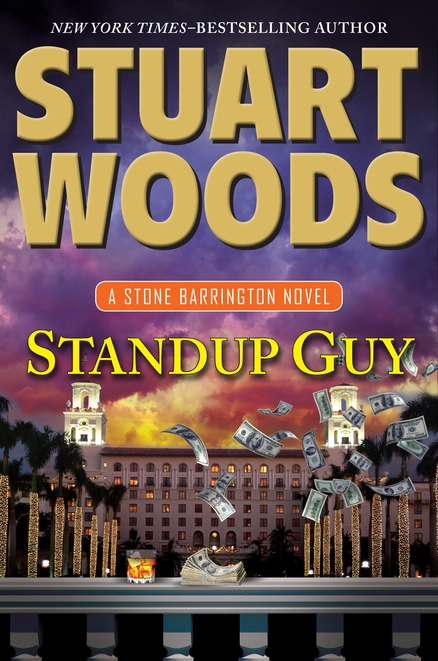
Stuart Woods is one of the first thriller writers whose work I fell in love with. His characters have fantastic names like Felicity Devonshire, Vance Calder and, my all-time favorite, Stone Barrington. I’m constantly impressed by the fluidity of his prose, as well as his wonderfully descriptive romantic scenes. There have been countless occasions when I stopped reading one of his books to recite a passage to a friend because I was so impressed by the use of adjectives, verbs and metaphors. Simply stated, he’s a terrific writer everyone should read. Speaking of which, Stuart Woods has a new Stone Barrington novel available: Standup Guy. Make sure to pick up a copy after reading my interview with the author below.

After graduating college, you started out working at several advertising agencies. What made you realize advertising wasn’t for you, and how did your time in the industry influence your future writing?

I found the advertising business to be a wonderful preparation for writing professionally. I always advise young people who want to write for a living to find a job in advertising, journalism, PR – any profession that requires you to sit down and write a thousand words a day, whether you feel like it or not. Advertising did that for me, and in addition, I had to satisfy some very demanding bosses – some of the best writers in the business – who wanted persuasive writing and every word to count. I left because I felt I had gone as far as I was going to go in that business, and because I had wanted to write fiction since I was a child, and leaving advertising forced me to finally write the novel I had been thinking about since I was ten.

Your first novel, Chiefs, earned you an Edgar Award. How did it feel to be honored by your peers for your first novel?

I didn’t know the Mystery Writers of America were my peers, since I had never heard of the award, though I was very happy to receive it. I thought I had written a novel about how small towns worked, but I was delighted that they found it to be mysterious.

Chiefs was turned into a TV miniseries with a stellar cast of actors, including Charlton Heston, Danny Glover, Billy Dee Williams, and John Goodman. Did you have an active role in the creation of the miniseries, and did it live up to your expectations?

I didn’t write the screenplay, but the producers were kind enough (and smart enough) to send me every draft of the screenplay and solicit my comments and suggestions. I made a lot of those, and they even accepted some of them, particularly in casting. Heston’s character, Hugh Holmes was based on James S. Peters, a father of my home town, and I interviewed him at length about the town’s history. I loaned the tapes of that interview to Heston, and he used them to create his character and his accent. I was delighted with the miniseries; I thought it true to both the plot of the novel and its intent. I played a small part in the mini-series, and they made me travel to New York to read for it. I had a two-minute scene with Billy Dee Williams, a fine actor who, for some reason, could not remember his lines. We rehearsed at length, shot it, then rehearsed some more and shot it a couple of more times. He finally got his lines right, whereas I was perfect throughout. I thought, “This acting thing isn’t so tough; after all I knew my lines.” Then I saw the series at a screening: Billy Dee was wonderful, and I came off as a blithering idiot. I thought, “Maybe there’s something to this acting thing, after all.”

I thought your standalone thriller, Under the Lake, was one of your best. It’s very different from your other work but just as captivating. It even attracted the attention of Stephen King, who lauded the book by saying, “it scared the living hell” out of him. More than 25 years later, what’s your opinion on the novel?

I reread it when someone was writing a screenplay (ultimately unproduced) from it, and I liked it a lot. I tried to get Simon & Schuster to use King’s comment, which was one line in a fulsome letter he wrote about the book, and they wouldn’t. They wanted to say, “It scared the living heck out of me.” (!)

For the past several years you’ve been providing fans with a steady flow of Stone Barrington novels. Do you plan on revisiting any of your other series or writing any new standalone thrillers?

My publisher persuaded me to write only Stone novels in a new contract (he offered me money, and I can be bought). I think he meant that he wanted the words, “A Stone Barrington Novel” on every cover. I tricked him by including all the other series characters in the various novels. Anyway, my readers who write to me like Stone best.

Having written 28 Stone Barrington novels, how do you keep your books fresh?

I have a fevered imagination and a rich fantasy life, which helps with the sex scenes.

Your memoir about sailing, Blue Water, Green Skipper, was re-released in 2012. How did the fans of your thrillers respond to Blue Water, Green Skipper when it was, once again, made available to the public?

I’ve had a great deal of mail about the book from readers – most of them, yachtsmen, and they were all warm in their praise. Reading it allowed me to revisit a happy time in my life. One day, I’ll write a full-blown autobiography, and I’ve reserved the right to plug the old book into the new one. I don’t think I can write about that time of my life any better.

Many popular writers, including James Patterson, have increased their productivity by collaborating with other authors on novels. Some readers don’t care for this practice because they feel having a co-author dilutes the end product, while others are perfectly fine with it. What’s your opinion on the matter, and would you ever collaborate with another author on a book?

I’ve never done that, though my publisher says he would like it. I’ve instructed my widow-to-be to call my agent as soon as I’m dead and hire a few writers, and I’ve explained to her that Jim Patterson makes more money than God.

Since you’re working on and releasing multiple books a year, how do you go about keeping track of all the characters and details from novel to novel?

My characters exist for me in an alternate universe; I know exactly what’s happened to them, though they know nothing about me. Apparently, they don’t read. I seem to have a gift for keeping their stories in memory.

What are you working on now and what’s next for Stone Barrington?
There are two Stone novels completed and awaiting publication, and I’ll finish another this week. Standup Guy is coming out on January 7th. 

Author Interview: Douglas Preston

Advertisements

Douglas Preston (left) and Lincoln Child.

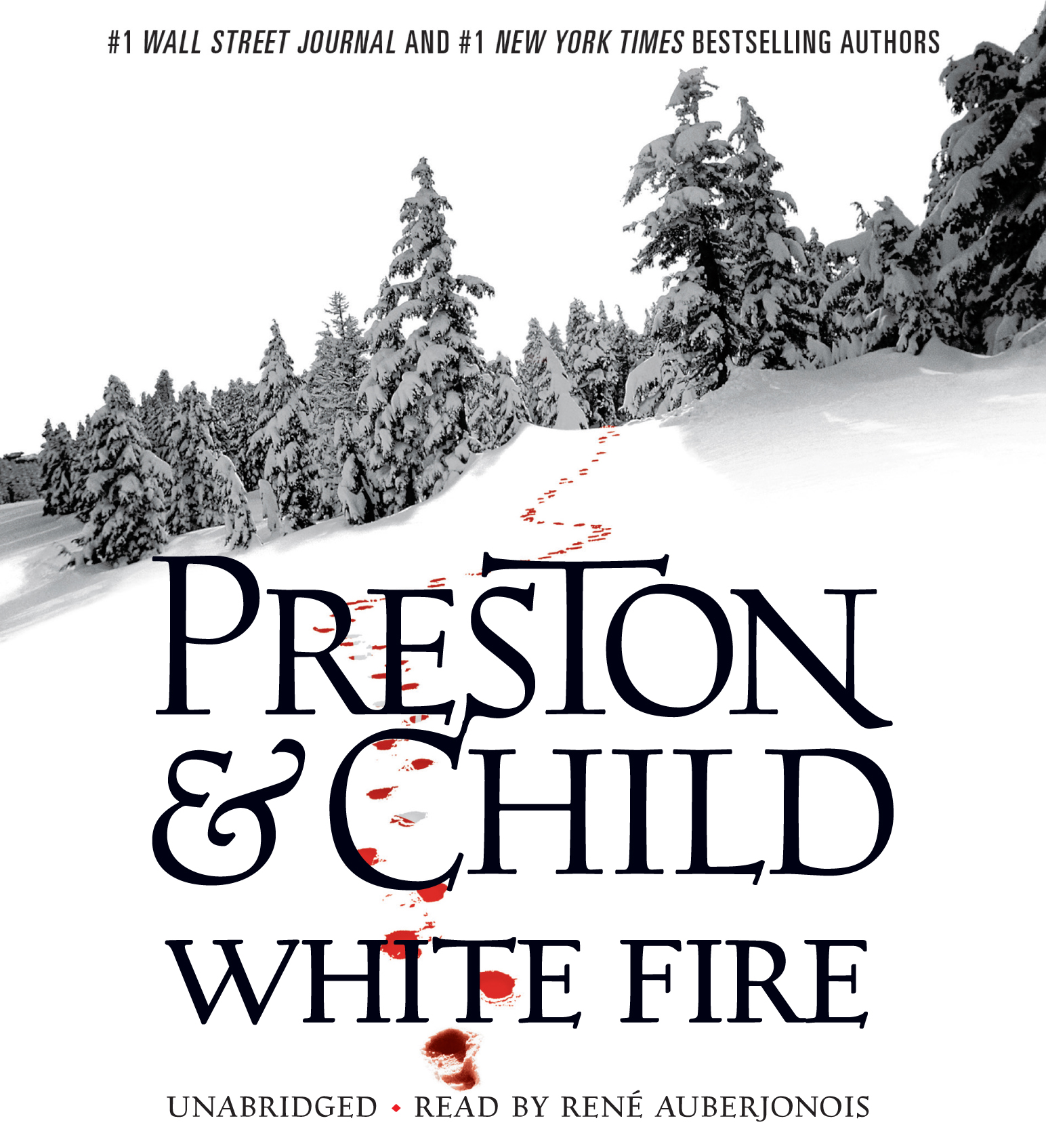
Douglas Preston is the best-selling author of 30 books, including the upcoming novel, White Fire, with his longtime collaborator Lincoln Child. I met Preston and Child at ThrillerFest VIII and learned a great deal from both of them. Below is my interview with Preston; I hope you enjoy it. Make sure to pick up a copy of White Fire, coming out November 12.

Many bestselling authors – Lee Child, James Patterson and Steve Berry, just to name a few – weren’t always writers; it was something they pursued later in life. In what field were you working prior to your first book being published, and what inspired you to take a chance at being an author?

My first job out of college was editing the throwaway newsletter published by the American Museum of Natural History. I found that editing other people’s work was not all that much fun. I wanted to write my own stuff. So I started writing for the newsletter, and then I was given a column in Natural History magazine to write about the Museum. Finally, I got a call from an editor at St. Martin’s Press named Lincoln Child, who suggested I write a book about the Museum. That was my first book, Dinosaurs in the Attic. Linc suggested we collaborate on a thriller set in the Museum, which became Relic, and the rest is history…

Many of us have fond memories of books that changed us in some way. Are there any books or authors that have greatly influenced you over the years?

Very much so. The books that profoundly affected me are, in no particular order, The Sirens of Titan, War and Peace, The Woman in White, Asimov’s Foundation series, Abbey’s Desert Solitaire, Charlotte’s Web, A Wrinkle in Time, the “Yes I will yes” chapter of Ulysses, The Andromeda Strain, and Patrick O’Brian’s Aubrey/Maturin series of novels.

In your free time, what kinds of books do you like to read and who are your favorite authors?

These days, I like to read nonfiction, mostly in the areas of science and biography. Right now I’m reading The Mind of the Raven by Bernd Heinrich. I recently read a fascinating biography of J. Robert Oppenheimer, father of the atomic bomb, called American Prometheus. One of the greatest nonfiction books ever written, in my view, is The Making of the Atomic Bomb by Richard Rhodes. And on the same subject, another superb book on the Manhattan project is 109 East Palace by Jennet Conant.

In addition to novels, you’ve written non-fiction work as well. Do you prefer one over the other and how does the writing experience for each differ?

They’re so very different. When I’m writing a novel I curse the fact that there’s no structure and I have to pull it all out of thin air and wish I were writing nonfiction. When I’m writing nonfiction, I feel imprisoned by the facts and wish I could just make it all up or bring in a serial killer to spice things up.

Your first book with Lincoln Child, Relic, was critically acclaimed and a New York Times Bestseller. How was it writing the first novel with Lincoln, and how has your collaborative writing process evolved over the years?

A writing partnership is like a marriage, except with Linc the sex is nonexistent… It can be difficult, but Linc and I over the years have learned how to disagree. The important thing is we trust each other implicitly. If Linc says to me, “This thing you wrote stinks,” I may get upset, but I have to believe him. That’s why we have a partnership—to tell each other the hard truths.

Your popular protagonist, Aloysius Xingu L. Pendergast, debuted in Relic and he’s going to be in your new novel, White Fire, coming out in November. What’s the premise of the new book, and what do you have in store for your readers?

White Fire opens with an historical event: a real (and fateful) dinner at the Langham hotel in London during which Oscar Wilde and Arthur Conan Doyle met each other for the first and last time. What they discussed has been lost to history, but it seems Wilde made crucial suggestions to Doyle about his newly invented character of Sherlock Holmes, and Doyle for his part told Wilde all about police procedure, which inspired Wilde to write The Portrait of Dorian Gray. Then our novel moves to the present-day. Pendergast has to rescue Corrie Swanson from jail in an upscale Colorado ski resort, but just after he arrives, a serial arsonist strikes the town, burning down multimillion dollar mansions with the people still inside…

You’ve written trilogies and stand-alone thrillers. Do you find one more satisfying than the other? And when writing a trilogy, how do you keep track of all the details?

They both satisfy in different ways. With a trilogy we can go deep and spin out a vast, complex story with many subplots. It is a daunting task to keep track of everything. A solo novel is shorter and sweeter, and perhaps punchier in some ways. The middle novel in a trilogy is always difficult…

Meeting Douglas Preston at ThrillerFest VIII.

One of the hot topics at ThrillerFest this year was whether or not to outline a book. What are your thoughts on this issue? Do you plot out your novels in advance or do you simply have an idea and start writing?

Linc and I outline. We first create a general, narrative of the novel: how it opens, what happens, where it ends up. Then we outline maybe ten to fifteen chapters ahead, lengthening the outline as we write. I don’t know how writers can just start writing without knowing where they’re going, but some outstanding novelists do work that way. Tony Hillerman, one of my favorite mystery writers, never knew the ending of his books when he started, and yet he pulled off one great novel after another. I think every writer needs to find their own way of doing things. 

According to Goodreads, there’ve been nearly 125 books set in Maine – everything from John Irving’s The Cider House Rules to It by Stephen King. Being a resident of the Pine Tree State, why do you think this is the case?

Maine is dark and cold and beautiful and mysterious, with resolutely independent people. It has everything a writer might ask for in a vivid setting and compelling characters.

If you could offer aspiring writers once piece of advice, what would it be?

Write every day, seven days a week, if only for an hour at a time. And keep that hour sacred. Warn your friends and family to stay away. A writer must write, just as violinists must practice and Olympic athletes must train. That sounds obvious but you would be surprised at how many people want to be writers but don’t write very much.

Author Interview: Jon Land

Advertisements

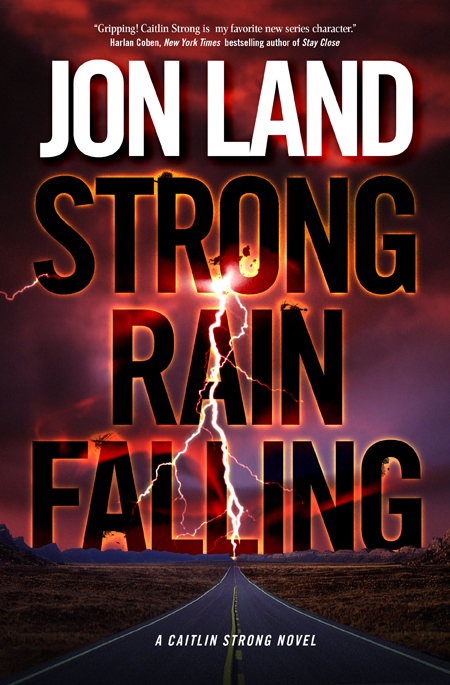
Jon Land is the bestselling author of over 25 novels, including the popular Caitlin Strong and Blaine McCracken series. I met him at ThrillerFest VIII and recently completed his newest novel, Strong Rain Falling. Jon is a terrific author and if you haven’t read his work, make sure you do. Below is my interview with him; I hope you enjoy it.

Your books involve a variety of characters and multiple plots. To keep things straight, do you draft an outline before sitting down to write a book or do you just start and see how it unravels?

My books definitely take on a life of their own, almost from the very first page. I’m a fly-by-the-seat-of-my-pants writer in all respects. I operate on the theory that if I don’t know what’s going to happen next, then the reader can’t possibly know. I can get away with this because I trust my characters to take me where they want and need to go. I’m normally about 100 pages ahead with where I’m headed in my mind, never much more than that. As the book moves forward, the challenge becomes making the connections between apparently disparate events and plots—it’s the challenge, but also the fun along with a journey of self-discovery. I have no idea how I do it, although I suspect it has something to do with a level of insanity. (laughs) But the result, unfortunately at times, is my first drafts tend to need lots of work. In fact, I’d venture to say that one of my greatest strengths as a writer is actually rewriting, often based on my own objective read of what I’ve created. For me, first drafts are about getting it down and getting it done. Each successive draft hones and polishes the material further. I throw a bunch out, I add a bunch more—sometimes even entirely new characters, subplots and scenes if I sense a weakness or flaw. I’m also blessed with a terrific editor, Natalia Aponte, who’s always pushing me to do better, to make my Caitlin Strong books, and all my books for that matter, both structurally and emotionally complete. The thing I like to stress here is that no process works for all writers. We all have to find what works for us.

We all have authors and books that inspire us. Are there any specific writers or books that greatly influenced your reading or writing habits?

Well, The Exorcist was the first book I read cover-to-cover in a single day, a single sitting actually. Reading Robert Ludlum’s The Holcroft Covenant (along with The Matarese Circle) taught me more about what makes a great thriller than anything else. The Boys From Brazil taught me the importance of a great “What if?” question. The Stand showed me the wonder of taking the reader out of his or her world and into the world we fashion on the page. Marathon Man made me realize just how much caring about the characters means. I can quote portions of that book, just as I can from the others I mention here and far more. As far as strictly favorites, Lee Child and James Lee Burke are the authors I most look forward to, with plenty of others not far behind. David Morrell, who never writes the same book twice. Stephen Hunter, who’s a maestro when it comes to action scenes. Michael Connelly for writing books that are impossible to put down. And I’ve recently discovered John Hart who seems incapable of writing a bad sentence or creating a character who doesn’t command our interest.

Some authors love research while others find it to be a chore. Do you enjoy it, and what was one of the most interesting pieces of information you uncovered while conducting research for a book?

No, I don’t enjoy it and that’s why I don’t do the research first—I do the majority of it as I’m writing because it’s only then that I really know what information I’m going to need. Whenever I’m in doubt about something, I just make it up the way I believe it to be and then make the fixes afterwards. The problem with doing research in advance is what I call the Clancy Effect where you write the book around your research instead of weaving only the information the reader needs into narrative. That’s the real key because otherwise you risk slowing your story’s pace and losing the reader in the process. In Strong Rain Falling, the most interesting thing I learned was how the huge problem of drug smuggling out of Mexico, the cartels and everything else, actually began. Turns out it goes back to the influx of Chinese immigrants in the late nineteenth century who brought opium with them into Mexico. By the turn of the century, poppies were being grown all over the country and actual drug smuggling began soon after through a governor named Cantu who was bringing it into California through Baja. Truly fascinating stuff.

Strong Rain Falling, your newest novel, is the fifth Caitlin Strong book. For those that haven’t read it yet, what does this new adventure have in common with its predecessors and how does it differ?

That’s a really good question. In common I think it has a great story that places Caitlin and company against really bad guys (well, a female villain this time out) planning to do really bad things that will have catastrophic effects on the country unless they’re stopped. In that respect all the books in the series are pretty much interchangeable which is kind of the case in all successful series fiction. Where each book in the series differs is in the emotional growth of the characters in the face of whatever challenges they’re facing. I made a decision with my Caitlin Strong books from the get-go that I was going to age the characters in real time, not book time. In other words, they were going to evolve emotionally from one book to the next and I think in addition to having the fastest pace of any entry in the series, Strong Rain Falling features the most emotionally complex story. That’s because we really get to see both sides of Caitlin and Cort Wesley Masters thanks in large part to the challenges that arise with their version of a nuclear family that includes Cort Wesley’s two teenage sons. But even more I love the nature of confronting Caitlin for the first time with a female villain who’s every bit her equal as a strong and independent woman. They only have two direct confrontations, but those scenes are priceless in what is essentially a battle of equally strong (no pun intended!) wills. But there’s also a historical connection between these two women that makes the antagonism between them even richer.

In Strong Rain Falling you go back and forth in time throughout the book. How do you effectively balance the present with the past and weave them together?

The historical subplots are my favorite part of the Caitlin Strong books and the factor that most distinguishes them from the crowded field for thrillers. Writing about the Texas Rangers intrinsically means writing lots about the drug trade that originates, and to an extent dominates, Mexico. So I finally asked myself, where did it all start? I couldn’t recall ever seeing any other writer answer that question and it turns out the Mexican drug trade actually began in the 1870s with a flood of Chinese immigrants who brought opium along for the ride. Just a few years later, farms growing the poppy flower needed to produce opium were sprouting up all over the country. And not long after that, right around the turn of the century, you have the actual birth of drug smuggling with opium being brought into the western United States through the Baja region. In fact, there was a Mexican provincial governor named Cantu (who’s actually a character in the book) who was lauded for building roads and other infrastructure projects when the real reason he built them was to facilitate his smuggling operation!

How did you get into writing and did you have any mentors who helped you along the way?

That’s a great question to start with and the answer, I don’t think, is very typical for those of us lucky enough to be in this profession. I didn’t actually start writing until I was a sophomore at Brown University. First off, that was probably a positive thing since it’s so easy for fledgling writers to get discouraged when they start out in high school or even before. I’d always enjoyed the process, dating all the way back to junior high, but I never had even considered the notion of pursuing a career. For me, law school was as certain after college as college was after high school. But the writing bug bit me while at Brown, and I started writing magazine articles for periodicals like People and The Saturday Evening Post and fell in love with, confession time!, seeing my name in print. Around the same time, I fell in love with reading again, particularly thrillers, and figured why not write one, specifically for my Senior Honors Thesis in Brown’s Honors Program. Two wonderful professors, George Monteiro and the legendary Elmer Blistein, took a huge chance by sponsoring me, but I ended up finishing the book. It was god-awful for the most part, but I’d proven to myself that I could do it. The next book I wrote was the first one that ended up selling and, to this day, I credit Brown to a huge degree in providing me the academic freedom and opportunity to chase my dream.

You also have the Blaine McCracken series, which you recently returned to with the award-winning Pandora’s Temple. How was it revisiting a character you hadn’t written about in several years?

The biggest challenge I faced was how to age him and I decided to be true to the background and mythology of the series. As a deep cover operative who cut his teeth in Vietnam’s Operation Phoenix, he’d have to be around 60 years old unless I wanted to cheat a la Robert Parker who made the mistake of making his wondrous Spenser a Korean War vet meaning he’d be around eighty-five now and still kicking butt. But cheating the reader was no way to reintroduce McCracken and had I made him, say, forty-five, he’d have been killing Vietcong at the age of ten. So I decided to age him normally and introduce him in Pandora’s Temple about to celebrate his 60th birthday. The phone has pretty much stopped ringing and time seems to have passed Blaine by, when the call that brings him back to action comes. And that’s one of the things that brought him back to life for me. I realized he made the perfect metaphor for so many successful businessmen and women who find their jobs outsourced or phased out when they reach the same age, thanks to the current economy. I knew I had a theme that would create an emotional resonance in Pandora that would help elevate it above the run-of-the-mill thriller and make it not just a worthy addition to the series, but maybe the best one yet. Lucky number ten! Once I realized that, I was able to swiftly recapture McCracken’s voice and his sharp, thoughtful exchanges with his right-hand man, the seven-foot indestructible and wise Johnny Wareagle. It happened organically and didn’t need to be forced at all, although I did go back and add some scenes to help recapture the magic between them that helps define who they are and the eternal quest they find themselves on. Because at heart all great thrillers are quest stories and McCracken’s quest here is to find Pandora’s box because that’s the only way to save the world. But this time out in saving the world, Blaine is also saving himself from the scrapheap, and watching him come to embrace that opportunity as the story goes on imbues the book with just the verve it needed to do justice to a hero who’s been away from the page since 1998.

When writing a series, how do you keep things fresh for the reader? And how do you keep track of all the details from book to book?

I’ve kind of answered that already: I keep things fresh by keeping my characters fresh. By confronting them with new crisis and challenges that further enrich and expand who they are as people, in addition to characters. The thriller authors I don’t come back to or don’t read anymore create emotionally vapid landscapes where there’s no emotional stake in the plights of their heroes. We need to care about them the same way we care about real people and if we don’t the book ultimately fails. I don’t really keep track of all the details in the Caitlin Strong series from book to book because I always assume (or hope anyway) the majority of those picking the latest up will be meeting her for the first time. The mark of any good series is to be able to pick up any entry in it first and not feel you’ve missed anything or need to know that isn’t provided. And that book ideally should make you want to go back and read all the ones that came before and all the ones that came after.

You’re an active member of International Thriller Writers and currently serve as its Marketing Chair. How has this organization benefited you as an author and do you recommend that aspiring writers join an organization such as this?

Well, “such as this” is a deal breaker because there is no other organization as concerned about its members and as responsive to their needs as ITW. It’s benefited me as an author tremendously, both for all the quotes my far more successful writer friends have provided and, even more importantly, creating a community of peers whose company I enjoy as much as I enjoy anyone’s. In fact, I’d go a step further and say that the five days of ThrillerFest are about my favorite days of the year. It’s interesting that some of the best and most famous names in our genre and our industry—David Morrell, Lee Child, James Rollins, Steve Berry, Doug Preston, R.L. Stine, Sandra Brown, Heather Graham, the list goes on—are also some of the best and nicest people I’ve ever met.

Do you have any new and exciting projects in the works?

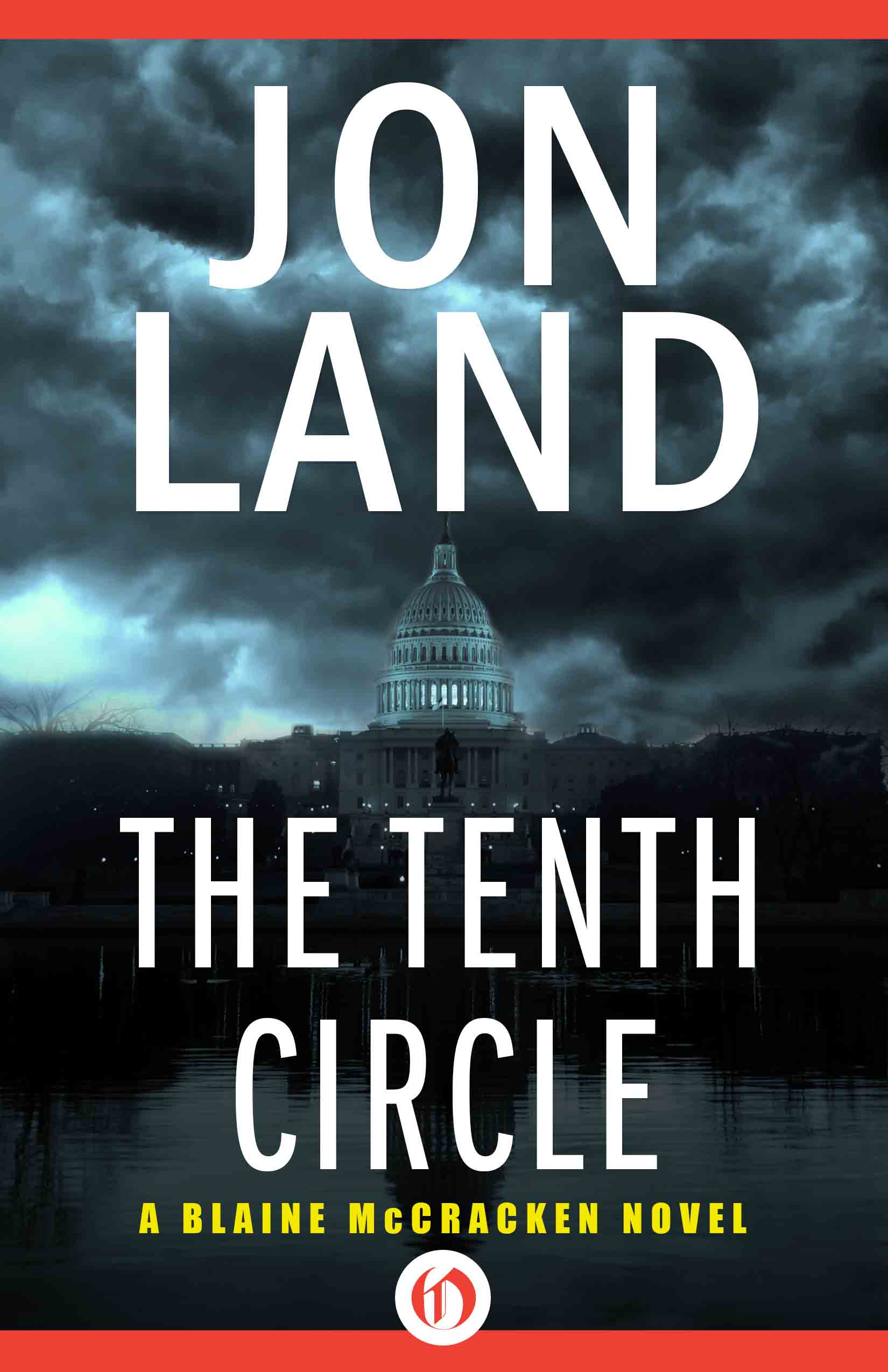
The next book’s ready to come out. It’s called The Tenth Circle and it’s the follow-up to Pandora’s Temple once again featuring Blaine McCracken, my original series hero I’ve fallen back in love with. Beyond that I’m actually working on three books: a sequel to my bestselling The Seven Sins, a terrific project I’m doing in tandem with the great Heather Graham called The Survivor, and I’ve just completed the first draft of Strong Darkness, the next book featuring Caitlin. But, oh boy, you know what I said about first drafts earlier and I’ve got my work cut out for me on this. Then again, that’s nothing new!

Author Interview: Taylor Stevens

Advertisements

Taylor Stevens is an award-winning New York Times bestselling author whose debut novel, The Informationist, took the literary world by storm in 2011. Since then, she’s published two more novels starring the popular protagonist Vanessa Michael Munroe: The Innocent and The Doll. I had the pleasure of meeting Taylor at ThrillerFest VIII in July, and she was kind enough to grant me the interview below. I hope you enjoy it.

You grew up in a communal apocalyptic cult where, as a teenager, you entertained the children with stories. What inspired these stories and did you use them as a way to briefly “escape” your dire surroundings?

Imagination was very much an escape mechanism. We didn’t have access to the outside world, so basically no novels, no television, no outside music and very, very few pre-screened movies. We spent a lot of time doing mundane manual labor—washing laundry, cooking, taking care of younger children—or out on the streets begging and that often meant considerable hours getting to/from our begging spots with nothing to keep our minds engaged in-between. Telling stories turned me in into the de facto entertainment and that’s pretty much how it started.

You’ve said that your scholastic education stopped at the age of 12 when you were separated from your parents. Having met you and read your books, I can say, without a doubt, that you’re a very intelligent woman. How did you go about catching up on those lost years of learning after you broke free from the cult in your 20s?

For some things, I still haven’t. There’s a huge difference between intelligence and education and although I’m very fortunate that I have the ability to self-teach through absorption, there are some things that I’m resigned to never grasping. For example, since math for me stopped when I was around 11, I still struggle desperately with math concepts. Math is one of those things that you can’t just skip three years and pick up where you left off by reading a few books. Even though I understand everyday mathematical concepts well enough to, say, manage money, I’m so bad at math in general that even using a calculator I still have to add numbers three times just to be sure I get the same answer twice. I read a lot—I’ve read so many text books cover-to-cover—that in many subjects you could say I’m better read than many people who’ve gone to college. But it’s splotchy and not exactly an “education” in the strictest sense. I couldn’t put it on a resume. I’m still kind of screwed in that regard if this whole writing thing doesn’t work out.

Being a mother, I’m sure finding time to write must be hard. How do you overcome this challenge and do you set out to type a specific number of words every day?

I do have to juggle around their needs and there are times when this is easier said than done, but it’s far easier now than it used to be when they were pre-school and kindergarten ages.  There are also chunks of time, for example during research and promotion—which in my case often means having to travel—as well as key points when contributing to a manuscript in its journey through the production pipeline, that it’s just not possible for me to put new words on a page. My goal, when I’m actually writing, is 1000 words per day, 6 days per week. I don’t always hit it, but that’s the goal.

The Informationist, your debut novel, was a bestseller that was well received by the public and critics alike. How did it feel when James Cameron’s production company, Lightstorm Entertainment, picked up the film rights? And will you play an active role in the development of the screenplay?

That was an incredibly surreal experience. I believe the exact words out of my mouth when my film agent gave me the news were, “I’m sorry. I don’t think I heard you right. Do you mean James Cameron as in “Titanic” James Cameron?” Whether or not The Informationist actually gets turned into a movie still remains to be seen. Last I heard he was working on Avatar 2, 3 AND 4. That’s a long wait. Generally speaking authors have no input on any aspect of movie making. There are exceptions—I expect if I wrote Twilight or Harry Potter things would be different—but I really respect James Cameron as a film maker and love what he’s done with the female characters in his films. I trust him and am just as eager as my fans to see what he does with Michael Munroe.

Do you draft an outline before sitting down to write a book or do you start with an idea and see where it takes you?

I’ve done it both ways. With The Informationist it was very much by the seat of my pants and it was probably more of a surprise to me how the story unfolded than it was for my readers. Vanessa Michael Munroe as a character was definitely a by-product of pantsing, because I certainly didn’t have her figured out before I started writing. But it also took me roughly three years to write The Informationist. Granted, it wasn’t my full-time job, but still. I do outline now.  This came about as a matter of desperation—I didn’t know if I could write another book, and I had to prove it to myself by first telling myself the story. But what I found from doing that was that I could write a whole lot faster when I knew what was happening before I actually began.

As it is now, because I work on such tight deadlines, I can’t afford to spend a month or more writing in one direction only to find out it didn’t work and have to go back and start again so I have turned into an outliner. I have heard of some authors making copious notes, writing out family histories for the characters and such, but I have never done that. My outlines are something closer to simply talking out the story to myself, a “tell don’t show” proposition that runs into about thirty pages. Once the writing begins, those thirty pages will turn into about 500 or so, which will be cut down to around 450 and that will turn into a 320-page book, give or take.

My favorite book of yours is The Innocent because the subject matter was fascinating and it featured great emotional depth. Clearly, this was inspired by your experience growing up in a cult. Was writing this novel a cathartic experience for you? 

I actually get this question quite often and it always makes me smile. Drawing directly on my background wasn’t necessarily easy, but I’d long come to terms with and already made my peace with what happened growing up—I don’t think I could have produced the book otherwise. Mostly, it seemed like a perfect opportunity to showcase more of Vanessa Michael Munroe’s skill and badassery while at the same time offering readers access to a firsthand account of cult life that most thriller writers don’t have. If there was any part of the experience that was cathartic, it was in finally being able to give a voice to the hundreds and thousands of kids who were raised like me—to raise awareness of the issues and prejudices we face. There is so much misunderstanding and judgment against us simply because of where we were born and how we were raised, choices that were made by our parents, not us. Our story has been hijacked by the cult, by the media, by sociologists, by basically everyone. It was fantastically satisfying to finally have our story told from our point of view—not some twisted version put out for ratings and sensationalism.

What do you find most satisfying about being an author?

Every day I wake up grateful that I get to do what I do for a living. I consider each additional book to be a stay of execution which allows me, for one more year, to still get to plan my own schedule, spend hours alone in relative quiet, and be able to be available to my children whenever they need me. I’m completely ruined for real life. I don’t know that I could ever hold a corporate job—not that I couldn’t do the work, I just don’t think I could handle the lifestyle that comes with it.

In The Doll, you wrote the following line: 

“Munroe focused on the ground, processing. He’d given her what she needed to know, and she in turn had scattered seed that might lay fallow or might, if she was lucky, eventually sprout into saplings strong enough to split the hardened topsoil that kept him as the Doll Maker’s doer.”

As far as I’m concerned, you’re one of the most talented authors when it comes to metaphor usage and this sentence is a perfect example. Do you spend a lot of time coming up with these or do they organically flow out of your writing?

Wow, thanks for the compliment. I’m blushing. My understanding of grammar is still stuck in 5th grade and 5th grade was a long, long time ago so, if you asked me to explain what a metaphor is, I’d probably just give you a blank look. Most of what I write just comes from instinct, from trying to translate emotion and feeling into words that make sense to other people, and then attempting to craft those words with as little corniness and as few reading hiccups as possible.

What’s the most challenging part of writing for you? 

The initial draft, for sure. This is where the actual scenes are fleshed out, the characters are built, and the plot is intertwined. It’s torture. When it comes to the nitty-gritty: action sequences are the hardest, especially when they involve multiple characters. Conversations are the most fun and go the fastest—that’s when the characters get to come alive and their conflicts play against each other.

Oscar Madison once said, “I don’t like writing. I like having written.” Do you identify with this sentiment or do you enjoy the writing process from start to finish?

Oh, yes, I absolutely identify with that sentiment. So many authors have been credited with that quote, and I’ve heard it used by so many friends, that I’m beginning to suspect it must be a universal truth among writers. Personally, I’m not really what I’d consider a “creative.” I’m far more comfortable with things like spreadsheets and data entry than crafting people and places and lifetimes out of nothing. It’s one thing to be able to make up a story with words, using broad brush strokes, and another entirely to bleed it out on paper in excruciating detail, so for me, developing the first layers of writing a book is incredibly difficult. Editing and re-writing after the initial creative work is finished is much easier and, since that’s the part of writing that makes a crappy story readable, that has worked out pretty well for me so far.

You just completed your fourth Vanessa Michael Munroe book, The Catch. What’s the story’s premise and in what countries is it taking place?

In The Catch, Munroe is headed back to Africa, this time to the north and east where she gets tangled up with a hijacked ship. Readers will have an opportunity to watch how she operates when she ends up in unfamiliar territory where she’s on her own and where she has no prior contacts or connections. And this time—unlike The Doll which entwined two timelines, two casts of characters, and two different plots—there is only one plot and one point of view. In The Catch, it’s pure Vanessa Michael Munroe, all the way.


Steven James’ Keys to Organic Writing

Advertisements

At ThrillerFest VIII I attended Steven James’ CraftFest session on organic writing, (i.e., writing without an outline). Following his presentation, James provided the audience with a handout summarizing his advice. For those interested in writing, below are highlights from the handout.

Keys to Organic Writing 

Let narrative forces rather than formulas drive your story forward. Imagine a giant ball of clay being held by a group of people. As one person presses against the clay it changes shape. 

The clay is your story; the people surrounding it represent the narrative forces pressing in on it. For example: 

  • Believability: The characters in your story need to act in contextually believable ways. All the time. 
  • Causality: Everything that happens in a story will be caused by the thing that precedes it. 
  • Inevitability & Surprise: The end of every scene must not just be logical, but, in retrospect, the only possible conclusion to that scene. Scenes will end in a way that’s unexpected and yet satisfying to readers. 
  • Escalation: The tension must continue to escalate, scene by scene, until it reaches a climax after which nothing is ever the same again. 
  • Scenes & Setbacks: If nothing is altered, you do not have a scene. If your characters solve something without a setback, you do not have a story – you have a setup for a story, an event, but that’s all. 
  • Continuity: Think of pace as the speed at which things are happening, think of narrative energy as the momentum that’s carrying them along. 
  • Story & Genre Conventions: Readers enter a story with expectations based on their understanding of story and of the genre they’re reading. You need to know the principles of storytelling and be familiar enough with genre conventions to meet or exceed your readers’ expectations without resorting to using cliches. 

When you know the right questions to ask, your story will unfold in unique, unpredictable and fulfilling ways. 

Escalation:

  • Does this scene ratchet up the tension of the one before it?
  • How can I make things worse?

Believability:

  • What would this character naturally do in this situation?
  • Is he properly motivated to take this action?

Causality: 

  • Is this event caused by what precedes it?
  • How can what I want to happen bow to what needs to happen based on the context?

Inevitability & Surprise:

  • Does this scene end in a way that’s both unexpected and yet inevitable?
  • How can I assure that readers don’t see the twist coming?

Scenes & Setbacks: 

  • Have I inadvertently included scenes just for character development?
  • Is there an interlude or moment of reorientation between each scene?

Continuity: 

  • Do my revelations happen at the right moments within the story?
  • Have I used foreshadowing to eliminate coincidences, especially at the climax?

Story & Genre Expectations:

  • What requisite scenes are inherent to this genre and to this story?
  • How can I render them in a way that’s not cliched?

Book Review – Seduction by M.J. Rose

Advertisements

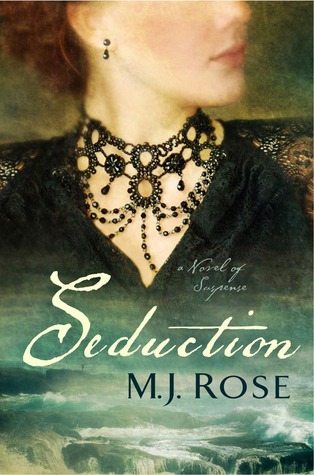
I recently read my first book by M.J. Rose, Seduction, and its compelling, suspenseful narrative kept me turning pages from start to finish. Rose’s ability to effortlessly switch between two storylines, filled with rich dialogue and palpable characters, kept me coming back for more. I was completely invested in Jac L’Etoile’s story arch, and I love how it intersected with Victor Hugo’s. Seduction was bursting with historical detail that kept me engrossed in the characters’ world, and the conclusion left me completely satisfied. If you’re trying to decide what to read next, I highly recommend you check out Seduction.

Below is the book’s synopsis, and make sure to read my interview with M.J. Rose to learn more about the author.

Synopsis

A gothic tale about Victor Hugo’s long-buried secrets and the power of a love that never dies . . . In 1843, novelist Victor Hugo’s beloved nineteen-year-old daughter drowned. Ten years later, still grieving, Hugo initiated hundreds of séances from his home on the Isle of Jersey in order to reestablish contact with her. In the process, he claimed to have communed with Plato, Galileo, Shakespeare, Dante, Jesus—and even the devil himself. Hugo’s transcriptions of these conversations have all been published.

Or so it has been believed . . .

Recovering from a great loss, mythologist Jac L’Etoile thinks that throwing herself into work will distract her from her grief. In the hopes of uncovering a secret about the island’s mysterious Celtic roots, she arrives on Jersey and is greeted by ghostly Neolithic monuments, medieval castles and hidden caves. But the man who has invited her there, a troubled soul named Theo Gaspard, hopes she’ll help him discover something quite different— transcripts of Hugo’s lost conversations with someone he called the Shadow of the Sepulcher. Central to his heritage, these are the papers his grandfather died trying to find. Neither Jac nor Theo anticipate that the mystery surrounding Victor Hugo will threaten their sanity and put their very lives at stake.

Seduction is a historically evocative and atmospheric tale of suspense with a spellbinding ghost story at its heart, written by one of America’s most gifted and imaginative novelists. Awakening a mystery that spans centuries, this multilayered gothic tale brings a time, a place and a cast of desperate characters brilliantly to life.

Author Interview: M.J. Rose

Advertisements

M.J. Rose is an international bestselling author of 13 novels and a founding member and board member of International Thriller Writers (ITW). I had the pleasure of meeting her at ITW’s ThrillerFest this summer. Her latest novel is Seduction, which I’ll be reviewing soon, and below is my interview with the author. Enjoy!

Continue reading

ThrillerFest VIII – Day 4

Advertisements

I picked up more than 35 books at ThrillerFest.

The fourth and final day of ThrillerFest was just as enjoyable as the ones that preceded it. As you can see from the photo above, I left the conference with a ton of books. Below are highlights, photos and videos from the final day of ThrillerFest, including the entire 43-minute interview with Michael Connelly. I’m attending next year’s conference, which I’m sure will be even better. Now I have to try and finish these books before next July. Wish me luck!

Does Speed Kill?

Does Speed Kill?

  • “Writing expository material in my books makes me feel like I’m running in mud.” – Andrew Gross
  • “I don’t like to write books that feel like screenplays.” – A.J. Hartley
  • “If you have a sprint from the beginning of the book to the end, without slowing down, there’s no depth to it at that point.” – Sheldon Siegel
  • “If my wife stops reading my book in the middle of a chapter, I ask her why.” – John Gilstrap
  • “I love to go to plays to see where the acts end and whether or not people get up from their seats during the intermission. It’s a great way to learn about pacing.” – Heather Graham

Meeting T. Jefferson Parker.

T. Jefferson Parker Interview

  • “I decided to be a reporter so I could pursue my passion for writing and in my free time work on novels.”
  • “I didn’t want to be a series writer. I didn’t see myself in that place, at that time.”
  • “The great thing about being a writer is you can be sitting on the boardwalk in Laguna Beach, minding your own business, and the main character in your next novel can walk right in front of you.”
  • “When it comes to the writing process, I’m a Monday through Friday kind of guy, from 7 to 5 pm. If I can get five pages done, it’s a good day.”
  • “The hardest part for me is not writing. It takes me three months to come up with an idea good enough to start writing. Then it takes me about six months to finish the first draft, and another three months to make it as good as I can before I send it off to my agent.”
  • “The shortest outline I wrote was on a bar napkin. After explaining the outline to the publisher, my agent called me the next day and said, ‘I don’t know what you wrote on that napkin but the publisher just bought it.’”
  • “For Laguna Heat, I threw away 2,500 pages over a five year period. I never worked so hard to make a book readable. In total, there were six drafts.”
  • “I love to read; it’s nourishment for me. I usually have two or three books going at a time. If I didn’t read while I write, I’d never read.”
  • Young writers’ first goal should be to find their own voice, and stop trying to write like their heroes.”
  • “I still feel that my best work is ahead.”

Are Young Adult Novels Meant For Adults?

Are Young Adult Novels Meant For Adults?

  • “A lot of my readers are adults because they grew up with me. I’m nostalgia to them. I’m Hall & Oates.” – R.L. Stine
  • “There was a statistic saying that 52% of YA readers are adults. But if you remove The Hunger Games and Harry Potter, I’m not sure that’s true.” – Michelle Gagnon
  • “I wrote my first young adult book in five weeks.” – Barry Lyga
  • “I write YA because that’s what I like to read.” – Linda Gerber
  • “Young adult novels have a direct, powerful and emotional point of view.” – Allen Zadoff
  • “On social media, 30% of my followers are adults.” – Lissa Price
  • “I don’t think it’s so remarkable that adults read YA. We all used to be teenagers.” – Kat Rosenfield

Michael Connelly being interviewed by Jon Land.

ThrillerFest – AgentFest

Advertisements

During the second half of day two of ThrillerFest was AgentFest, which is best described as speed dating between aspiring authors and agents. Hundreds of authors looking to get published lined up in four or five rooms waiting to have five minutes or less to pitch a book to a variety of agents. The agents were very nice to the authors, and they had timers to make sure each person was given a fair shot. This went on for three and a half hours. In the end, some authors were asked to email the agents a few chapters or an entire manuscript, while others were kindly rejected. The rooms were filled with so much hope and anxiety it was palpable. In case you’re curious, I didn’t pitch anything; my books aren’t far enough along to warrant a review, but next year, who knows.