
Mobile horror has its own grammar. Most of it comes down to a confined space, a hostile presence that reacts to sound, and a handful of objects you need to find in the right order. The genre borrows heavily from the PC survival horror boom of the mid-2010s, when scares came from resource scarcity and audio cues rather than gore.
What makes these games stick is restraint. You get almost nothing: no weapon worth using, no map, no checkpoint generosity. The tension builds because the player understands the rules long before they understand the house.
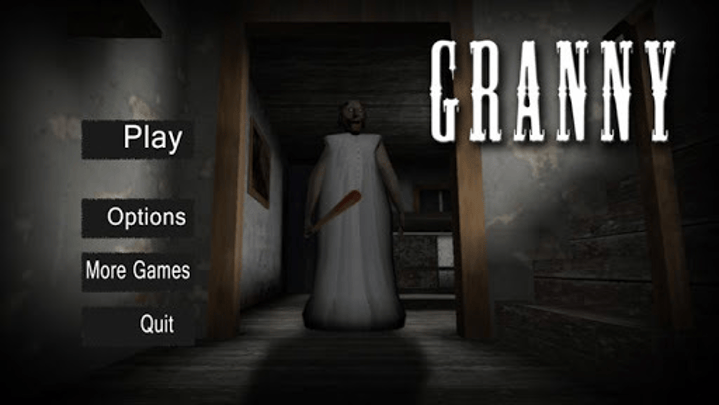
Granny, listed in the Arcade category and published under the name DVloper, is one of the clearest examples of that design philosophy working on a small screen.
The premise is one sentence long
Granny keeps you locked in her house. You have five days to get out.
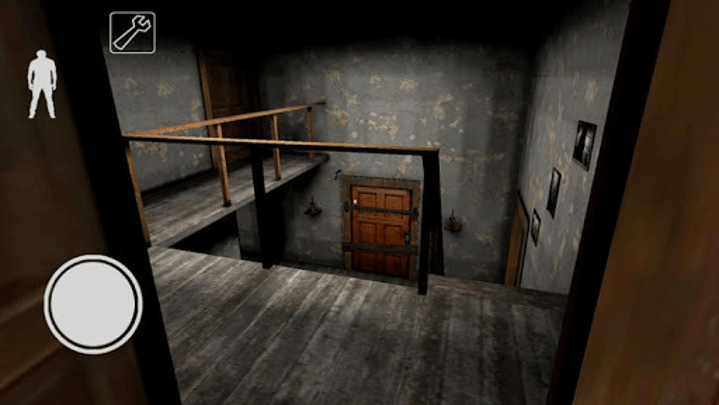
That is the entire setup, and it is enough. The house is a multi-floor maze of locked doors, hidden keys, and tools scattered in places that require some backtracking to reach. Every day you fail, the counter drops by one.
She hears everything. Drop something on the floor, and she comes running, which turns the simple act of picking up an object into a decision. Do you carry the crowbar upstairs now, or do you leave it and risk forgetting where you put it?
Hiding is your only real defense. Wardrobes and the space under beds will keep you alive while she sweeps a room, assuming you got there before she rounded the corner.
Why the audio design does the heavy lifting
Plenty of horror games lean on jump scares. Granny leans on footsteps.
The sound of her moving through the house above or below you is the primary information channel, and it is also the primary source of dread. You learn to track her by creaking floorboards, which quietly trains you to listen rather than look.
This is where the game runs into a problem on phones. Phone speakers flatten everything into the same mid-range mush, and many players run mobile titles muted or with ambient room noise. Lose the audio, and you lose roughly half the game.
Headphones solve this. So does a desktop with decent speakers, which is one reason Granny has a second life among PC players who found it through streamers rather than the Play Store.
Granny on PC changes how you read the house
Running the game on Windows through an Android emulator shifts a few things. The bigger screen makes the house layout legible in a way a 6-inch display never quite manages, and keyboard controls give you precision touch swiping can’t match.
That precision matters most during the panic moments. Backing into a wardrobe with WASD while she is three feet away is a different experience than fumbling at a virtual stick.
BlueStacks handles the game without much fuss for most people. LDPlayer is the other common choice and tends to be lighter on older machines.
One thing worth checking first
Granny is an ad-supported title, and the game’s own description notes it contains advertisements. That mismatch between the ad window and the emulator’s display resolution is the specific snag reported by anyone who’s done a granny download pc only to watch the screen freeze between attempts. Setting the emulator’s resolution to a standard 16:9 profile before the first launch usually prevents it.
Audio routing is the other thing to confirm. If footsteps don’t come through clearly, the game becomes close to unplayable, so test that before committing to a five-day run.
The type of player this setup suits
The real test comes on day four, when the house stops feeling like scenery and starts feeling like a liability. Every door you haven’t opened is one you now have to, and the crowbar you left on the first floor is suddenly half a staircase away. That’s the moment the desktop version earns its keep: keyboard and mouse let you back out of a room the instant you hear her, instead of fumbling for a virtual stick while she’s already in the doorway. It’s a narrow advantage, but it’s the exact one that made players start plotting their escape routes on paper in the first place.