
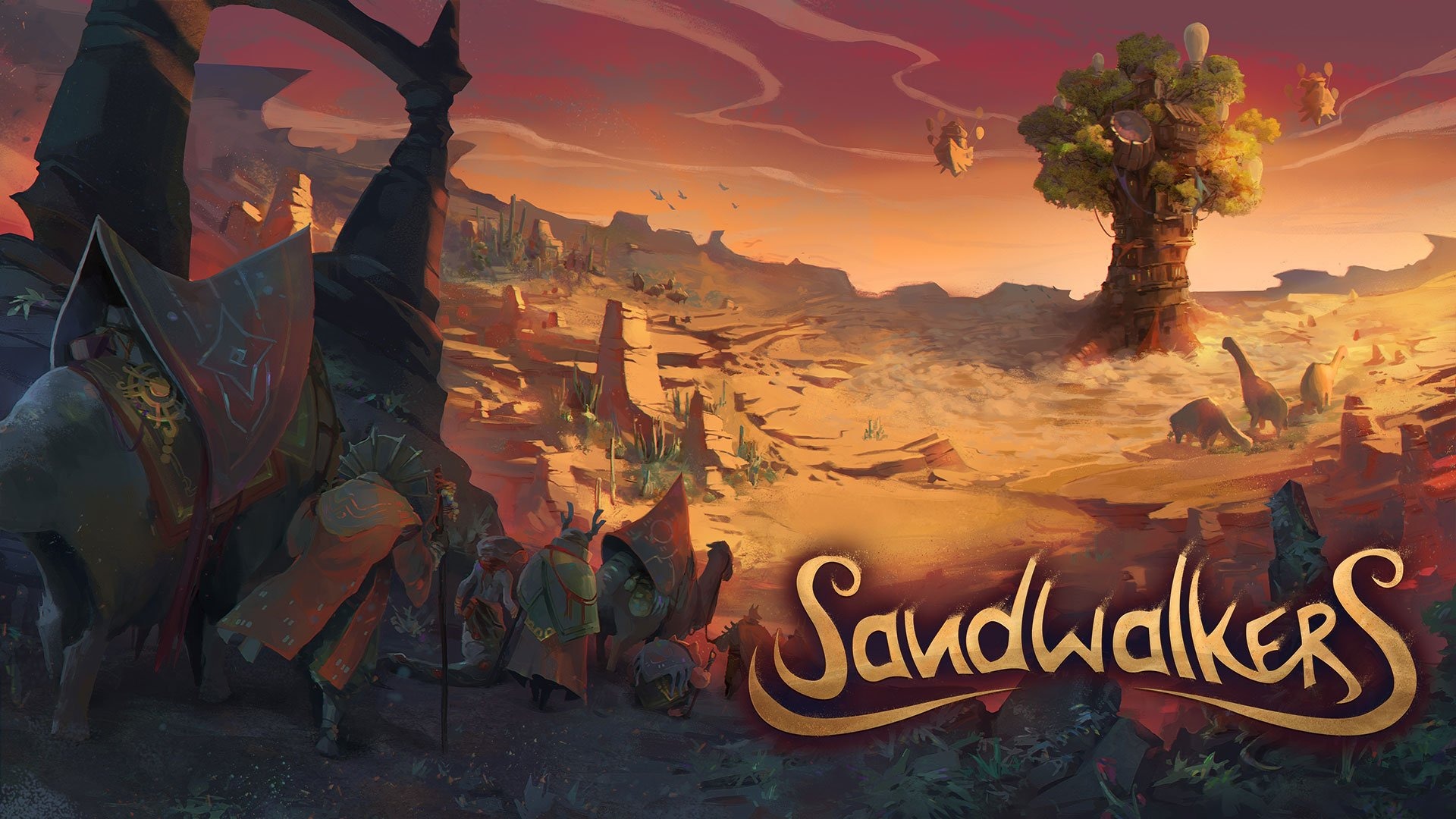
Every once in a while, an indie strategy game comes along that doesn’t just want you to win—it wants you to feel the grit in your teeth and the dry heat in your lungs.
That was my immediate takeaway within my first hour of Sandwalkers, the turn-based roguelite exploration RPG originally brought to life by Goblinz Studio and ported to Xbox by Red Art Games. Billed somewhere between the caravan-managing despair of The Banner Saga and the tile-by-tile resource dread of Curious Expedition, Sandwalkers throws you headfirst into an ecologically shattered world and asks a simple question: How far into the storm can you push before your faith runs dry?
Having spent the past week shepherding caravans through acid squalls and monster ambushes on Xbox Series X, here is my honest look at how this atmospheric trek holds up on the couch.
The World: Planting Trees in a Broken Sky
The narrative backbone of Sandwalkers is easily one of its greatest strengths. You belong to the Mka, an anthropomorphic tribe inhabiting a sanctuary city known as Lecwasi. Outside your walls lies the Phithi—a swirling, centuries-old meteorological nightmare that has fragmented the surrounding tribes, turned the weather violently erratic, and left the world in ruins.
Every ten years, the Mka send out an expedition into the unknown. Your goal isn’t just to loot dungeons; it’s to re-establish broken diplomatic ties, map out survival routes, rescue stranded refugees, and ultimately plant new “tree cities” to revive the Mother Tree, Umama, and fix the fractured climate.
The roguelite hook here is wonderfully woven into the lore: regardless of whether your squad accomplishes its mission or starves three tiles away from safety, you send your hard-earned knowledge back to the capital using crystospheres strapped to giant traveling beetles. Those memories become your meta-progression currency, unlocking better starting perks, specialized jobs, and tactical edges for the next caravan heading into the dust.
The Journey: Counting Rations and Praying for Rain
Moment-to-moment gameplay is split between overland exploration and turn-based combat. On the world map, you maneuver your four-person caravan hex by hex through a fog of war.
Every single step costs supplies. Terrain matters: dragging an expedition across jagged badlands or sweltering sand dunes devours your provisions much faster than following a worn path. When your rations hit zero, your caravaneers start burning through their actual health bars, turning simple navigational errors into death sentences.
Layered on top of that is the dynamic weather system and the Hope mechanic:
- The Weather: Heatwaves dehydrate your squad, sandstorms blind your line of sight, and acid rain strips away equipment durability and shield reserves. You are constantly making trade-offs: Do we detour toward a dilapidated watchtower to reveal the map, or do we rush straight toward that oasis before the storm kicks in?
- Hope: It’s essentially your party’s collective sanity and willpower. Make smart diplomatic calls, rest at shrines, or feed your people well, and high Hope rewards you with combat buffs. Let morale crater, and paranoia and panic will cripple your expedition faster than any bandit blade.
It’s a deliberate, slow-paced loop that rewards methodical planning. If you’re the type of player who loves checking supply tallies and hedging risks against a cruel map, this game scratches that itch deeply.
The Clashes: Small Grids, Sharp Decisions
Eventually, you will stumble into hostiles—whether that’s wandering scavengers, mutated predators, or rogue mages. Combat shifts the perspective to a classic side-view 2D tactical grid.
The battle mechanics will feel instantly comfortable if you’ve played modern deck-builders or retro turn-based RPGs:
- Speed and Initiative: A clean turn-order bar at the top dictates who acts next.
- Shields vs. Flesh: Units possess regenerating shields and a separate pool of actual HP. Shields automatically recover after battle, but lost meat points stay gone until you rest or consume rare curative items. Keeping damage localized to shields is the golden rule of survival.
- Class Synergies: Your roster consists of distinct archetypes—from heavy-hitting Protectors anchoring the frontline to agile Scouts, Hunters tracking down beasts, and Archaeologists deciphering forgotten relics. Synergizing damage-over-time effects (like venom), damage reflection, and area-of-effect strikes is where the combat really sings.
If there’s a knock on the combat system, it’s that encounters can start to feel a bit repetitive in the mid-to-late runs. Once you find an overpowered team synergy—especially teams built heavily around crowd control and AoE abilities—standard mob skirmishes begin to feel more like a checklist than a puzzle. But boss encounters and sudden environmental modifiers do a solid job keeping you on your toes.
How Does It Play on Xbox?
Playing deep, menu-heavy PC-style strategy games on a living room console can sometimes be a disaster. Thankfully, the Xbox port handles the transition reasonably well:
- Presentation: On a 4K TV via Xbox Series X, the hand-crafted pixel art is gorgeous. The creature designs, stylized nomad portraits, and weather particle effects give the game immense personality. The soundtrack—haunting, sparse, and windblown—does a lot of heavy lifting for the immersion.
- Controls & UI: Red Art Games incorporated radial selection wheels and D-pad snapping to navigate inventory grids and skill bars. Moving the camera freely with the right stick to plan your overland route works smoothly.
- The Caveat: While text legibility is sharp and well-scaled, late-game inventory management and micro-managing four characters’ gear can feel slightly sluggish on a controller compared to the pinpoint click of a mouse. It takes a short adjustment period, but it rarely gets in the way of the experience.
Final Verdict
Sandwalkers is not a game that rushes to please you. It doesn’t offer the adrenaline rush of an action roguelite like Hades, nor does it give you an easy out when the desert turns hostile. It demands patience, resource thrift, and a willingness to watch caravans succumb to the sands so that the next generation can push twenty miles further.
For $19.99 on the Xbox Store, it’s a thoughtfully designed, deeply atmospheric strategy title that punches above its weight in worldbuilding and visual charm.
As an Amazon Associate, I earn from qualifying purchases.