A Conversation With Michael Des Barres – Part 2

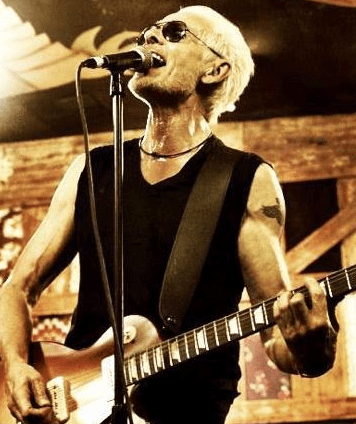
Michael Des Barres 1Below is part two of my interview with Michael Des Barres. You can read part one here. Stay tuned for part three, and check out the live clips at the end of this post from Michael Des Barres’ concert in New York City on March 7, 2013 at the Bowery Electric.

So, the song “Obsession” came out of your experiences with drugs?

It came out of drug use, yeah. But I turned and mutated that, in a literary sense, into a romance about a man who was determined to get this woman. But it could be donuts, or Prada, or guitars, or whatever you collect, man. It could be whatever you want. It will collect and capture you. It’s about ownership, taking something hostage – obsession. 

How was it working with Holly Knight on the song?

Oh, she’s brilliant! Just an extraordinary writer. She’s a classically trained pianist. I must have written that lyric in 10 minutes. I’ve found all the best stuff comes that way. It just flows, there it is and you don’t touch it. When you start tinkering with it – at least for me – that’s when it loses its potency. It was a great experience working with Holly. 

I think the new recording of “Obsession” is the definitive version. Do you prefer it to the others?

I love the new one. I think that it’s very relaxed, and I love singing in that Bowie-esque baritone. And I love the girl singer, she’s fantastic – Teal; she’s a great singer from Austin. We just got lucky with it. I played it on acoustic guitar, we sang it and turned it over to a new mixer, Kyle Moorman, who turned it into what you hear, which I think is terrific. It’s a movie almost. It’s got a great story with a good chorus. 

You recently hinted that a live album is in the works. Do you have a sense of when it will be released?

It’s done and ready to go, I just have to pull the trigger whenever I want. But first I wanted “Obsession” to come out so people could see what I wanted it to be in the first place. I’m following no rules here. I’m off to do this radio show now, and I’m going to put out the live album within the next several months. It’s all ready to go. It’s called Hot ‘n Sticky. 

When I saw you live, you did a few cover songs. In addition to music from Carnaby Street, what covers are going to be featured on the live album?

It’s a rocking record. It starts with a medley of “Little Latin Lover,” “My Baby Saved My Ass,” “I Don’t Need No Doctor,” “Get It On,” and “Long Tall Sally.” It was so rockin’ and so satisfying. You’re gonna’ love it!

Did you have to spend a lot of time in the studio on the live album, making sure everything sounded just right?

No, I didn’t change a fucking thing on it. I just went in and heard it. I did take out some of my conversation with the audience in between the songs because that had a lot to do with what was happening in the room at the moment. But other than that, I didn’t touch it. 

Michael Des Barres - RoseMany bands – KISS, for example – go into the studio and heavily tinker with live recordings, and sometimes fans are upset by this. Is this something you were trying to avoid?

Most of the time bands will do some audio tuning or one of the musicians missed a chord. But to me, that’s rock and roll! When you do fuck up and the microphone falls over, I like it. When I was a kid and I would listen to a recording and a tambourine would hit the floor it made me feel like I was there. It puts you in that room, it puts you in that club, it makes you part of it. If everything is so perfect, there’s no soul to it. I think that the greatest things that have ever happened to me have been by mistake. I turned a corner, bumped into somebody and my life changed. It’s the same thing with rock and roll. 

When you’re writing music, do you first think of a lyric or does a melody come to you while strumming the guitar?

The way it happens is I get a title and I see how it goes and where it fits. I love up-tempo rock and roll and I love ballads. I don’t know what’s going to happen, really. But I write so much every day that lines pop in and pop out. I’ll sit around and watch the news or hang out with my friends and somebody will say something and I’ll grab it, I’ll just grab it out of the air. I’ll say it and write it down. And the next morning I get up at dawn, drink a gallon of coffee, I go to the gym, I come back, I pick up my Les Paul, I plug in, and I write. 

Musically, you’ve done quite a bit. But as of right now, what would you say is your proudest accomplishment?

My proudest accomplishment has nothing to do with having any band members in the room or music. The highlight of my life is talking to you right now … because this is all I’ve got right now. Today is what’s important to me. There’s an immediacy to what I do. People sense it. It’s intense and it’s urgent, and it’s what keeps you alive. Enthusiasm is what’s important. I just don’t want to go backwards. I don’t even want to go forwards. I just want to go! (laughs)

Is it true that it only took you 10 days to record the Carnaby Street album?

Yeah, I recorded it in one week, and I mixed it in three days. Everything you’re hearing on that album was done in no more than two takes. And I fixed nothing, vocally. We went in and did some backups here and there and maybe added a tambourine. There were no solos that were put on there, not one. Mixed it. Put it out. And people went crazy for it. I played it in the clubs – Atlanta, Austin, you name it, LA. Came back, we were red hot, we went in and cut it. Everybody’s laughing and we’re looking at each other. We were all in one room, with the earphones on – just smiling and enjoying each other’s work, if you can call it work. We enjoyed each other’s taste and execution. Took a smoke in between songs and set up the next tune. 

Do you have a favorite song from that album or does it change for you all the time?

I don’t have a favorite. Lyrically, I think “Carnaby Street” because it’s an autobiographical narrative. But “Please Stay,” I think, is the most accomplished song. I just got lucky one day and wrote that thing. And it says everything I mean to say about heartache. You can’t have a blues-based information pool from which to choose and not write these soulful ballads. That would be like no wearing trousers on your first date. (laughs) There’s nothing on that album that I don’t like playing. I love “Route 69,” all of it. 

Were any tracks left off the album?

No, I just went in with the set that we worked on and shuffled around live and recorded the songs that we knew. There’s many more that I wrote and rehearsed. I just wanted a collection of songs that worked as a whole. But I always have 10 or 20 songs completed and ready to go – the others were just not right for what I wanted for that album. And I could only find that out in rehearsal, singing them live. And those were the ones I liked singing the best – the ones that wound up on Carnaby Street.

Do you have any new songs coming out soon?

Yeah, I’m always creating new music. For my radio show for the David Lynch Foundation, I provided them with “Life Is Always Right.” It’s a beautiful acoustic ballad that came out of the slew of songs I wrote during my time in Texas, including “My Baby Saved My Ass” and “From Cloud 9 To Heartache.” While many of these songs weren’t included on Carnaby Street, they will see the light of day.

A Conversation With Michael Des Barres – Part 1

Michael Des Barres 2I recently had the opportunity to speak with one of my favorite musicians and actors, Michael Des Barres. Many of you may know him for his role as the sinister Murdoc on the TV show MacGyver. Others may know him from his tenure as lead singer of Silverhead, Detective and The Power Station. While music is Des Barres’ main priority, he still makes time for acting, including his recent role in the wonderful film California Solo.

Below is part one of the interview. Stay tuned for parts two and three. And at the end of each part I’m including live clips from Michael Des Barres’ concert in New York City on March 7, 2013 at the Bowery Electric. I was in attendance, and it was an awesome show. Enjoy!

Hello, Michael. You recently announced your new radio show, Roots and Branches. How did this come about?

I had a relationship with David Lynch because I had done Mulholland Drive with him when it was a TV show. And what happened was he cast me to play the bad guy in the pilot for a TV show for ABC but ABC passed on it because it was incomprehensibly Lynchian, ya know? (laughs) So, a couple years go by and he invites me to the premiere and I realize I’ve been absolutely cut out of it and replaced by these two chicks fucking. And I thought, oh man, this is very exciting, but where the hell’s my footage? (laughs) So, we’ve had a relationship for a while. 

But he’s got this amazing TM (transcendental meditation) movement going, and he just created this network, Transcend Radio, and he’s contacted people and asked them to produce some content for that and it ended up my door. And I came up with a show called Roots and Branches, which is essentially about influences, where lots of musicians got their influences and passed it on to the next generation, and the next generation. I deal mainly in American blues music and also the edginess of  Manhattan rock and roll, heroin rock and roll, I call it – the psychosis of rock and roll. So I do various genres. I play a song and then I play a song that was obviously influenced by that song or artist, hence the title Roots and Branches, because it’s very important for me. And I do it in the vein of Stevie Van Zandt, who flies the flag of the lineage of rock and roll, the history of rock and roll, soul, pop, and rockabilly, and all of the wonderful music that is, in a sense, threatened by extinction today because of the advent of technology.

If you can see relationships between artists, you can go deep into it and that’s what I want to create: A sort of atmosphere of research, ya know? You start at Zeppelin, then you back to the blues and where that came from. You listen to Jack White and then who influenced him, and equally groundbreaking musicians that inspired them. And it becomes this enormous organism, and hopefully an enormous orgasm (laughs). 

I recently read Rod Stewart’s autobiography, and in it he talks about how his music as well as other artists’ music, including The Rolling Stones, Eric Clapton and Jeff Beck, was influenced by the blues. What was it like during this time period?

I was in the clubs at the time you’re describing with Mitch Mitchell saying to me, “Why don’t you come see me play with this black bloke?” And I did, and it was Jimi Hendrix. I was there in London at the birth of the skinny rock and roll dudes being inspired by the blues. It was a phenomenal hybrid, which I’ll explore deeply in my show. It’s why working working class English boys and girls would turn to the oppressed black slave music that came out of oppression – out of Chicago and the Delta. Why would that be? I think it’s because it’s almost the same today: You get out of the ghetto by being a rapper or a sports figure. It’s the same man, you know?

Yeah, Jeff Beck was heavy. But there were a lot of people that were plugging in and turning up because rock and roll was blues real loud, essentially. And if Chuck Berry hadn’t existed, there wouldn’t be a Mick Jagger or Keith Richards. I mean imagine a world without Chuck Berry in it. What a horrible thought. (laughs). But they were smart enough to marry that with the poetry of Arthur Rimbaud and the style of Oscar Wilde. It was this pop-hybrid of Muddy Waters, Oscar Wilde and Lord Byron with a slide guitar. It was this incredible cocktail of stuff.

Your modern music seems to harken back to that classic three-chord rock and roll. 

Yes, because what happens is, as an artist in the beginning it’s all about passion. Then you learn how to do it and you learn the chords that are complicated, and to keep yourself interested you start experimenting. And you lose sight of why you did it in the first place. Rock and roll is a synonym for having sex. It’s not a synonym for meditation. So you’ve gotta roll with it. And, for me, I went on all sorts of tangents because I was thinking too much. But when I got back to it three years ago, when I was in Texas recovering from an accident, I broke a lot of bones, I had time to reflect on what I really wanted to do, so I started to write. I couldn’t write with my right arm because it was smashed, so I wrote with my left hand these social media updates and people started to respond. So I took those ideas and put them to simple chords, blues-based music and I wrote “My Baby Saved My Ass,” (laughs) which sounds funny and cute but it’s true. It’s a redemptive song about the redemption of love transcending a drug addict’s downward spiral. 

MDB

Stephen King once stated that, “The idea that creative endeavor and mind-altering substances are entwined is one of the great pop-intellectual myths of our time.” Like King, you’ve overcome drugs and alcohol. Do you agree that these substances don’t enhance an artist’s creative work?

He and I are the only ones that have said that. I mean, I’ve been saying that for 30 years. The myth of the self-destructive genius is bullshit. And I can give you one and only one example: Jim Morrison did not write the “Great American Novel” … and he could have. And it’s as simple as that. Genius is divine; it’s a talent you’re given by the universe. It’s like being born beautiful and you fuck yourself up.

I always think of Chet Baker and his beautiful face and how ravaged it was at the end of his life when he fell out of a hotel room window and smashed his skull because of heroin. So, I’m with Stephen King. It is a myth, and I’m 100% more creative with clarity than I am in a fog. I might think I’m a genius, but I’m not.

What made you stop using drugs?

I looked in the mirror and I looked like a monster. And I’m way too narcissistic and vain to look like that. I can honestly say vanity got me through it (laughs). I felt like a fool, and there’s nothing worse for me than feeling foolish. And being a slave to something? Good lord! I can’t be owned by a bag of white powder…unless it’s foundation. It’s absurd; it’s childlike. Unfortunately many of our greatest artists capitulated to it and died, and that’s a shame.

To answer your question, I’m not being glib when I say I looked in the mirror and didn’t like what I saw. It was absolute vanity. But once I got into that spiritual groove, I woke up from the trance of drugs. And I wrote “Obsession” within the first few weeks of being sober. Everybody around me was saying “I’m obsessed with this” and “I’m obsessed with that.” Is it an obsession? Yes. So I thought, OK, and I wrote that song, which was a worldwide hit because people could relate to the thing. 

Michael Connelly On Writing

Michael ConnellyHere’s an interesting interview with best-selling author Michael Connelly about writing:

10 Questions for James Patterson

James PattersonHere’s a great interview TIME did with bestselling author James Patterson featuring 10 questions from fans:

Dan Brown On Writing

Dan Brown - The Lost SymbolHere’s an interesting interview with bestselling author Dan Brown when his last book, The Lost Symbol, was released:

Author Interview: Andrew Gross

Andrew GrossI recently interviewed Andrew Gross, the author of the captivating new thriller No Way Back. I hope you enjoy the following Q&A, and make sure to check out my book review too.

Harlan Coben once said that every now and then he spends time with Lee Child, Nelson DeMille and Mary Higgins Clark. Do you have similar get-togethers with any of your fellow writers, and if so, what do you talk about?

Well, I have a few authors I knock around with every once in a while: Michael Palmer, Lorenzo Carcaterra, Dottie Benton Frank – not a mystery/thriller writer but a bestseller. Mostly we just grumble how the business has changed. I gotta tell you, if there’s one  thing I hate to talk about out of the office it’s books! I’d rather talk about politics and hockey. I actually know more investment bankers than authors. But I can’t talk politics with any of them.

Do you still keep in touch with James Patterson and do you plan on working with him again in the future?

I can’t say we’re on the same circuit these days. I actually run into him every once in a while in Florida. We both have homes in Palm Beach, his is just slightly grander than mine – by a factor of ten! He goes to the movies a lot and we might bump into each other and have a bite after.

No, not sure it will work out on the collaborative front. Though I’d probably find it fun to do so once more. I mean, if the Eagles could get back together… But it’s usually not a good career sign if you have to go back to co-writing…

Your new book, No Way Back, is focused on the lives of two women in dire straits and how their lives intersect. What was your inspiration for this story?

I had three inspirations when it came to No Way Back. And for most books, for me, it’s more like a triangulation than an epiphany. First, the idea of a woman who gets into a situation way over her head by foolishly sleeping with someone who turns out to be a different guy than she anticipated, and then she gets caught in his hotel room where a murder takes place, and she’s the only witness. I loved the dilemma: Does she turn herself in, but then have to explain where she was to her husband and kids and maybe have her life fall apart. Of course, in No Way Back the choice is made for Wendy and she’s on the hook for two murders. The other two were things I read–one an editorial about a criminal who turned state’s evidence but the guy he was informing on one-by-one killed his children in retribution, and the U.S. government refused to take them into protective custody. Totally heartbreaking. The last was a very compelling article on the border drug wars between El Paso, Texas and Juarez. Each of these stories led to one of my main characters.

What’s the hardest part of writing for you?

The hardest part is coming up with great initial ideas. It’s all in the set-up for me – drawing a sympathetic, everyday character into a disastrous situation they cannot get out of. Those things are hard for me; executing is easy. I come up with hopefully one per year–that’s all I need. Patterson might come up with one a month!

Are you already working on your next book, and will it feature Ty Hauck?

Well, sure, I’m midway through my next book and still behind. It’s a similarly structured book to No Way Back: A mom with a handicapped kid who’s just lost her job accidentally comes on a cache of money. And like a lot of my books–one bad or foolish act begets a ton of unforeseeable consequences. Sadly, Ty is on a beach somewhere working on his tan. Or on Naomi. My publisher likes these standalones for the moment, so Ty has had to wait. At least one more book.

James Patterson: What I’ve Learned

Here are some words of wisdom from James Patterson:

Author Interview: Lisa Scottoline

rc2012033-NYT Lisa Scottoline

I recently had the honor of interviewing Lisa Scottoline, the author of the wonderful novel Don’t Goavailable April 9. As you’ll see below, her answers were a compelling and insightful look into the life of a bestselling author. I hope you enjoy the following Q&A.

Shakespeare said, “Brevity is the soul of wit” while Ray Bradbury felt, “Digression is the soul of wit.” When setting out to write engaging dialogue for your characters, what do you find works best?

What a great question! First, I never forget that the Shakespeare quote was in fact by Polonius, who is a bit of a fool, but he was definitely on the right track with his observation. I think I side with him more than Ray Bradbury, as great as Bradbury was. I say this because the governing principle of writing any novel, regardless of genre, is to get to the point. You really want to keep the reader engaged and turning the pages. That only happens if pace is paramount. Therefore nothing should be extraneous or extra. If you’ve made the point, you don’t need to make it again. Like I am now, in fact!

Some authors outline books ahead of time, like James Patterson, while others, like Lee Child, just sit down and write without planning ahead. How do you approach writing a story? Do you know exactly what’s going to happen and when, or do you let the characters lead the way?

I admire James Patterson, but I’m not as smart as he is, and I have much more in common with the wonderful Lee Child, in that I just sit down and write without planning ahead. I always say that not only do I not know how the book ends, I don’t even know how it middles. The great thing about writing is that there’s no correct answer and you get to do whatever works best for you. This works best for me because I like the spontaneity and excitement that not knowing what’s going to happen brings to me as a writer; I think if I planned it all out in advance in an outline, I would feel like the writing of it afterwards was like filling in the blanks, or playing Mad Libs. Also, the way I do it is unfortunately the kind of thing that leads to a constant state of anxiety, because I don’t know if I have a successful plot line at all, but part of me rationalizes even that. I think that being hyper-aware when you’re writing finds its way into the book and keeps the tension and excitement high, leading to that page-turner goal I always try to meet.

Ian Fleming wrote 2,000 words a day by sitting down at his desk and typing non-stop for hours at a time. Do you have a strict writing schedule to which you adhere?

This is amazing, because I never thought I had anything in common with the great Ian Fleming, but evidently I do. I actually sit down every day, 7 days a week, and meet a word count of 2000. I think that’s the perfect number because it takes the entire day and sometimes most of the night, but it seems to be about 9 pages and therefore enough to get out a single scene or plot element in a 1st draft. The good thing about having a word limit is not only does it enable you to get the words down the paper, which you absolutely must do in the end, but it also permits you a stopping point, in the event that you reach your 2000 word goal early. This happens to me a lot, and I like that very much. Mainly because, as anybody who works at home will tell you, it’s hard to turn work off when it’s just upstairs. If I meet my 2000 word goal at 7 o’clock, I can watch television or read without guilt, and that’s something to rejoice over.

Many bestselling authors have started to co-author books. You’ve collaborated with your daughter and contributed to The Chopin Manuscript and The Copper Bracelet. Would you ever consider working with another author on one of your novels?

I have cooperated and contributed to serial anthologies or chapter books for charitable reasons, like the ones you just mentioned, and I’m proud of my work in those things, but I never collaborated per se with another author in the actual writing of each sentence. I have already collaborated with my amazing daughter Francesca Serritella on the nonfiction humor books, but even there, she writes her own stories and I write mine, and we combine them in one volume. It’s hard for me to imagine a true joint production on something as personal and voice-laden as a novel, but I often think about writing a children’s book or something later with someone else. For that, we’ll have to stay tuned.

rc2012033-NYT Lisa ScottolineWhat did it mean to you when you won the Edgar Award in 1995 for Final Appeal

I was really honored to win the Edgar award because it’s given by the Mystery Writers of America, which is our oldest professional organization, and I was even lucky enough to be nominated for the award the year before that, though I didn’t win it. I actually think that loss was an equally important accomplishment, because the ultimate lesson in writing is to write the absolute best you can for yourself, and not for any extrinsic reward, whether it’s a wonderful award like the Edgar, or even a newspaper or blog review. I read all of those things and I care very much about them, but I don’t write for anyone else but me, and my assumption is always that if I think something is wonderful, my readers will too. They are my highest and best award ever.

Instead of the massive text and trite visuals most book covers are known for, your most recent novel covers have featured interactions between real people. Don’t Go has a beautiful orange glow to it and it features the book’s main character, Dr. Mike Scanlon and his daughter in a loving embrace. What led to this change in artistic direction a few years ago and what kind of feedback have you received from your fans?

Another excellent question! This is a completely accurate observation and I have a wonderful publisher in St. Martin’s and a great editor in Jennifer Enderlin, and we have together come up with these new covers, which I love. At the macro level, I’m writing 3 books years these days; two novels – one of which is a standalone and the other is the next installment of the Rosato & Associates series – and a humor memoir. Our little team wanted to figure out a way to differentiate these books, so that readers could easily see which was a standalone, which was a Rosato, and which was the nonfiction humor. I think the covers accurately capture that, and at the same time they share a common font and typeface which ties them all together, since they’re all books by me. In my heart, I believe that if you like one type of book by me, you’ll like the other type, because the voice always remains the same, and I work hard on that. But I’m aware that some people will read only Rosato and some people will read only the standalones, and so I feel really happy that we are always accurately representing my work and positioning it in a way in which it reaches the most number of readers.

Don’t Go focuses on the tumultuous life of a Doctor serving in the military. What was your inspiration for this novel?

There were so many inspirations for this book that is hard to pick just one, but the bottom line is that like any American citizen, I have been following with great absorption and concern the progress of our wars in Iraq and Afghanistan, and I am overwhelmingly grateful to the men and women who fight them on our behalf, as well as to the families and friends on the homefront, who make their own sacrifices, though not the ultimate sacrifice made by the soldiers. I’d also read a lot about the effects of wartime on custody arrangements in general, and this idea came to me and so I went with it. More and more I think the standalone novels, and even the ones that feature Rosato & Associates, as a blend of love story, family story, and crime story. I have educated myself on the development of the mystery and thriller genre in general, and I think this is a natural direction for it to take, because it’s not just a few writers that transcend genre but in fact, all of us are transcending genre these days.

rc2012033-NYT Lisa ScottolineDon’t Go is filled with interesting information about the day-to-day life of our armed forces overseas. Did you go into the book already aware of these details or did it require a great deal of additional research?

I did so much research for this book it’s not even funny. I don’t think I have ever spent so much time researching a novel except for Killer Smile, which as you may know, involves the internment of Italian-Americans during World War II. The research in Don’t Go was for much of the same reason, too; wartime is a grave and dramatic time in the history of a nation, if not globally, and attention must be paid to the details. Everything has to be right, because real lives are being sacrificed in real time. I interviewed an Army surgeon who served in Afghanistan and he read everything in the manuscript to make sure it was accurate, which I think is the best you can do when you’re writing about an Army surgeon who served in Afghanistan. It’s straight out of the horse’s mouth, so to speak. I also read widely and extensively on the subject, both fiction and nonfiction accounts of both wars, I listed all of those books in the Acknowledgements. While none of them gave me specific ideas, because that comes only from my head and heart, they certainly help form a backdrop that would help me get the details right.

Don’t Go is your 20th novel – a monumental accomplishment for any writer. Looking back, what’s your proudest professional accomplishment?

Aren’t you so nice to say so, and I am very proud of producing a really fine body of work over the past 20 years. I really want the name Scottoline to be synonymous with quality fiction, whether it’s humor, crime, love story, or family story. But of course, I have to tell you that my proudest accomplishment is raising a wonderful and amazing daughter in Francesca.

When I met you last year, at your book signing at Barnes & Noble on Rittenhouse Square, I was blown away by the fact that you remembered your fans’ first names upon seeing them. It was as if they were part of your extended family. After your first novel was published, how did it feel when people started to notice you and praise your work?

I do tend to remember people because I am such a people person, and of course my favorite people in the world are my fans, because they support me, both literally and figuratively. There is absolutely no feeling as good as walking into a room full of people who read a novel written by you and therefore know your heart, the way you think, the way you express yourself, the values you value as important, and all of the other things that any good novel contains, which is some amalgam of heart, brain, and human soul. I remember my readers because I love them. It’s as simple as that. And going to any signing is like a homecoming, even though we’ve never met. That is proof positive of the magic of fiction, because it brings people together at a soul level. And I feel so lucky to be a part of that partnership with my readers, forever.

And the interesting part about your question about when my 1st novel was published, how did it feel when people started to notice and praise my work, is that it doesn’t feel any different today than it did then. I still feel lucky and happy and surprised and blessed. I work very very hard, but I have a wonderful job, and I always endeavor to keep my side of my compact with the reader, which is to tell them a wonderful story, that even though it’s fiction, will contain an emotional truth that will resonate with them, and maybe help them deal with the ups and downs of their own lives, or maybe even encourage them through the tougher moments. Books do that for all of us, and I know it’s not only literally true, but that is a point worth making, because I get lots of e-mail from people who are actually convalescing or recovering from surgeries, were going through chemotherapy, or have just had a mastectomy, and all of them tell me that they managed to lose themselves in one of my mysteries or were laughing really hard at the humorous memoirs. Nothing can make me happier, and there is no greater purpose to fiction, or any form of writing, than to heal the human heart.