A Conversation With Melissa Manchester

Melissa Manchester in concert Feb. 11. Contributed photoI recently had the opportunity to interview the Grammy award-winning artist Melissa Manchester. Known for her signature sound and countless hits, including “Midnight Blue,” “Don’t Cry Out Loud” and “You Should Hear How She Talks About You,” Manchester has been an icon in the music industry for more than 40 years.

I’m attending Melissa’s concert in New York City on February 16, and it should be a fabulous Valentine’s Day weekend performance. If you’re interested in attending this show or another one of her concerts, make sure to visit the tour page on her website.

It was a delight speaking with Melissa, and I hope you enjoy the interview below.

For your upcoming studio album, You Gotta Love The Life, you used Indiegogo to include your fans in the process and wound up raising more than $40,000. Were you happy with the experience, and how was it received by your fans?

It was a mind-blowing experience. It was my students – I teach at USC, at the Thorton School of Music – it was my students that awakened me to this new definition of the marketplace. They helped lead the team and do the project management. I said yes. It was fascinating because my fans are so interested in the process, actually, almost as interested in the process as I am; and because I was doing so many Facebook entries and all that, it was so sweet, and started to become this living, breathing entity. And when the campaign was over (laughs), the fans said “please don’t stop posting, it’s so wonderful to read what you have to say.” I would do it again in a heartbeat. I just thought it was fascinating. 

Now that the Indiegogo campaign is over, what’s the next step for your new album?

Well, the album is half-recorded and I’m going back into the studio in January to finish it and orchestrate it, and mix it, and master it, and all that. Hopefully it will come out either this spring or this fall, definitely one of the two. 

You’re releasing this on your own, directly to the fans, correct?

At the moment I am, and if fans go onto my website the first single is free to download as a thank you gift to them. It’s a rethinking of the classic “Be My Baby,” which I didn’t realize, this year, is 50 years old. So, it’s a lovely way to celebrate that song. 

My favorite song by you is “Don’t Cry Out Loud.” In Clive Davis’ recent autobiography, The Soundtrack of My Life, he said that originally you weren’t in love with the idea of singing the song. What’s the story behind that?

Well, I believe that Mr. Davis, like many of us, has selective memory, and that’s fine. I loved the song the way my friend Peter Allen first presented it, which was very quiet and very intimate. Clive Davis’ version was this big anthem, and at the time it turned out splendidly, and I’m grateful for that. Clive and I had a lot of success and (laughs) a lot of failure together. 

It’s interesting that you mention it originally being a softer song because now when you sing it live it’s usually a more stripped down version. Is that how you originally imagined it?

When I’m doing my duo show with myself and Stephan Oberoff, my keyboard player, we do a very quiet version and it really makes the crowd go crazy because they’re inside the song like I am. And when we’re with a symphony or my larger band, it’s the larger more well-known version and everyone is delighted to hear that as well. 

That’s nice that you can have such flexibility with the song. 

That’s the magic of live performance. You can reinterpret things on the spot – it’s fantastic. 

Speaking of live performances, I’m attending your concert on February 16 in New York City. Do you have any new material from your upcoming album that you’re going to try out on the hometown crowd?

Sure, there’s plenty of new stuff from the album that will be all over the stage, and because of the occasion of Valentine’s Day, you never know what I might sing. 

While at NYU, you were enrolled in a songwriting class taught by Paul Simon. Today, you’re an Adjunct Professor at the Thorton School of Music. What’s a typical semester like for someone enrolled in your course?

Well, I teach a class I call “The Art of Conversational Singing.” I teach mostly the pop students and some musical theater kids, and they bring in whatever they want to learn about that day. Sometimes we discuss their compositions, and sometimes they want to talk about the life on the road – surviving that. I always assign them songs from the first volume of the American Songbook because I want them to see what singing was like, what breathing was like when songs were melody driven, as opposed to rhythm driven, which is the aesthetic of today. And it’s all very interesting because there’s no way they can imagine what a career feels like in the bones but I can absolutely reimagine what it feels like to be at the beginning of that adventure. So, what I’m trying to do is help them survive it as intact as possible.

That must be interesting for you now being the teacher when you were previously the student. I imagine it’s a surreal experience. 

 (laughs) It is surreal. Totally surreal, that’s the word. 

You and Barry Manilow, who I adore, met while singing jingles for commercials, and you both identify as singer-songwriters. Is this one of the reasons that your friendship has remained so strong over the years?

Well, we really grew up together. And because we shared the experience of Clive Davis together, we really (laughs) know what that kind of experience is all about. We have enormous respect for each other, and surviving in this industry, relatively sanely, relatively stably, relatively well is no small feat because, as you well know, the industry is littered with cliches of people who were enormously talented that couldn’t chew gum and walk at the same time. So, to have been gifted with this long career that shows no end in sight, is something we share and our enormous respect for each other. 

Our idols were the singers that did have very long careers: Ella Fitzgerald, Judy Garland, Rosemary Clooney, and Tony Bennett. Those people were our touchstones of the kind of long careers we were looking for. We were never really rock and rollers, so it’s sort of interesting that I’m number 92 on the list of top 100 rock and roll females (laughs). 

We’re very loving friends, and part of the goal of my Indiegogo campaign was to donate a portion of the funds to the Manilow Music Project, which I think is just a fantastic organization. He has his fans donate used musical instruments and he has them repaired and donates them to public schools.

You’re currently co-writing a new musical, The Sweet Potato Queens. What’s the premise behind it and when should fans expect to see it on stage?

It’s a little too early to talk about it other than that I’m writing it with Rupert Holmes and Sharon Vaughn, and we’re just starting to present it for workshop. 

You’ve been in movies, plays and, of course, Blossom. How is acting on stage different than being on screen? Do you prefer one over the other?

Acting is sort of scary business. With singing you always have the energy of the music to inform you, regardless of how you’re feeling or what you’re going through in your personal life. Whereas, with acting there’s nothing but you and the silence, so you better be really present and in that moment. But all creative energy has room for all versions of expression. Whether I’m writing a score for a Disney movie, or writing a song for my upcoming album or writing a show, it’s all coming out of the same hunger. I’m really still as hungry to create as when I first started. 

You were nominated for two Grammy awards before winning the 1982 Grammy for Best Female Vocalist. How did it feel to win the big one?

It was delightful, of course, but it was certainly surprising because prior to that I was nominated for those mid-tempo ballads that I was (laughs) sort of known for. So, to be nominated for “You Should Hear How She Talks About You,” which was this great disco record that the great Arif Mardin produced for me was so surprising but so delightful. At first, I couldn’t quite get it and sync up with it. I couldn’t totally accept the gift that I’d been given by my friends Tom Snow and Dean Pitchford, who wrote it for me. Now when I sing it live, I always show the videos of me performing it on Solid Gold and on the Grammys, and it’s lovely to be able to chuckle along with the audience about the shoulder pads and my hair cut (laughs) and all that stuff. And the song is great, it’s just great. I’ve been very fortunate to have lots of great songs cross my path. 

Your father was a bassoonist with the Metropolitan Opera. How did his career affect your own? 

There was always music around the house. My Mother was a wonderful singer. And my Father sometimes would take me to the opera with him to dress rehearsal when I was very very little. The grandness of it was very normal for me, the big vocal sound was very normal for me. The long held notes, the expressive interpretation – that was just the way music was supposed to be sung, and it was validated by all of the popular singers: Ella and Judy and Rosie and Sinatra and Tony Bennett and Nat Cole, and all of those people. It was all part of a continuum. It’s what really informed me. 

Those are great performers to grow up with and experience. Much better than what we have today. 

Well, I think so. That’s why I assign my students songs from the first volume of the American Songbook. I want to make sure they understand that the music form started with Stephen Foster and that what they hear today is only the latest version, and that the there was an earlier version that was melody driven and not rhythm driven. The lyric writing and the melodic structure – that’s something they need to feel and dig into to help not only bring it forward but to also bring it into their composition. 

You were one of Bette Midler’s original Harlettes. How was it working with the Divine Miss M?

She was sensational. She’s a truly brilliant woman, and as she says, she has the soul of a librarian (laughs). I was fortunate to work with her at the very beginning of her career. I worked with her for six months, right after she had been on the Johnny Carson show for the first time. To be part of watching that ascendancy from an interesting and unique vantage point, which was to the left of her as the toots in the middle, was fantastic because she gave a voice to the gay audience, which had been marginalized up to that point. She galvanized their culture and population through her energy and focus, and her choice of material was superb. Her vision on stage was superb. It was a magnificent experience.

I saw Rod Stewart earlier this week and he was fabulous as always. And, at one point in the show, he brought out his daughter, Ruby, to sing a couple songs. Do your children share your musical talent?

My son is talented but he’s more of a shower hummer (laughs). My daughter and I sometimes sing on stage and it’s lovely because there’s a tone in her voice that is from me – it’s my gene pool – and yet she has her own smokey, jazzy voice. She’s sort of a throwback like me. She likes those standards, and those long lines to sing. So, yes, we have sung together. 

Aside from the classic singers you previously mentioned, who are some of your favorite performers to listen to?

I like Radiohead, Sarah McLachlan and Bonnie Raitt is a giant to me. I love Beyonce, I think she’s remarkable. And I love Katy Perry. I think she writes fantastic anthems. 

Since you mentioned Beyonce, what are your thoughts on her secretly releasing her new album on iTunes?

I think the marketplace is open for absolutely anything anybody can imagine. I heard that we are now in a frictionless industry, which means you don’t have to necessarily bend to the convention. If you can think of a new way to do it, it may just work. 

That’s true. Today, the delivery of content, whether it’s digital music or e-books, is much more direct. Speaking of which, you recently streamed a concert online from your studio for your fans to watch. For those that missed it, will it be available to view on your YouTube channel at a later date?

No, when you do it on StageIt.com it’s just a half hour or 45 minutes and it’s gone. So, when people jump on, it’s just a lovely communal experience and that’s it. 

It sounds like it went well. Would you consider doing it again?

Oh, I’m gonna do it again. 

Are there any other exciting projects you’re working on that you’d like your fans to be aware of?

I’m starting rehearsals today for the Colors of Christmas tour that starts tomorrow in Cerritos and goes across the country for nine days, and it’s kind of wild and fast, and I’ll be home by Christmas Eve. But between now and then, I’m gone. 

Author Interview: Steven James

Steven James

I met Steven James at ThrillerFest VIII. In addition to seeing him moderate several panels, I attended his workshop on organic writing and was very impressed. Following the conference, I read Placebo, his first book in the Jevin Banks series, and I’m currently reading his newest novel, Singularity, the follow-up to the aforementioned title. Below is my interview with Steven James; I hope you enjoy it. And don’t forget to pick up a copy of Singularity – it’s a great read.

Your newest novel, Singularity, is receiving even better reviews than the first book in the Jevin Banks series, Placebo. For those that have yet to read it, what’s the premise of Singularity and what inspired it?

Jevin Banks, one of the world’s greatest illusionists and escape artists, ends up stumbling onto a sweeping conspiracy while looking into the suspicious death of one of his friends. As far as what inspired the story, I’d say a growing interest that I have in emerging technology and the uncharted waters it’s taking us into.

Do you write a specific amount of words every day, and how do you keep stay motivated to stick to your timeline?

That’s a good question. I find that when I go by word count I get easily discouraged since I might fly and write several thousand words one day and then the next day delete everything I worked so hard on. Typically, I go by time. I set a certain number of actual manuscript hours that I would like to work in a given day and then as I write I keep a timer and take scheduled breaks, but keep track of the time down to the second (I know, it’s a bit fanatical, but it keeps me on track).

Some writers have said they barely edit their work while others put their drafts through several revisions. How do you handle the editing process?

There are very few people who can pull off writing great stories with very little editing and revising. I’ve read some of the work of people who say they barely edit their work and, honestly, you can tell. Personally, I go through a lot of drafts (with Placebo, I went through the prologue at least fifty times tweaking it until I was happy with it).

Steven James - Opening Moves

For fans that haven’t read your work, how does the Jevin Banks series differ from your bestselling Bowers Files books, and do you prefer one over the other?

Ah, so you’re going to make me choose between my children, are you? Well, the Bowers books are more police procedurals, darker, more suspense than anything else. The Banks books are a little more light-hearted and conspiracy/science thrillers.

Speaking of Patrick Bowers, what’s next for the FBI Special Agent?

I’m currently working on Checkmate, the eighth and final book in the chess series. After that, we’ll see what happens. I’m nowhere near running out of ideas for Patrick’s storylines.

One of the characters from your Jevin Banks novels is Charlene Antioch. Did you choose her last name, Antioch, because it means the “cradle of Christianity”? Additionally, what inspires other character names in your Bowers and Banks books?

Huh, I had no idea about that meaning. I don’t choose names that have hidden messages in them because because I don’t want anything to get between my readers and my stories. Decoding what different names might mean would be a distraction for readers. Instead, I just choose names that sound cool to me. Now my secret is out. But I shouldn’t admit that, should I? Yes, there is a master plan at work. I just don’t know what it is yet.

Do you use any tools like Scrivener or Scapple while writing? What are your thoughts on software designed for authors?

It’s funny you should ask that. I do use both of them—mainly Scrivener. I don’t think I could write a novel without it. I’ve abandoned Word and Pages, they’re just too slow and the features don’t help me with a big, complex project like a novel. 

Singularity by Steven JamesKurt Vonnegut once shared the following piece of writing advice:

“First rule: Do not use semicolons. They are transvestite hermaphrodites representing absolutely nothing. All they do is show you’ve been to college.”

Some writers, like Vonnegut, despise semicolons while others think they’re perfectly acceptable. What are your thoughts on this never-ending debate?

I avoid them, but you will find a few in my books if the pace, flow and context call for them. My editor seems to like them and it’s a back and forth thing of me deleting all the ones she adds. I have a friend who says before you write you need to perform a semicolonoscopy on your writing.

Your stories are filled with characters and multiple plots. Since you’re an organic writer that doesn’t plot everything out ahead of time, how do you keep track of what’s going on while writing a story?

I find myself reviewing the story from the beginning—not necessarily reading through it all, but at least trying to keep the context in my mind as I write. I’m a big believer in context determining content and it boggles my mind that people can write a book without that constant scrutiny of what is happening in the story and what that means for the direction of the narrative.

Your Jevin Banks novels feature a considerable amount of scientific information. Do you gather this information prior to writing? When it comes to this information, how do you know when you’ve struck a healthy balance of showing and telling?

I had to do a ton of research for this novel on transhumanism, the hypothetical singularity, robotics and cybernetics, consciousness and nanotechnology. As you mention, it’s always a balance. As I edited the book if I found myself getting bored, I knew that readers would as well. When I was working on Placebo I needed to research quantum mechanics. Talk about confusing. I finally realized I knew as much as I needed to about physics to write my book. I think I included maybe one page of explanation in the final draft. So, you can over-research stuff. Most of the time the best bet is just sitting your butt down and writing.

Steven James PlaceboIn May 2014 you have an instructive book for writers coming out called Story Trumps Structure. Can you give us a preview of what’s inside?

Too many writers straightjacket their novels by trying to follow a certain structure—three acts or plot outlines and so on. That stuff can so easily get in the way of telling a great story. I couldn’t find any books that talked through how to break the rules to tell unforgettable fiction, so I decided to write one.

What made you decide to pursue an M.A. in storytelling and would you recommend other aspiring writers do the same?

At the time, I was doing a lot of speaking and working as a family entertainer. It was helpful to learn stage presence, how to come up with stories and tell them orally. Looking back would I do it again? I’m not sure. I think getting an M.A. in any creative writing field can be a big waste of time and money. We learn best by writing. I’d tell aspiring writers to read the books on writing craft that are out there, check out Writer’s Digest magazine, and write. That’s where the education happens. That’s how you become a writer.

At ThrillerFest VIII you moderated numerous panels and gave a presentation on organic writing. What did you enjoy most about the conference?

I’d say the organic storytelling workshop. It’s just so different from so many of the other seminars on plotting out your novels and following a certain structure and template that it was fun to get the word out there on how to write organically. It rocked the boat a little bit and that’s always a good thing.

Steven James leading a workshop about organic writing at ThrillerFest VIII.

Steven James leading a workshop about organic writing at ThrillerFest VIII.

When you’re not writing, what genres and authors do you enjoy reading?

I tend to go against the common advice that’s out there in which published authors tell aspiring writers to write in the genre they read. I read some thrillers, but for the most part I avoid them so that my writing doesn’t subconsciously mirror the writing or plot lines of other authors. I read books on the craft of writing as well as poetry and philosophy. When I have time I might pick up a literary novel. I wish I had more time to read recreationally, but I’m pretty consumed in my own projects and don’t get out of my writing corner in my basement much—either mentally or physically.

Did you have any mentors that helped you cut your teeth in the writing industry? If so, what were the most important lessons they taught you?

I had an editor fifteen years ago who called me a writer. I’d had a few things published, but no books. When he said that to me I told him, “No I’m not.” But he looked me in the eye and said, “Yes. You are.” That encouraged me and kept me going. Advice? Well, he once told me not to fall in love with my first draft and I’ve found that to be some of the most advice for my fiction.

Author Interview: Douglas Preston

Douglas Preston (left) and Lincoln Child.

Douglas Preston (left) and Lincoln Child.

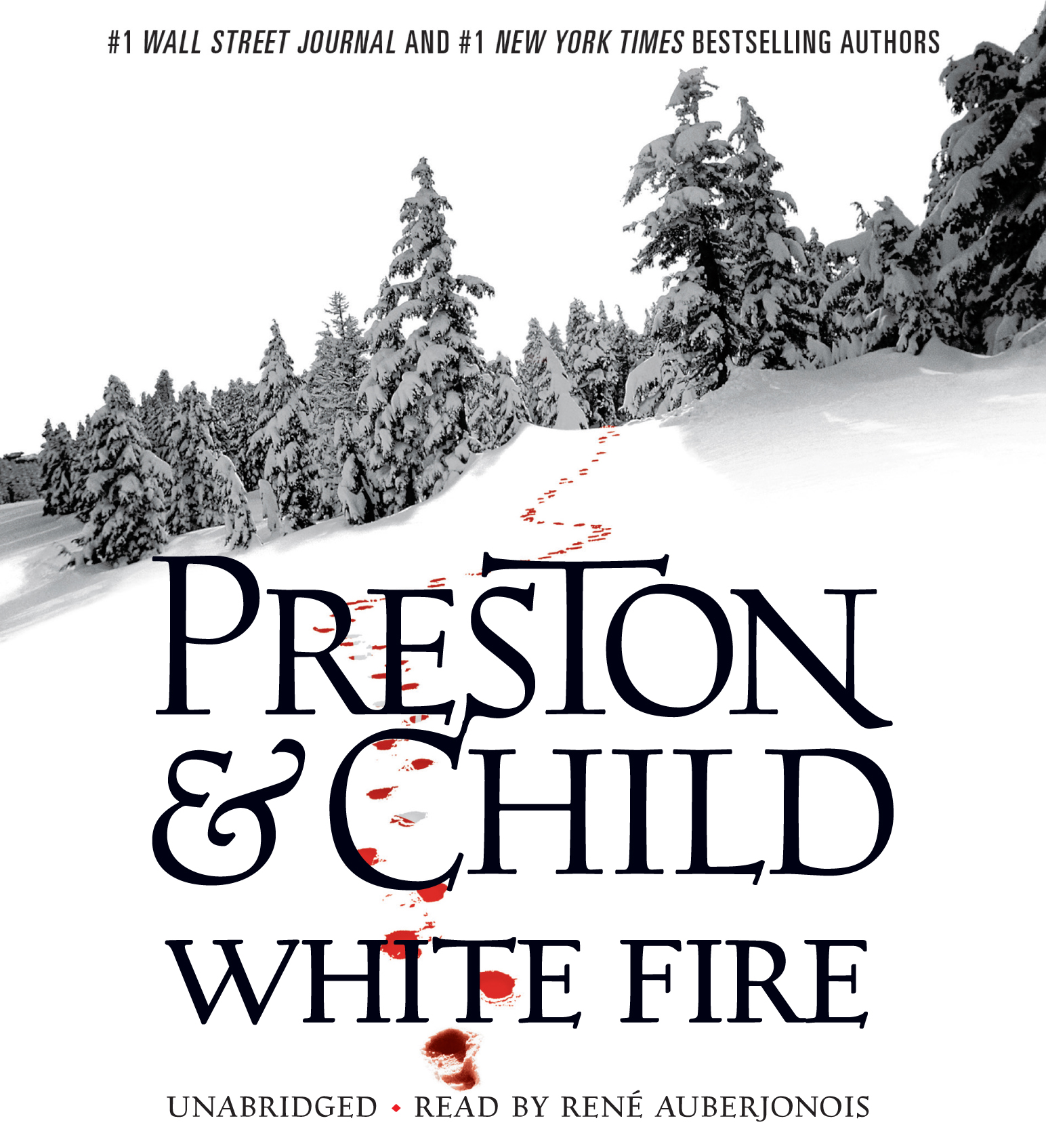
Douglas Preston is the best-selling author of 30 books, including the upcoming novel, White Fire, with his longtime collaborator Lincoln Child. I met Preston and Child at ThrillerFest VIII and learned a great deal from both of them. Below is my interview with Preston; I hope you enjoy it. Make sure to pick up a copy of White Fire, coming out November 12.

Many bestselling authors – Lee Child, James Patterson and Steve Berry, just to name a few – weren’t always writers; it was something they pursued later in life. In what field were you working prior to your first book being published, and what inspired you to take a chance at being an author?

My first job out of college was editing the throwaway newsletter published by the American Museum of Natural History. I found that editing other people’s work was not all that much fun. I wanted to write my own stuff. So I started writing for the newsletter, and then I was given a column in Natural History magazine to write about the Museum. Finally, I got a call from an editor at St. Martin’s Press named Lincoln Child, who suggested I write a book about the Museum. That was my first book, Dinosaurs in the Attic. Linc suggested we collaborate on a thriller set in the Museum, which became Relic, and the rest is history…

Many of us have fond memories of books that changed us in some way. Are there any books or authors that have greatly influenced you over the years?

Very much so. The books that profoundly affected me are, in no particular order, The Sirens of Titan, War and Peace, The Woman in White, Asimov’s Foundation series, Abbey’s Desert Solitaire, Charlotte’s Web, A Wrinkle in Time, the “Yes I will yes” chapter of Ulysses, The Andromeda Strain, and Patrick O’Brian’s Aubrey/Maturin series of novels.

Relic

In your free time, what kinds of books do you like to read and who are your favorite authors?

These days, I like to read nonfiction, mostly in the areas of science and biography. Right now I’m reading The Mind of the Raven by Bernd Heinrich. I recently read a fascinating biography of J. Robert Oppenheimer, father of the atomic bomb, called American Prometheus. One of the greatest nonfiction books ever written, in my view, is The Making of the Atomic Bomb by Richard Rhodes. And on the same subject, another superb book on the Manhattan project is 109 East Palace by Jennet Conant.

In addition to novels, you’ve written non-fiction work as well. Do you prefer one over the other and how does the writing experience for each differ?

They’re so very different. When I’m writing a novel I curse the fact that there’s no structure and I have to pull it all out of thin air and wish I were writing nonfiction. When I’m writing nonfiction, I feel imprisoned by the facts and wish I could just make it all up or bring in a serial killer to spice things up.

Your first book with Lincoln Child, Relic, was critically acclaimed and a New York Times Bestseller. How was it writing the first novel with Lincoln, and how has your collaborative writing process evolved over the years?

A writing partnership is like a marriage, except with Linc the sex is nonexistent… It can be difficult, but Linc and I over the years have learned how to disagree. The important thing is we trust each other implicitly. If Linc says to me, “This thing you wrote stinks,” I may get upset, but I have to believe him. That’s why we have a partnership—to tell each other the hard truths.

White Fire

Your popular protagonist, Aloysius Xingu L. Pendergast, debuted in Relic and he’s going to be in your new novel, White Fire, coming out in November. What’s the premise of the new book, and what do you have in store for your readers?

White Fire opens with an historical event: a real (and fateful) dinner at the Langham hotel in London during which Oscar Wilde and Arthur Conan Doyle met each other for the first and last time. What they discussed has been lost to history, but it seems Wilde made crucial suggestions to Doyle about his newly invented character of Sherlock Holmes, and Doyle for his part told Wilde all about police procedure, which inspired Wilde to write The Portrait of Dorian Gray. Then our novel moves to the present-day. Pendergast has to rescue Corrie Swanson from jail in an upscale Colorado ski resort, but just after he arrives, a serial arsonist strikes the town, burning down multimillion dollar mansions with the people still inside…

You’ve written trilogies and stand-alone thrillers. Do you find one more satisfying than the other? And when writing a trilogy, how do you keep track of all the details?

They both satisfy in different ways. With a trilogy we can go deep and spin out a vast, complex story with many subplots. It is a daunting task to keep track of everything. A solo novel is shorter and sweeter, and perhaps punchier in some ways. The middle novel in a trilogy is always difficult…

Meeting Douglas Preston at ThrillerFest VIII.

Meeting Douglas Preston at ThrillerFest VIII.

One of the hot topics at ThrillerFest this year was whether or not to outline a book. What are your thoughts on this issue? Do you plot out your novels in advance or do you simply have an idea and start writing?

Linc and I outline. We first create a general, narrative of the novel: how it opens, what happens, where it ends up. Then we outline maybe ten to fifteen chapters ahead, lengthening the outline as we write. I don’t know how writers can just start writing without knowing where they’re going, but some outstanding novelists do work that way. Tony Hillerman, one of my favorite mystery writers, never knew the ending of his books when he started, and yet he pulled off one great novel after another. I think every writer needs to find their own way of doing things. 

According to Goodreads, there’ve been nearly 125 books set in Maine – everything from John Irving’s The Cider House Rules to It by Stephen King. Being a resident of the Pine Tree State, why do you think this is the case?

Maine is dark and cold and beautiful and mysterious, with resolutely independent people. It has everything a writer might ask for in a vivid setting and compelling characters.

If you could offer aspiring writers once piece of advice, what would it be?

Write every day, seven days a week, if only for an hour at a time. And keep that hour sacred. Warn your friends and family to stay away. A writer must write, just as violinists must practice and Olympic athletes must train. That sounds obvious but you would be surprised at how many people want to be writers but don’t write very much.

Author Interview: Jon Land

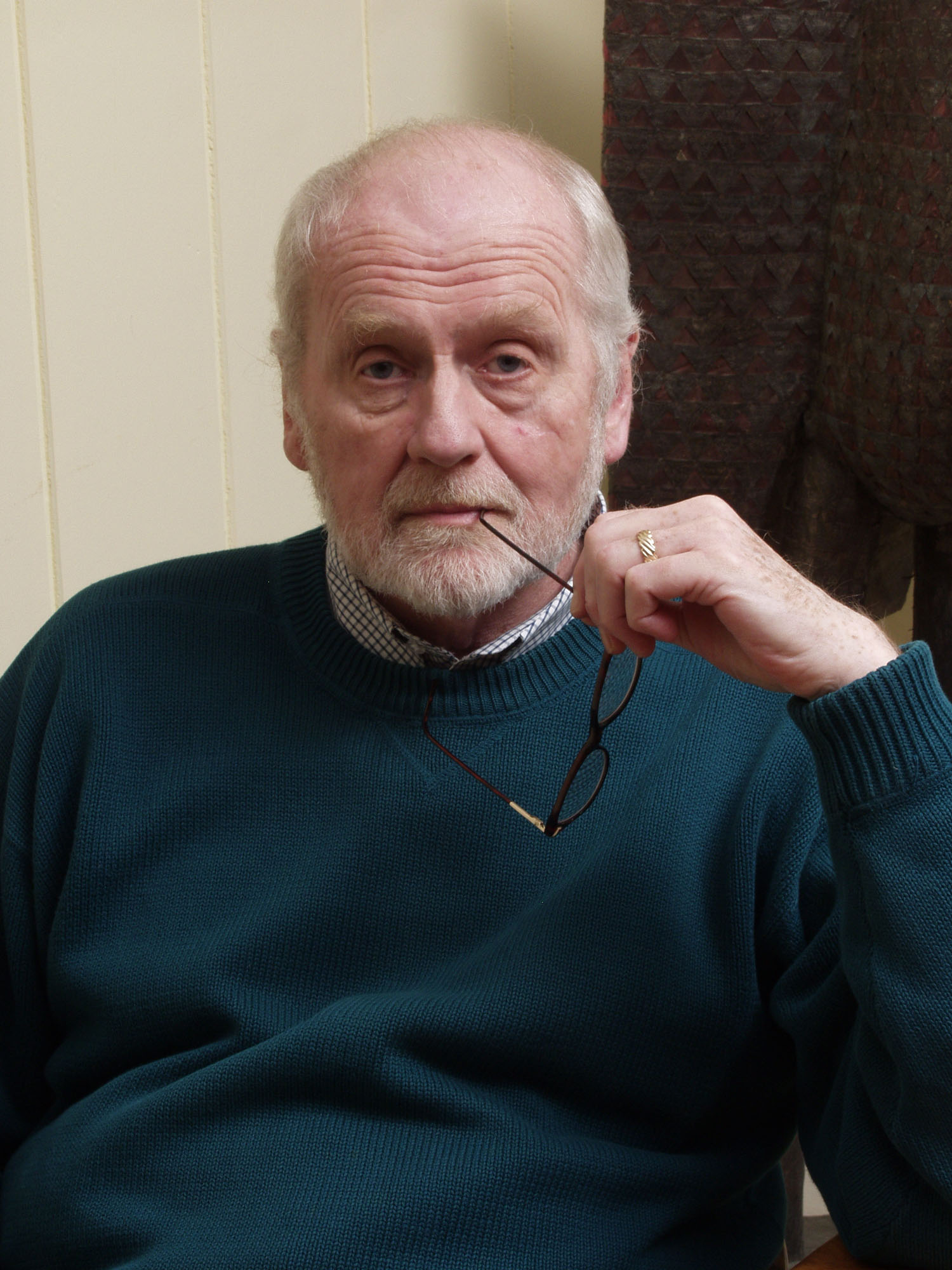
Jon Land

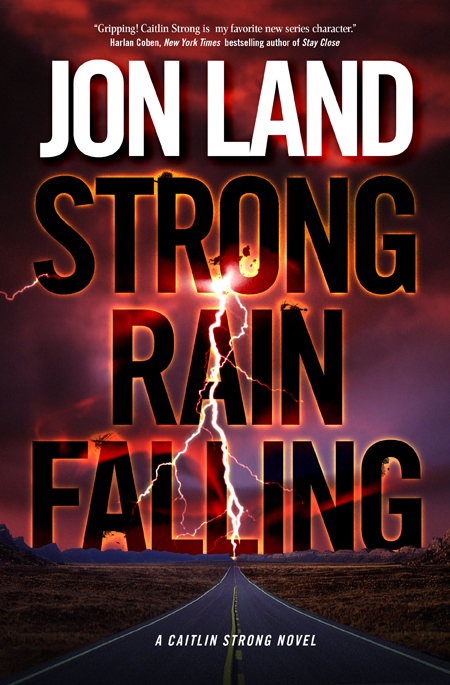
Jon Land is the bestselling author of over 25 novels, including the popular Caitlin Strong and Blaine McCracken series. I met him at ThrillerFest VIII and recently completed his newest novel, Strong Rain Falling. Jon is a terrific author and if you haven’t read his work, make sure you do. Below is my interview with him; I hope you enjoy it.

Your books involve a variety of characters and multiple plots. To keep things straight, do you draft an outline before sitting down to write a book or do you just start and see how it unravels?

My books definitely take on a life of their own, almost from the very first page. I’m a fly-by-the-seat-of-my-pants writer in all respects. I operate on the theory that if I don’t know what’s going to happen next, then the reader can’t possibly know. I can get away with this because I trust my characters to take me where they want and need to go. I’m normally about 100 pages ahead with where I’m headed in my mind, never much more than that. As the book moves forward, the challenge becomes making the connections between apparently disparate events and plots—it’s the challenge, but also the fun along with a journey of self-discovery. I have no idea how I do it, although I suspect it has something to do with a level of insanity. (laughs) But the result, unfortunately at times, is my first drafts tend to need lots of work. In fact, I’d venture to say that one of my greatest strengths as a writer is actually rewriting, often based on my own objective read of what I’ve created. For me, first drafts are about getting it down and getting it done. Each successive draft hones and polishes the material further. I throw a bunch out, I add a bunch more—sometimes even entirely new characters, subplots and scenes if I sense a weakness or flaw. I’m also blessed with a terrific editor, Natalia Aponte, who’s always pushing me to do better, to make my Caitlin Strong books, and all my books for that matter, both structurally and emotionally complete. The thing I like to stress here is that no process works for all writers. We all have to find what works for us.

We all have authors and books that inspire us. Are there any specific writers or books that greatly influenced your reading or writing habits?

Well, The Exorcist was the first book I read cover-to-cover in a single day, a single sitting actually. Reading Robert Ludlum’s The Holcroft Covenant (along with The Matarese Circle) taught me more about what makes a great thriller than anything else. The Boys From Brazil taught me the importance of a great “What if?” question. The Stand showed me the wonder of taking the reader out of his or her world and into the world we fashion on the page. Marathon Man made me realize just how much caring about the characters means. I can quote portions of that book, just as I can from the others I mention here and far more. As far as strictly favorites, Lee Child and James Lee Burke are the authors I most look forward to, with plenty of others not far behind. David Morrell, who never writes the same book twice. Stephen Hunter, who’s a maestro when it comes to action scenes. Michael Connelly for writing books that are impossible to put down. And I’ve recently discovered John Hart who seems incapable of writing a bad sentence or creating a character who doesn’t command our interest.

Some authors love research while others find it to be a chore. Do you enjoy it, and what was one of the most interesting pieces of information you uncovered while conducting research for a book?

No, I don’t enjoy it and that’s why I don’t do the research first—I do the majority of it as I’m writing because it’s only then that I really know what information I’m going to need. Whenever I’m in doubt about something, I just make it up the way I believe it to be and then make the fixes afterwards. The problem with doing research in advance is what I call the Clancy Effect where you write the book around your research instead of weaving only the information the reader needs into narrative. That’s the real key because otherwise you risk slowing your story’s pace and losing the reader in the process. In Strong Rain Falling, the most interesting thing I learned was how the huge problem of drug smuggling out of Mexico, the cartels and everything else, actually began. Turns out it goes back to the influx of Chinese immigrants in the late nineteenth century who brought opium with them into Mexico. By the turn of the century, poppies were being grown all over the country and actual drug smuggling began soon after through a governor named Cantu who was bringing it into California through Baja. Truly fascinating stuff.

Strong Rain FallingStrong Rain Falling, your newest novel, is the fifth Caitlin Strong book. For those that haven’t read it yet, what does this new adventure have in common with its predecessors and how does it differ?

That’s a really good question. In common I think it has a great story that places Caitlin and company against really bad guys (well, a female villain this time out) planning to do really bad things that will have catastrophic effects on the country unless they’re stopped. In that respect all the books in the series are pretty much interchangeable which is kind of the case in all successful series fiction. Where each book in the series differs is in the emotional growth of the characters in the face of whatever challenges they’re facing. I made a decision with my Caitlin Strong books from the get-go that I was going to age the characters in real time, not book time. In other words, they were going to evolve emotionally from one book to the next and I think in addition to having the fastest pace of any entry in the series, Strong Rain Falling features the most emotionally complex story. That’s because we really get to see both sides of Caitlin and Cort Wesley Masters thanks in large part to the challenges that arise with their version of a nuclear family that includes Cort Wesley’s two teenage sons. But even more I love the nature of confronting Caitlin for the first time with a female villain who’s every bit her equal as a strong and independent woman. They only have two direct confrontations, but those scenes are priceless in what is essentially a battle of equally strong (no pun intended!) wills. But there’s also a historical connection between these two women that makes the antagonism between them even richer.

In Strong Rain Falling you go back and forth in time throughout the book. How do you effectively balance the present with the past and weave them together?

The historical subplots are my favorite part of the Caitlin Strong books and the factor that most distinguishes them from the crowded field for thrillers. Writing about the Texas Rangers intrinsically means writing lots about the drug trade that originates, and to an extent dominates, Mexico. So I finally asked myself, where did it all start? I couldn’t recall ever seeing any other writer answer that question and it turns out the Mexican drug trade actually began in the 1870s with a flood of Chinese immigrants who brought opium along for the ride. Just a few years later, farms growing the poppy flower needed to produce opium were sprouting up all over the country. And not long after that, right around the turn of the century, you have the actual birth of drug smuggling with opium being brought into the western United States through the Baja region. In fact, there was a Mexican provincial governor named Cantu (who’s actually a character in the book) who was lauded for building roads and other infrastructure projects when the real reason he built them was to facilitate his smuggling operation!

How did you get into writing and did you have any mentors who helped you along the way?

That’s a great question to start with and the answer, I don’t think, is very typical for those of us lucky enough to be in this profession. I didn’t actually start writing until I was a sophomore at Brown University. First off, that was probably a positive thing since it’s so easy for fledgling writers to get discouraged when they start out in high school or even before. I’d always enjoyed the process, dating all the way back to junior high, but I never had even considered the notion of pursuing a career. For me, law school was as certain after college as college was after high school. But the writing bug bit me while at Brown, and I started writing magazine articles for periodicals like People and The Saturday Evening Post and fell in love with, confession time!, seeing my name in print. Around the same time, I fell in love with reading again, particularly thrillers, and figured why not write one, specifically for my Senior Honors Thesis in Brown’s Honors Program. Two wonderful professors, George Monteiro and the legendary Elmer Blistein, took a huge chance by sponsoring me, but I ended up finishing the book. It was god-awful for the most part, but I’d proven to myself that I could do it. The next book I wrote was the first one that ended up selling and, to this day, I credit Brown to a huge degree in providing me the academic freedom and opportunity to chase my dream.

Pandora's Temple

You also have the Blaine McCracken series, which you recently returned to with the award-winning Pandora’s Temple. How was it revisiting a character you hadn’t written about in several years?

The biggest challenge I faced was how to age him and I decided to be true to the background and mythology of the series. As a deep cover operative who cut his teeth in Vietnam’s Operation Phoenix, he’d have to be around 60 years old unless I wanted to cheat a la Robert Parker who made the mistake of making his wondrous Spenser a Korean War vet meaning he’d be around eighty-five now and still kicking butt. But cheating the reader was no way to reintroduce McCracken and had I made him, say, forty-five, he’d have been killing Vietcong at the age of ten. So I decided to age him normally and introduce him in Pandora’s Temple about to celebrate his 60th birthday. The phone has pretty much stopped ringing and time seems to have passed Blaine by, when the call that brings him back to action comes. And that’s one of the things that brought him back to life for me. I realized he made the perfect metaphor for so many successful businessmen and women who find their jobs outsourced or phased out when they reach the same age, thanks to the current economy. I knew I had a theme that would create an emotional resonance in Pandora that would help elevate it above the run-of-the-mill thriller and make it not just a worthy addition to the series, but maybe the best one yet. Lucky number ten! Once I realized that, I was able to swiftly recapture McCracken’s voice and his sharp, thoughtful exchanges with his right-hand man, the seven-foot indestructible and wise Johnny Wareagle. It happened organically and didn’t need to be forced at all, although I did go back and add some scenes to help recapture the magic between them that helps define who they are and the eternal quest they find themselves on. Because at heart all great thrillers are quest stories and McCracken’s quest here is to find Pandora’s box because that’s the only way to save the world. But this time out in saving the world, Blaine is also saving himself from the scrapheap, and watching him come to embrace that opportunity as the story goes on imbues the book with just the verve it needed to do justice to a hero who’s been away from the page since 1998.

When writing a series, how do you keep things fresh for the reader? And how do you keep track of all the details from book to book?

I’ve kind of answered that already: I keep things fresh by keeping my characters fresh. By confronting them with new crisis and challenges that further enrich and expand who they are as people, in addition to characters. The thriller authors I don’t come back to or don’t read anymore create emotionally vapid landscapes where there’s no emotional stake in the plights of their heroes. We need to care about them the same way we care about real people and if we don’t the book ultimately fails. I don’t really keep track of all the details in the Caitlin Strong series from book to book because I always assume (or hope anyway) the majority of those picking the latest up will be meeting her for the first time. The mark of any good series is to be able to pick up any entry in it first and not feel you’ve missed anything or need to know that isn’t provided. And that book ideally should make you want to go back and read all the ones that came before and all the ones that came after.

You’re an active member of International Thriller Writers and currently serve as its Marketing Chair. How has this organization benefited you as an author and do you recommend that aspiring writers join an organization such as this?

Well, “such as this” is a deal breaker because there is no other organization as concerned about its members and as responsive to their needs as ITW. It’s benefited me as an author tremendously, both for all the quotes my far more successful writer friends have provided and, even more importantly, creating a community of peers whose company I enjoy as much as I enjoy anyone’s. In fact, I’d go a step further and say that the five days of ThrillerFest are about my favorite days of the year. It’s interesting that some of the best and most famous names in our genre and our industry—David Morrell, Lee Child, James Rollins, Steve Berry, Doug Preston, R.L. Stine, Sandra Brown, Heather Graham, the list goes on—are also some of the best and nicest people I’ve ever met.

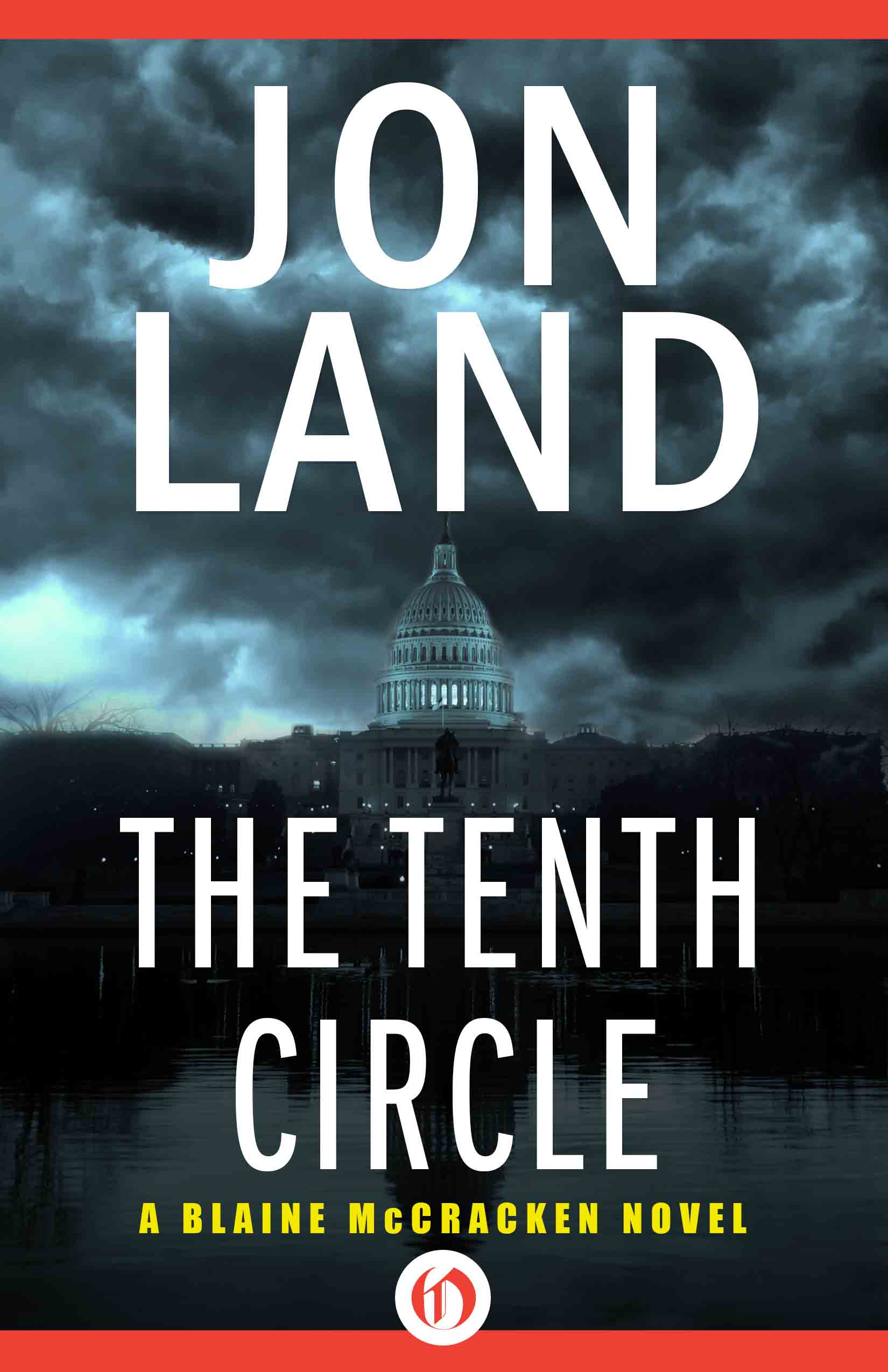
The Tenth CircleDo you have any new and exciting projects in the works?

The next book’s ready to come out. It’s called The Tenth Circle and it’s the follow-up to Pandora’s Temple once again featuring Blaine McCracken, my original series hero I’ve fallen back in love with. Beyond that I’m actually working on three books: a sequel to my bestselling The Seven Sins, a terrific project I’m doing in tandem with the great Heather Graham called The Survivor, and I’ve just completed the first draft of Strong Darkness, the next book featuring Caitlin. But, oh boy, you know what I said about first drafts earlier and I’ve got my work cut out for me on this. Then again, that’s nothing new!

Author Interview: Taylor Stevens

Taylor Stevens

Taylor Stevens is an award-winning New York Times bestselling author whose debut novel, The Informationist, took the literary world by storm in 2011. Since then, she’s published two more novels starring the popular protagonist Vanessa Michael Munroe: The Innocent and The Doll. I had the pleasure of meeting Taylor at ThrillerFest VIII in July, and she was kind enough to grant me the interview below. I hope you enjoy it.

You grew up in a communal apocalyptic cult where, as a teenager, you entertained the children with stories. What inspired these stories and did you use them as a way to briefly “escape” your dire surroundings?

Imagination was very much an escape mechanism. We didn’t have access to the outside world, so basically no novels, no television, no outside music and very, very few pre-screened movies. We spent a lot of time doing mundane manual labor—washing laundry, cooking, taking care of younger children—or out on the streets begging and that often meant considerable hours getting to/from our begging spots with nothing to keep our minds engaged in-between. Telling stories turned me in into the de facto entertainment and that’s pretty much how it started.

You’ve said that your scholastic education stopped at the age of 12 when you were separated from your parents. Having met you and read your books, I can say, without a doubt, that you’re a very intelligent woman. How did you go about catching up on those lost years of learning after you broke free from the cult in your 20s?

For some things, I still haven’t. There’s a huge difference between intelligence and education and although I’m very fortunate that I have the ability to self-teach through absorption, there are some things that I’m resigned to never grasping. For example, since math for me stopped when I was around 11, I still struggle desperately with math concepts. Math is one of those things that you can’t just skip three years and pick up where you left off by reading a few books. Even though I understand everyday mathematical concepts well enough to, say, manage money, I’m so bad at math in general that even using a calculator I still have to add numbers three times just to be sure I get the same answer twice. I read a lot—I’ve read so many text books cover-to-cover—that in many subjects you could say I’m better read than many people who’ve gone to college. But it’s splotchy and not exactly an “education” in the strictest sense. I couldn’t put it on a resume. I’m still kind of screwed in that regard if this whole writing thing doesn’t work out.

Being a mother, I’m sure finding time to write must be hard. How do you overcome this challenge and do you set out to type a specific number of words every day?

I do have to juggle around their needs and there are times when this is easier said than done, but it’s far easier now than it used to be when they were pre-school and kindergarten ages.  There are also chunks of time, for example during research and promotion—which in my case often means having to travel—as well as key points when contributing to a manuscript in its journey through the production pipeline, that it’s just not possible for me to put new words on a page. My goal, when I’m actually writing, is 1000 words per day, 6 days per week. I don’t always hit it, but that’s the goal.

The Informationist

The Informationist, your debut novel, was a bestseller that was well received by the public and critics alike. How did it feel when James Cameron’s production company, Lightstorm Entertainment, picked up the film rights? And will you play an active role in the development of the screenplay?

That was an incredibly surreal experience. I believe the exact words out of my mouth when my film agent gave me the news were, “I’m sorry. I don’t think I heard you right. Do you mean James Cameron as in “Titanic” James Cameron?” Whether or not The Informationist actually gets turned into a movie still remains to be seen. Last I heard he was working on Avatar 2, 3 AND 4. That’s a long wait. Generally speaking authors have no input on any aspect of movie making. There are exceptions—I expect if I wrote Twilight or Harry Potter things would be different—but I really respect James Cameron as a film maker and love what he’s done with the female characters in his films. I trust him and am just as eager as my fans to see what he does with Michael Munroe.

Do you draft an outline before sitting down to write a book or do you start with an idea and see where it takes you?

I’ve done it both ways. With The Informationist it was very much by the seat of my pants and it was probably more of a surprise to me how the story unfolded than it was for my readers. Vanessa Michael Munroe as a character was definitely a by-product of pantsing, because I certainly didn’t have her figured out before I started writing. But it also took me roughly three years to write The Informationist. Granted, it wasn’t my full-time job, but still. I do outline now.  This came about as a matter of desperation—I didn’t know if I could write another book, and I had to prove it to myself by first telling myself the story. But what I found from doing that was that I could write a whole lot faster when I knew what was happening before I actually began.

As it is now, because I work on such tight deadlines, I can’t afford to spend a month or more writing in one direction only to find out it didn’t work and have to go back and start again so I have turned into an outliner. I have heard of some authors making copious notes, writing out family histories for the characters and such, but I have never done that. My outlines are something closer to simply talking out the story to myself, a “tell don’t show” proposition that runs into about thirty pages. Once the writing begins, those thirty pages will turn into about 500 or so, which will be cut down to around 450 and that will turn into a 320-page book, give or take.

The Innocent - Taylor Stevens

My favorite book of yours is The Innocent because the subject matter was fascinating and it featured great emotional depth. Clearly, this was inspired by your experience growing up in a cult. Was writing this novel a cathartic experience for you? 

I actually get this question quite often and it always makes me smile. Drawing directly on my background wasn’t necessarily easy, but I’d long come to terms with and already made my peace with what happened growing up—I don’t think I could have produced the book otherwise. Mostly, it seemed like a perfect opportunity to showcase more of Vanessa Michael Munroe’s skill and badassery while at the same time offering readers access to a firsthand account of cult life that most thriller writers don’t have. If there was any part of the experience that was cathartic, it was in finally being able to give a voice to the hundreds and thousands of kids who were raised like me—to raise awareness of the issues and prejudices we face. There is so much misunderstanding and judgment against us simply because of where we were born and how we were raised, choices that were made by our parents, not us. Our story has been hijacked by the cult, by the media, by sociologists, by basically everyone. It was fantastically satisfying to finally have our story told from our point of view—not some twisted version put out for ratings and sensationalism.

What do you find most satisfying about being an author?

Every day I wake up grateful that I get to do what I do for a living. I consider each additional book to be a stay of execution which allows me, for one more year, to still get to plan my own schedule, spend hours alone in relative quiet, and be able to be available to my children whenever they need me. I’m completely ruined for real life. I don’t know that I could ever hold a corporate job—not that I couldn’t do the work, I just don’t think I could handle the lifestyle that comes with it.

Taylor Stevens - The Doll

In The Doll, you wrote the following line: 

“Munroe focused on the ground, processing. He’d given her what she needed to know, and she in turn had scattered seed that might lay fallow or might, if she was lucky, eventually sprout into saplings strong enough to split the hardened topsoil that kept him as the Doll Maker’s doer.”

As far as I’m concerned, you’re one of the most talented authors when it comes to metaphor usage and this sentence is a perfect example. Do you spend a lot of time coming up with these or do they organically flow out of your writing?

Wow, thanks for the compliment. I’m blushing. My understanding of grammar is still stuck in 5th grade and 5th grade was a long, long time ago so, if you asked me to explain what a metaphor is, I’d probably just give you a blank look. Most of what I write just comes from instinct, from trying to translate emotion and feeling into words that make sense to other people, and then attempting to craft those words with as little corniness and as few reading hiccups as possible.

What’s the most challenging part of writing for you? 

The initial draft, for sure. This is where the actual scenes are fleshed out, the characters are built, and the plot is intertwined. It’s torture. When it comes to the nitty-gritty: action sequences are the hardest, especially when they involve multiple characters. Conversations are the most fun and go the fastest—that’s when the characters get to come alive and their conflicts play against each other.

1270999_10151546617996261_879066557_o

Oscar Madison once said, “I don’t like writing. I like having written.” Do you identify with this sentiment or do you enjoy the writing process from start to finish?

Oh, yes, I absolutely identify with that sentiment. So many authors have been credited with that quote, and I’ve heard it used by so many friends, that I’m beginning to suspect it must be a universal truth among writers. Personally, I’m not really what I’d consider a “creative.” I’m far more comfortable with things like spreadsheets and data entry than crafting people and places and lifetimes out of nothing. It’s one thing to be able to make up a story with words, using broad brush strokes, and another entirely to bleed it out on paper in excruciating detail, so for me, developing the first layers of writing a book is incredibly difficult. Editing and re-writing after the initial creative work is finished is much easier and, since that’s the part of writing that makes a crappy story readable, that has worked out pretty well for me so far.

You just completed your fourth Vanessa Michael Munroe book, The Catch. What’s the story’s premise and in what countries is it taking place?

In The Catch, Munroe is headed back to Africa, this time to the north and east where she gets tangled up with a hijacked ship. Readers will have an opportunity to watch how she operates when she ends up in unfamiliar territory where she’s on her own and where she has no prior contacts or connections. And this time—unlike The Doll which entwined two timelines, two casts of characters, and two different plots—there is only one plot and one point of view. In The Catch, it’s pure Vanessa Michael Munroe, all the way.


Author Interview: Thomas B. Sawyer

Thomas B SawyerAt ThrillerFest VIII, I was lucky enough to meet Thomas B. Sawyer, the former head writer for one of my all-time favorite TV shows: Murder, She Wrote. In addition to working in television, Tom has written several books, as well as a musical drama. Below is my interview with Sawyer about his exceptional career. I hope you enjoy it.

Growing up, did you always want to be a writer?

In a way, yes. My childhood ambition/fixation was to draw and write a realistic syndicated daily newspaper comic strip, telling a continuous story. There are almost none of those today, but they were big when I was a kid. My hero was Milton Caniff, who drew and wrote such strips as Terry & the Pirates and Steve Canyon. I started freelancing as a comic-book artist (writing a few) in Manhattan at age 20, moving on to advertising, where I became a successful illustrator. Along the way, I realized that doing a daily strip was not for me, so I began making short films, and fell in love with directing. I studied with Lee Strasberg, directed off-off Broadway, and directed/produced TV commercials for major ad agencies.

What led you to the television industry?

I moved from NY to the LA area to try breaking into movies – as a director. My plan, produce and direct a low-budget comedy as a calling-card. My writer fell out as soon as I arrived on the Coast, so I wrote it myself. Then, the financing fell through, so I bankrolled it, shot it, and began screenings in hope of finding a distributor – and getting my money back. By then, I’d begun to network with people in the biz, and would invite them to screening as well. One was a multiple Emmy-winning writer/director/producer, Lila Garrett. She approached me at the end of a screening: “Tom, you should be writing for television.”

Truthfully, I had never even thought about that, totally focused as I was on directing movies. I asked her how I might get started. Her response, with a shrug: “I’ve got a production deal. If you get an idea, call me.” Two weeks later, I phoned her with a one-line pitch: “A gang-comedy on a tacky used-car lot in the valley.” She said: “That’s great. You’ll write it and I’ll produce it.

Another two weeks, my first gig in Hollywood: I was writing a comedy pilot for CBS. Incidentally, it was several years before I realized that is not the way it works for most people.

How did you become involved in Murder, She Wrote?

I became a writer for Murder, She Wrote (MSW) before it began to air, the result of my agent sending show creator Peter Fischer a non-mystery series pilot script I’d written for CBS, a one-hour WWII drama titled Cody’s War. Peter ‘saw’ something in it – presumably, that I could write scenes that worked – and he gave me a ‘blind assignment’ to write an episode. Meaning, I had to first come up with a story that was acceptable. He invited me to come in and view the pilot, and to me, anyway, Angela Lansbury’s specialness, her presence, was awesome. As was the prospect – the honor and privilege, really – of writing for her.

MSW looked to me like a hit, and I said so. In response to my question about the approach, the show’s style, Peter explained that he envisioned it as “sort of” in the mold of traditional Agatha Christie puzzle mysteries. Which prompted – with no hesitation: “Peter, I have to tell you, when I was a kid I read a couple of Christies and one or two locked-room mysteries, you know, where they gather the suspects in the drawing-room at the end? They bored the shit out of me, and I won’t write that for you.” His response: “Okay. What will you write?” “I’ll write The Maltese Falcon.” Peter replied without missing a beat: “That’ll be fine.” And – on reflection – I realize that that was my signal contribution to the show. With few exceptions, over the next 12 seasons, in each episode we did a play about a bunch of interesting characters in conflict with each other. And someone is murdered.

What was it like working with Angela Lansbury?

The absolute best. Angela was – and still is – a total professional, without vanity, generous to other actors. My only frustration was that the character of Jessica Fletcher, as originally conceived, used such a tiny fraction of Angela’s incredible range as an actress. But in re-examining her movies, I observed that she played irate-and-pissed-off better than almost any actor in the world. So I contrived, in each episode, to give her at least one moment when another character would say the equivalent of: “Ms. Fletcher, I don’t have time for this, so get outta my office.” And Jessica would get her back up – and the show would immediately take on that energy.

Meeting Tom Sawyer at ThrillerFest VIII.

Meeting Tom Sawyer at ThrillerFest VIII.

Murder, She Wrote regularly featured popular guest stars. Which guest stars did you enjoy working with the most and why?

Jerry Orbach tops the list. Jerry played a recurring character, PI Harry McGraw, which we eventually spun off into a series (The Law & Harry McGraw). Jerry, a major Broadway musical star, was a great guy, and a delight to work with. Oh, there were so many others, too: Len Cariou, Anne Meara, Lorna Luft, Milton Berle, Bobby Morse, Buddy Hackett, Steve Lawrence… The list is endless.

How did your role on the Murder, She Wrote team evolve over the years, and what was it like when the show came to an end?

I was on staff, then off, doing other shows, and pilots and film scripts, plus the McGraw spinoff, but continuing to write for MSW. And then, after 7 seasons, Fischer departed, and I was asked to take over as Head Writer/Showrunner, which I did – and enjoyed enormously – for the next 5 seasons.

It was sad when CBS pulled the plug. We were still one of the top shows, but had become a casualty of demographics. We were on opposite ABC’s Lois & Clark, which had 1/3 fewer viewers. But, of a more advertiser-desirable age-group, they were able to charge more for commercials.

Our final episode: “Death By Demographics,” was about the murder of a broadcaster.

What is the TV script-writing process like, and how many revisions are made before shooting a scene?

A lot depends on the type of show. Comedies involve a lot of meetings in the “Writers’ Room.” Dramas, less so. And while I’ve written finished shooting scripts for action-adventure shows in as little as four days, teleplays for MSW took several months. Plus – unlike many theatrical movies – in TV, once the script is written, that’s what is shot.

The Writers Guild dictates that the TV episode writer do two drafts of the story (outline), and two drafts of the script. After that, the show’s staff writers have to make any necessary changes. Thus, it is in the interest of those staffers to work closely with the freelance writer, holding his/her hand along the way, so that final script is as close to shootable as possible.

You’ve written a musical drama (Jack) and a novel (The Sixteenth Man) about John F. Kennedy. What inspired you to base these two works on the former U.S. President?

I regard his loss as one of the major tragedies this country has experienced. JFK’s passion was without equal. Moreover, I find his life and family fascinating (operatic, really, hence, Jack), and the truth about his assassination never revealed (thus, my take on it, The Sixteenth Man).

How does writing novels compare to writing for television and theater?

In novels the writer really gets the chance to know the characters far more intimately. Though in the case of Jack, the writing process – and getting to know the characters went on for years. More than five in fact, before we figured out who Jack Kennedy was.

Your conspiracy thriller, No Place to Run, was focused on the U.S. government’s involvement in the 9/11 terrorist attacks. What inspired the premise? And did the sensitive subject matter lead to any interesting encounters with the government or law enforcement officials?

I gradually became convinced that 9/11 was known to be in work, and was abetted/permitted to happen because our government (as in: the MICC Complex) needed an event that would cause the public to put up with another war. I’m fully aware that once history is written, it becomes part of the public’s comfort-zone, but in writing that book, I figured if I could make as many as a dozen people think (re-think, actually), I had succeeded.

It did not provoke any encounters with government or law enforcement, but I was invited to post my take on it at a very interesting website, patriotsquestion911.com, where I found myself in some amazing company. I have since appeared on panels with a number of them. But getting the book published wasn’t easy. The head of one of the major houses in NY said to my agent: “I really like Tom’s writing, but I’m offended by his premise.”

Fiction Writing DemystifiedYou teach an online course about writing fiction and wrote the book Fiction Writing Demystified. How has writing for television influenced and helped what you produce as an author?

More than anything else, TV taught me that the number one requirement of any writer, (novelist, historian, ad copywriter, clergyman, you-name-it), no matter how lofty the goal, is to know – and never forget — that we are Entertainers.
Simply put, unless we entertain, one’s audience isn’t going to stay with us until The End.

Are there any authors in particular that you read regularly and draw inspiration from?

Absolutely. Moreover, these hold up for me on rereading. John O’Hara, Dashiell Hammett, Raymond Chandler, Donald Westlake, Elmore Leonard, Irwin Shaw, and Eric Ambler.

What do you think is currently the best-written show on television?

For me – and they’re inconsistent, a tossup between Blue Bloods and The Good Wife. The all-time best? The Sopranos.

Are you working on any exciting new projects?

Yes. I just finished my first non-stand alone thriller (w/humor), Cross Purposes. It features a New York PI, Barney Moon. Barney, a permanent fish-out-of-water, hates Los Angeles, is stuck there, and he doesn’t drive. I’m also completing my memoir, Who Knew…?

Author Interview: Donald Bain

Donald Bain

Donald Bain

I had the pleasure of meeting Donald Bain after he participated in a panel at this year’s ThrillerFest. For the uninitiated, he’s the author of more than 115 books, many of which have been bestsellers. Bain is most famous for being the author of the long-running Murder, She Wrote series. If you’re a fan of the show or just enjoy a good mystery, I highly recommend that you read these novels – they’re good, clean fun.

Below is my interview with the author; I hope you enjoy it.

In your memoir, Murder, HE Wrote, you stated, “I never wanted to be a writer.” What did you want to be, and how did you wind up becoming a writer?

I was headed for a career in broadcasting. I received Purdue University’s top award for my work on the university’s educational radio and TV stations, and intended to seek a job with a radio or TV station after fulfilling my three-year Air Force commitment (I was ROTC at Purdue). I ended up being officer-in-charge of the Armed Forces Radio and TV stations in Dhahran, Saudi Arabia. Following that I was the base PR officer in Amarillo, Texas, where I worked in my spare time as a DJ at a radio station. Upon being discharged I stayed in Amarillo and was an on-air personality at the ABC TV station, and continued to work in radio along with owning a piece of a nightclub where I led a jazz quintet.

I married and returned to New York, taking various jobs until my cousin, Jack Pearl, a prolific writer, got me magazine assignments. He also introduced me to an editor at a major publishing company who gave me an assignment to ghostwrite the history of stock car racing. That led to another book, Coffee, Tea or Me? and I became a writer despite my intentions to not be one.

You’ve been writing the Murder, She Wrote novels for many years. How did this opportunity come about? And did you think it would last this long?

I’d been ghostwriting DC-based murder mysteries for a well-known person when a publisher approached my agent to see if I’d be interested in writing a novel using characters from the popular TV show, Murder, She Wrote. I took the assignment and here I am 25 years later starting the 42nd book in the series. I never dreamed it would last this long.

How do you keep track of everything your characters have done since the inception of the Murder, She Wrote series?

With great difficulty. Fans of the TV show and of the series of novels have a much better grasp of the characters and events than my wife and I do (we’ve been collaborating on the series for quite a while).

Murder, She Wrote - The Queen's Jewels

You’ve ghostwritten many books over the years. Do you have any favorites among them, and how does the experience differ from being a named author?

Ghostwriting demands being sensitive to the “voice” of the person for whom I’m ghosting, and precludes me, to a great extent, from using my own voice. I’m especially proud of the 26 books in the Margaret Truman Capital Crimes series. Since her death, the novels contain my byline, which frees me up to out more of me in the books.

Speaking of favorites, at ThrillerFest you told me you really enjoyed writing The Queen’s Jewels. What other Murder, She Wrote books are among your favorites?

The Queen’s Jewels takes place on the Queen Mary Two, a magnificent vessel and a wonderful background for the story. I also enjoyed writing Murder on the QE2, another splendid ship. Trick or Treachery is a favorite because of the way the novel ends, and The Highland Fling Murders took me back to my family’s origins in Scotland. But every book in the series has something about it that pleased me.

Do you plot out your books ahead of time, from start to finish, or do you just start and see where the story takes you?

My wife, Renée, and I come up with a rough outline before starting writing, but it changes as the characters assume lives of their own and take the story in different directions.

How have you managed to keep the Murder, She Wrote series fresh over the past 20 years?

Having Jessica Fletcher travel help keep things fresh and new. Locations provide not only changing backdrops for the tales, they can become characters of their own. And having Jessica do things that the reader doesn’t expect of her also helps.

Do you aim to write a specific amount of words every day, and for how long do you write?

I used to aim for 10 pages a day, then start the next day rewriting those pages. I tend to write fewer pages each day now. What’s important to me is not allowing a day to pass without writing something.

Years ago you were an award-winning public relations executive. How did your writing and experiences in that field help you as an author?

I’m not sure that it did help me as an author, at least not the writing aspect of it. What I loved about PR was that it demanded that you develop a sense of what the public wanted and to come up with ways to satisfy those needs. It also brought me into contact with a wide variety of people and situations, each providing a learning experience.

Murder, She Wrote - Coffee, Tea, or Murder

In your free time, what kind of books do you like to read?

I don’t read much fiction when I’m writing a book, but I do read a number of non-fiction books that bear upon whatever it is that I’m writing at the moment. During those rare times when I’m between writing books I enjoy spy novels (good ones), and reading murder mysteries by those writers who I consider to be at the top of their game.
How has it been collaborating with your wife on the Murder, She Wrote series?

It’s a joy collaborating with Renée on the Murder, She Wrote series. She’s a really good writer who brings a dimension to the series that makes it better. She also provides a woman’s perception that gives the female characters more depth.

What are you working on now, and what’s next for Jessica Fletcher?

We’ve just completed Aloha Betrayed and have sent it to the publisher. At the moment we’re working on the storyline for the next book, which will take place in Cabot Cove and has high school football as a background. The working title is Deadly Rivalry.

Book Review – The Informationist by Taylor Stevens

The InformationistI recently finished Taylor Stevens’ 2011 debut novel, The Informationist. It’s the first in a series of books featuring Vanessa “Michael” Munroe, an expert in uncovering information for her clients. She’s best described as a detective without a badge that’s not afraid to rough somebody up. Similar to Lee Child’s Jack Reacher novels, this book was about the main character and what she did to overcome seemingly insurmountable odds. It started off slow, and trudging my way through words that most people outside of Africa wouldn’t know how to pronounce wasn’t fun. But once I cut past this and reached the half-way point, the story found its groove. As I neared the end I was eager to see how things would wrap up. It was filled with action, believable dialogue and a lead character I look forward to following on future adventures. If you’re seeking an enjoyable thriller, The Informationist is worth a read.

Below is the official synopsis and book trailer. And stay tuned for my interview with Taylor Stevens later this summer; it should be a good one.

Synopsis 

Vanessa “Michael” Munroe deals in information—expensive information—working for corporations, heads of state, private clients, and anyone else who can pay for her unique brand of expertise. Born to missionary parents in lawless central Africa, Munroe took up with an infamous gunrunner and his mercenary crew when she was just fourteen. As his protégé, she earned the respect of the jungle’s most dangerous men, cultivating her own reputation for years until something sent her running. After almost a decade building a new life and lucrative career from her home base in Dallas, she’s never looked back.

Until now.

A Texas oil billionaire has hired her to find his daughter who vanished in Africa four years ago. It’s not her usual line of work, but she can’t resist the challenge. Pulled deep into the mystery of the missing girl, Munroe finds herself back in the lands of her childhood, betrayed, cut off from civilization, and left for dead. If she has any hope of escaping the jungle and the demons that drive her, she must come face-to-face with the past that she’s tried for so long to forget.

A Conversation With Michael Des Barres – Part 3

Michael Des Barres and I hanging out before his concert in NYC.

Michael Des Barres and I hanging out before his concert in NYC.

Below is the conclusion to my three-part interview with Michael Des Barres. Make sure to read part one and part two.

There are two videos at the end of this post: One is a live clip from Michael Des Barres’ concert in New York City on March 7, 2013 at the Bowery Electric, and the other is Michael’s music video for his terrific new single, “Life Is Always Right.”

When it comes to how to distribute your music, how do you decide what works best for you?

Well, what works best for me is ownership. Autonomy is everything. As you can imagine, I’ve been owned for 40 years as a recording artist. And I don’t like that. I didn’t like it then, and I don’t like it now…so I don’t do it. I’m in the position where I can sit down and figure out how I want to get my music out to people and bandcamp is fantastic. iTunes and Amazon clearly have an infrastructure that works, and I have my own infrastructure. We do our own artwork. Photographers, for some reason, like to take my picture, so I have an enormous amount of content to turn into the graphics required.

People enjoy working with me because I’m enthusiastic and it’s fun for them. It brings the best out in them. Half of this endeavor is being able to inspire others to do great stuff. And I don’t mean great in the sense of being better than anybody else. I mean just great, fun work that they enjoy doing.

And in terms of  distribution, there are a particular ways to go. You have iTunes and Amazon, and then it becomes about building a fan base. I fully accept the notion that music is free. And I have no problem with that; I think it should be free. Then it becomes about selling other things, t-shirts and merchandising or licensing songs for TV shows or movies – whatever it is to make a living out of it. But let’s not forget, I am 65 years old, I’ve got 45 movies, 100 hours of American television and I’ve sold a lot of songs to people. I am not struggling in the back of a van. I have autonomy, in that I can do whatever I want. What a great place to be. 

With your rich body of work in acting and music, I think of you as a Renaissance Man. You’re just an artist at heart, right?

Yeah, I just want to express myself. The trick about self-expression is knowing who the self is that’s doing the expressing. So, you have to work on who you are to be an authentic artist. You can be anything. You can be a sculptor, a painter, a photographer, a choreographer, a rock and roll star, whatever. What do you want to express, and who is doing the expressing? If I’m coming from an inauthentic place and I’m trying to be somebody else and I’m writing songs for an audience, or through a persona I’ve invented, it’s inauthentic. The audience doesn’t know why it’s inauthentic, but they know that there’s something wrong. So, half of the work as an artist is figuring out who the fuck you are – who’s doing the expressing. That’s why they say a writer “has a voice.” A writer has a voice because it’s true; it’s a true voice. Whether it be Hemingway or Voltaire, they had their own form of expression. They knew what they wanted to say – a point of view, about art and life and the human condition. And if you feel that way, you’ve got a shot at other people feeling the same way. If’ it’s authentic then it will reach the authentic part of the audience and you’ll have a career. 

That’s why Hollywood is such a tainted place. The houses and cars are leased. It’s a land of fantasy, smoke and mirrors and illusion. And that’s why the movies suck and the majority of the music sucks – because they’re trying to figure out what the people want, rather than creating what they love. And I’m not interested in mainstream success. I was never interested in the mainstream. I drown in the mainstream. I have no desire to be there, none whatsoever. And yet I continue to do the TV shows, and I’ve got a couple movies in the can coming out. Of course I do…because I’ve got to fund the work that I love. 

If you could collaborate with any musician, living or dead, who would it be?

It would be Booker T & the M.G.’s. I would sit with them and write songs. These were the guys who were responsible for Wilson Pickett records and Otis Redding records. I would love to play with them: “Duck” Dunn, Steve Jordan and Al Jackson. And the other band I would have loved to play with is Muddy Waters and Little Walter Jacobs’ band. I would have loved to have played with them. 

IMG_0380Do you have a favorite new band?

I don’t know if you’ve heard of them, but I love Vintage Trouble. They’ll drive you crazy, they’re so good. They’re a young black singer and three white rockers, and they’re fantastic. Their influences are clearly the blues, and it’s exactly what I’m talking about on my radio show. And when they really get it right, it’s beautiful. 

Poison, god bless them, was a parody of the New York Dolls, as were most 80s’ hairnet, Aquanet hairspray bands. They had catchy little songs with the same riffs since time began. My favorite band of them all was Motley Crue – I thought they were fantastic. I’m very generous with this stuff. I can honestly say that I admire anybody that plugs in because it’s so dreadful. You’re putting yourself, literally, in an execution firing line – they can shoot you. It’s very brave to get up and play, so I never put anybody down. God bless anybody giving it a go. Having the balls to to stand up and say, “Look, this is what I do!” That’s great. Do I have preferences? Yes. And I’ll get on the bike in the gym and listen to Motley Crue. Sure, why not?

You mentioned the two movies “in the can.” Can you reveal any details about these projects?

One has just come out. It’s called California Solo with Robert Carlyle, which is just fantastic. He’s the actor in Trainspotting and he’s on ABC’s Once Upon a Time. Wiry Scottish actor, you’d recognize him. Fantastic movie – very fun to make. Grab a DVD and watch it with your girlfriend. It’s really one of the good movies about rock and roll. I play his manager and it’s all very sinister. And there’s this movie I just finished that’s being edited. It stars Gina Gershon, Jennifer Jason Leigh, Molly Ringwald, and myself, and it’s called Me. And it’s improvised. It was incredible to work with those 80s’ ladies. It’s going to be a hell of a movie. Very sexy, very troubling – very much about what’s going on today. It’s about a guy who thinks he’s in a reality show. I can’t tell you anymore about the story, but it’s going to blow your mind and it’s called Me. 

How do your various acting opportunities come about?

I have to audition like every other actor, and if you get it, you get it. For NCIS, I believe they called me in, but they want to see you. They don’t know if you’re 300 pounds or if you’re a junkie. They want to speak to you, and that’s fine; I’ll go in. If there’s something really cool and it has the potential to reach a lot of people, I’ll stand in a parking lot naked to get it. If it’s something I don’t want to do, I simply don’t go in on it. That’s the bureaucratic side of it. Then, there are friends that I’ve worked with and if they think there’s something right for me, they’ll get in touch. That’s usually followed by the sentence, “There’s no money in it.” (laughs) But you do it anyway because it’s challenging and a labor of love and lust. 

IMG_0390The way I discovered you was through MacGyver. When you were on the screen you brought gravitas to the scenes. 

I’m so glad you said that, and I’m so happy when someone says, “Hey, Murdoc!” It happens every day. I’m in Trader Joe’s with my girlfriend and there’s a guy shaking with item in his hand and I said, “What’s going on? Are you OK?” And he said, “You’re Murdoc!” I said to myself, oh god, that’s so great, and I gave him a hug and an autograph – signed the Trader Joe’s bag and moved on. I loved that character, it was great. And people still dig it to this day. How fabulous is that? 

Were you able to make it your own, or was the role of Murdoc already defined for you?

Oh, fuck no! What happened was I just came off The Power Station tour, and I remember I had this big vintage white Rolls Royce and drove onto the set at Paramount for the audition to play Murdoc, a killer in one episode. And the producers were all smoking outside the MacGyver offices and I pull up in my Rolls Royce. I, to this day, know that I got that job because of that entrance. (laughs) They saw me getting out of a white Rolls, all dressed in black and said, “There’s our guy!” And I did it for the next few years, as you know. 

Did you have a good working relationship with Richard Dean Anderson?

Oh, I loved him! Sweet, soulful, generous dude. And it was a hard job – being in a TV series. Wow! Hard work. 16 or 17-hour days, especially if you’re the star. You have to know about pacing, and he did. He paced himself well for such a physical role, and he did a fantastic job. And it was a huge show for many years. It wasn’t an under-the-radar show. It wasn’t a pop culture Twin Peaks, water cooler show. But it had a steadfast audience and I was very grateful for the opportunity.  

A Conversation With Dick Hill

Dick Hill HeadshotOver the past year I’ve become obsessed with audiobooks. They’re a great way for someone with a busy schedule (i.e., me) to enjoy books on the go. Whether I’m walking around town or brushing my teeth, I’m almost always listening to an audiobook on my iPhone or Kindle Fire HD, through the Audible or Overdrive apps.

Audiobooks are a magical form of entertainment because of the narrators that read them. These men and women are legitimate actors that breath life into the stories they read with a variety of intricate character voices, accents and dialects. The right audiobook narrator can make a mediocre book good and a great book excellent.

One of my favorite audiobook narrators is Dick Hill. Most famous for being the voice of Lee Child’s Jack Reacher series, Hill has nearly 500 audiobooks on Audible – including classics, sci-fi and fantasy, mysteries and thrillers, you name it. Hill is one of the most prolific audiobook narrators in the business and his ability to turn words into theater for the ears is impressive.

I recently had the honor of interviewing Dick Hill, and I hope the questions and answers below provide you with a greater understanding of this interesting profession. Enjoy!

How did you get involved in narrating books?

A friend of mine, Brit actor, was narrating for Brilliance Audio. They were looking to cast a WWII combat novel, and he suggested I get in touch. I did, recorded a couple pages of something similar I got off the supermarket shelf on a crappy little recorder and sent it to them. (They weren’t looking for audio quality, they’d provide that, they wanted to hear me read). Booked the gig, and knew I’d found my niche. Never looked back.

On average, how many hours does it take to record a book?

Depends on the length of the book, type of text etc. Generally I finish an hour of recorded book in around 75 minutes.

Do you read chapters straight through, or do you stop and start and edit the pieces together later to establish a seamless sound?

Susie is upstairs engineering and directing, and whenever I stumble or miss a word, we stop, roll back to a likely spot, then do a punch edit. She plays back for me to hear a lead in, then does an on the spot edit and I come right in and do it right. Generally.

How many audiobooks do you narrate each year?

I’d guess around 40 a year now, give or take a dozen.

From a business standpoint, do you have long-term contracts with publishers where you have to narrate a certain number of books a year, or are you hired on a book-by-book basis?

I’m paid per finished hour.

How are audiobook narrators compensated? Is there an upfront payment, a monthly retainer, royalties based on sales, or a combination of all three?

There are some works being done through ACX on royalty share, but I work strictly for fee. If Lee wanted to do a royalty share, or Stephen King, I’d be happy to, but those are not the kind of authors hoping to get someone to narrate their book on spec.

How do you make sure your recordings don’t include any background noise from inside the studio, like turning pages?

I’m quiet. I’ve developed a technique for moving from one page to the next that’s mostly soundless. If I do screw up, we just do an edit.

What is the most challenging aspect of your job and what is the most rewarding?

I find all the aspects I deal with challenging, but in a very good way. I relish the challenge of presenting the listener with the best, most compelling delivery I can achieve. It’s of the moment work, which I love doing. I don’t pre-read things, with a few exceptions. Susie preps the books, makes a vocabulary list to check, and gives me a character sheet noting gender, age, any accents mentioned or implied, etc. I use those to guide my performance. Since she’s prepped the book, she can alert me to any potential traps (e.g., don’t make the mystery caller too this or that) so the voice seems reasonable to fit the character it turns out to be. She generally doesn’t tell me just who those people are, or really, anything beyond performance guidance. I like to discover what happens right along with the listener. I love flying by the seat of my pants, doing cold reads. I’m good at them, and I think the sense of discovery helps with my work. Most rewarding?…pretty much all of it. Plus the checks. Getting paid to have fun, in large part.

Without naming it, have you ever had to narrate an awful book? If so, did you have to work harder or approach it differently than a book of higher quality?

Yes. Harder work. A couple were so bad I felt like a five dollar whore faking passion. I turned down any more work from those authors. Pretty lucky now, the publishers I work with most often have a very clear idea of the sort of things I like to do, and I’m seldom offered work I’d find offensive.

I’ve noticed that some of your books feature interesting audio effects to immerse the listener in the story. For example, Jack Reacher might be talking to someone on the phone and the voice on the other end is altered to sound as if it’s coming through a phone line. How is this done?

Those were probably earlier books. I prefer eschewing that sort of thing myself. If you’re gonna’ have a phone effect, then how about ambient noise, traffic, door slams, gunshots? I don’t include any effects or ask for any. I’m not aware of any publishers adding them any longer, though I’m not sure. I don’t listen to audiobooks myself, my own or anyone else’s. It’s immensely pleasurable to record books, but once I’ve done that why would I want to listen to them? Been there, done that.

What kind of personal preparation goes into getting to record an audiobook and how do you preserve your voice?

Occasionally if Susie gives me a heads up about a particular accent, I may go online to find samples of 15-year-old Malaysian girls with lisps raised in Irish Catholic orphanages till age ten then indentured as servants to a family of Germans with a Spanish head of the household. Other than that, I pretty much have a handle on how I approach accents, etc. Might not be Meryl Streepalicious, but then she has to perfect an accent for several hundred lines in a few projects per year. I do many more characters, many more books, so while I do try to do a good job with accents and dialects, my primary concern is to create characters and narrators that feel well motivated and interesting and further the author’s intent.

Recently, three of Lee Child’s Jack Reacher books, Die Trying, Tripwire and Running Blind, were rerecorded by another audiobook narrator, Jonathan McClain, and released on Audible. There was a backlash from fans for you not being the narrator. Do you know why your versions of these books were replaced and will you continue to be the voice of future Jack Reacher audiobooks, including Never Go Back, which comes out in the fall?

Yes, I’ve heard from a number of concerned folks. I think what that is, audio rights for the UK are issued separately, and Mr. McClain has been doing those. I will be doing the latest Reacher, and unless something happens I expect to continue doing so. Folks just have to look carefully to ensure they’re getting the reader they prefer, I guess.

Aside from narrating books, what other kinds of acting have you done?

I’ve worked regionally in live theatre, onstage. No film, some commercial video, ads and the like.

You and your wife have extensive experience in the audiobook industry. How did you two meet, and have you had the opportunity to collaborate on a project?

We met when she played Guinevere and I played Arthur in a production of Camelot. In addition to our work onstage, once we entered the audio world I directed her several times, she’s engineered and directed me on lord knows how many projects, and we’ve recorded a number of dual reads, one of which won us both Audies, the audiobook equivalent of an Oscar or a Tony. Or a Westchester Kennel Club best in show I suppose.

What projects are you currently working on that fans should look out for in the months to come?

Expecting that Reacher script soon, think there’s a fall release. Doing the last of the Stephen White series about Dr. Alan Gregory, which is heartbreaking for us. Love his writing and character insight, and one supporting character, Det. Sam Purdy, is one of the characters nearest and dearest to my heart. Susie’s prepping it this week, and is raving about how good it is and wailing about the fact that it is the last.