Author Interview: Thomas B. Sawyer

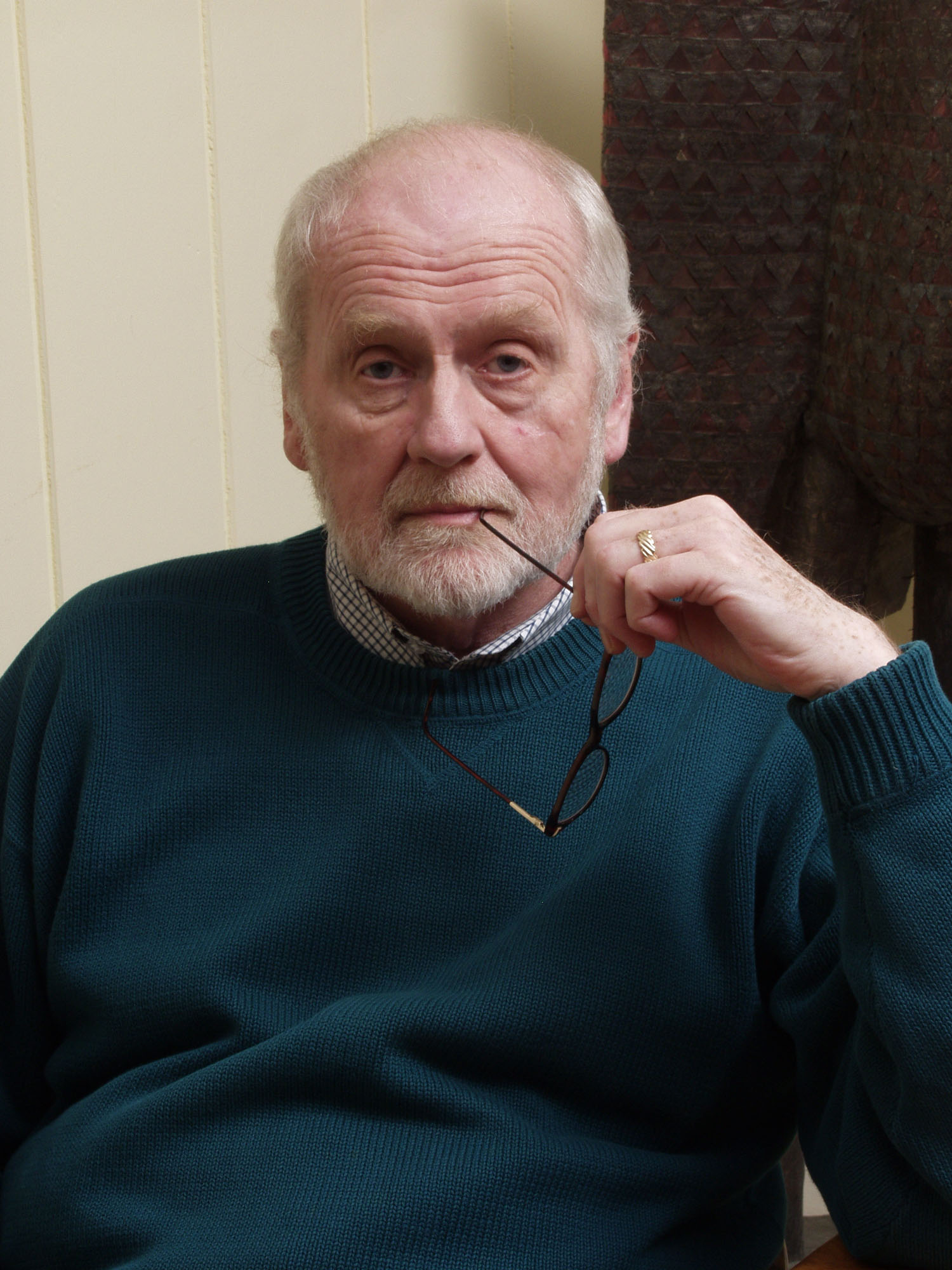
Thomas B SawyerAt ThrillerFest VIII, I was lucky enough to meet Thomas B. Sawyer, the former head writer for one of my all-time favorite TV shows: Murder, She Wrote. In addition to working in television, Tom has written several books, as well as a musical drama. Below is my interview with Sawyer about his exceptional career. I hope you enjoy it.

Growing up, did you always want to be a writer?

In a way, yes. My childhood ambition/fixation was to draw and write a realistic syndicated daily newspaper comic strip, telling a continuous story. There are almost none of those today, but they were big when I was a kid. My hero was Milton Caniff, who drew and wrote such strips as Terry & the Pirates and Steve Canyon. I started freelancing as a comic-book artist (writing a few) in Manhattan at age 20, moving on to advertising, where I became a successful illustrator. Along the way, I realized that doing a daily strip was not for me, so I began making short films, and fell in love with directing. I studied with Lee Strasberg, directed off-off Broadway, and directed/produced TV commercials for major ad agencies.

What led you to the television industry?

I moved from NY to the LA area to try breaking into movies – as a director. My plan, produce and direct a low-budget comedy as a calling-card. My writer fell out as soon as I arrived on the Coast, so I wrote it myself. Then, the financing fell through, so I bankrolled it, shot it, and began screenings in hope of finding a distributor – and getting my money back. By then, I’d begun to network with people in the biz, and would invite them to screening as well. One was a multiple Emmy-winning writer/director/producer, Lila Garrett. She approached me at the end of a screening: “Tom, you should be writing for television.”

Truthfully, I had never even thought about that, totally focused as I was on directing movies. I asked her how I might get started. Her response, with a shrug: “I’ve got a production deal. If you get an idea, call me.” Two weeks later, I phoned her with a one-line pitch: “A gang-comedy on a tacky used-car lot in the valley.” She said: “That’s great. You’ll write it and I’ll produce it.

Another two weeks, my first gig in Hollywood: I was writing a comedy pilot for CBS. Incidentally, it was several years before I realized that is not the way it works for most people.

How did you become involved in Murder, She Wrote?

I became a writer for Murder, She Wrote (MSW) before it began to air, the result of my agent sending show creator Peter Fischer a non-mystery series pilot script I’d written for CBS, a one-hour WWII drama titled Cody’s War. Peter ‘saw’ something in it – presumably, that I could write scenes that worked – and he gave me a ‘blind assignment’ to write an episode. Meaning, I had to first come up with a story that was acceptable. He invited me to come in and view the pilot, and to me, anyway, Angela Lansbury’s specialness, her presence, was awesome. As was the prospect – the honor and privilege, really – of writing for her.

MSW looked to me like a hit, and I said so. In response to my question about the approach, the show’s style, Peter explained that he envisioned it as “sort of” in the mold of traditional Agatha Christie puzzle mysteries. Which prompted – with no hesitation: “Peter, I have to tell you, when I was a kid I read a couple of Christies and one or two locked-room mysteries, you know, where they gather the suspects in the drawing-room at the end? They bored the shit out of me, and I won’t write that for you.” His response: “Okay. What will you write?” “I’ll write The Maltese Falcon.” Peter replied without missing a beat: “That’ll be fine.” And – on reflection – I realize that that was my signal contribution to the show. With few exceptions, over the next 12 seasons, in each episode we did a play about a bunch of interesting characters in conflict with each other. And someone is murdered.

What was it like working with Angela Lansbury?

The absolute best. Angela was – and still is – a total professional, without vanity, generous to other actors. My only frustration was that the character of Jessica Fletcher, as originally conceived, used such a tiny fraction of Angela’s incredible range as an actress. But in re-examining her movies, I observed that she played irate-and-pissed-off better than almost any actor in the world. So I contrived, in each episode, to give her at least one moment when another character would say the equivalent of: “Ms. Fletcher, I don’t have time for this, so get outta my office.” And Jessica would get her back up – and the show would immediately take on that energy.

Meeting Tom Sawyer at ThrillerFest VIII.

Meeting Tom Sawyer at ThrillerFest VIII.

Murder, She Wrote regularly featured popular guest stars. Which guest stars did you enjoy working with the most and why?

Jerry Orbach tops the list. Jerry played a recurring character, PI Harry McGraw, which we eventually spun off into a series (The Law & Harry McGraw). Jerry, a major Broadway musical star, was a great guy, and a delight to work with. Oh, there were so many others, too: Len Cariou, Anne Meara, Lorna Luft, Milton Berle, Bobby Morse, Buddy Hackett, Steve Lawrence… The list is endless.

How did your role on the Murder, She Wrote team evolve over the years, and what was it like when the show came to an end?

I was on staff, then off, doing other shows, and pilots and film scripts, plus the McGraw spinoff, but continuing to write for MSW. And then, after 7 seasons, Fischer departed, and I was asked to take over as Head Writer/Showrunner, which I did – and enjoyed enormously – for the next 5 seasons.

It was sad when CBS pulled the plug. We were still one of the top shows, but had become a casualty of demographics. We were on opposite ABC’s Lois & Clark, which had 1/3 fewer viewers. But, of a more advertiser-desirable age-group, they were able to charge more for commercials.

Our final episode: “Death By Demographics,” was about the murder of a broadcaster.

What is the TV script-writing process like, and how many revisions are made before shooting a scene?

A lot depends on the type of show. Comedies involve a lot of meetings in the “Writers’ Room.” Dramas, less so. And while I’ve written finished shooting scripts for action-adventure shows in as little as four days, teleplays for MSW took several months. Plus – unlike many theatrical movies – in TV, once the script is written, that’s what is shot.

The Writers Guild dictates that the TV episode writer do two drafts of the story (outline), and two drafts of the script. After that, the show’s staff writers have to make any necessary changes. Thus, it is in the interest of those staffers to work closely with the freelance writer, holding his/her hand along the way, so that final script is as close to shootable as possible.

You’ve written a musical drama (Jack) and a novel (The Sixteenth Man) about John F. Kennedy. What inspired you to base these two works on the former U.S. President?

I regard his loss as one of the major tragedies this country has experienced. JFK’s passion was without equal. Moreover, I find his life and family fascinating (operatic, really, hence, Jack), and the truth about his assassination never revealed (thus, my take on it, The Sixteenth Man).

How does writing novels compare to writing for television and theater?

In novels the writer really gets the chance to know the characters far more intimately. Though in the case of Jack, the writing process – and getting to know the characters went on for years. More than five in fact, before we figured out who Jack Kennedy was.

Your conspiracy thriller, No Place to Run, was focused on the U.S. government’s involvement in the 9/11 terrorist attacks. What inspired the premise? And did the sensitive subject matter lead to any interesting encounters with the government or law enforcement officials?

I gradually became convinced that 9/11 was known to be in work, and was abetted/permitted to happen because our government (as in: the MICC Complex) needed an event that would cause the public to put up with another war. I’m fully aware that once history is written, it becomes part of the public’s comfort-zone, but in writing that book, I figured if I could make as many as a dozen people think (re-think, actually), I had succeeded.

It did not provoke any encounters with government or law enforcement, but I was invited to post my take on it at a very interesting website, patriotsquestion911.com, where I found myself in some amazing company. I have since appeared on panels with a number of them. But getting the book published wasn’t easy. The head of one of the major houses in NY said to my agent: “I really like Tom’s writing, but I’m offended by his premise.”

Fiction Writing DemystifiedYou teach an online course about writing fiction and wrote the book Fiction Writing Demystified. How has writing for television influenced and helped what you produce as an author?

More than anything else, TV taught me that the number one requirement of any writer, (novelist, historian, ad copywriter, clergyman, you-name-it), no matter how lofty the goal, is to know – and never forget — that we are Entertainers.
Simply put, unless we entertain, one’s audience isn’t going to stay with us until The End.

Are there any authors in particular that you read regularly and draw inspiration from?

Absolutely. Moreover, these hold up for me on rereading. John O’Hara, Dashiell Hammett, Raymond Chandler, Donald Westlake, Elmore Leonard, Irwin Shaw, and Eric Ambler.

What do you think is currently the best-written show on television?

For me – and they’re inconsistent, a tossup between Blue Bloods and The Good Wife. The all-time best? The Sopranos.

Are you working on any exciting new projects?

Yes. I just finished my first non-stand alone thriller (w/humor), Cross Purposes. It features a New York PI, Barney Moon. Barney, a permanent fish-out-of-water, hates Los Angeles, is stuck there, and he doesn’t drive. I’m also completing my memoir, Who Knew…?

Author Interview: M.J. Rose

M.J. Rose

M.J. Rose is an international bestselling author of 13 novels and a founding member and board member of International Thriller Writers (ITW). I had the pleasure of meeting her at ITW’s ThrillerFest this summer. Her latest novel is Seduction, which I’ll be reviewing soon, and below is my interview with the author. Enjoy!

Continue reading

Author Interview: Donald Bain

Donald Bain

Donald Bain

I had the pleasure of meeting Donald Bain after he participated in a panel at this year’s ThrillerFest. For the uninitiated, he’s the author of more than 115 books, many of which have been bestsellers. Bain is most famous for being the author of the long-running Murder, She Wrote series. If you’re a fan of the show or just enjoy a good mystery, I highly recommend that you read these novels – they’re good, clean fun.

Below is my interview with the author; I hope you enjoy it.

In your memoir, Murder, HE Wrote, you stated, “I never wanted to be a writer.” What did you want to be, and how did you wind up becoming a writer?

I was headed for a career in broadcasting. I received Purdue University’s top award for my work on the university’s educational radio and TV stations, and intended to seek a job with a radio or TV station after fulfilling my three-year Air Force commitment (I was ROTC at Purdue). I ended up being officer-in-charge of the Armed Forces Radio and TV stations in Dhahran, Saudi Arabia. Following that I was the base PR officer in Amarillo, Texas, where I worked in my spare time as a DJ at a radio station. Upon being discharged I stayed in Amarillo and was an on-air personality at the ABC TV station, and continued to work in radio along with owning a piece of a nightclub where I led a jazz quintet.

I married and returned to New York, taking various jobs until my cousin, Jack Pearl, a prolific writer, got me magazine assignments. He also introduced me to an editor at a major publishing company who gave me an assignment to ghostwrite the history of stock car racing. That led to another book, Coffee, Tea or Me? and I became a writer despite my intentions to not be one.

You’ve been writing the Murder, She Wrote novels for many years. How did this opportunity come about? And did you think it would last this long?

I’d been ghostwriting DC-based murder mysteries for a well-known person when a publisher approached my agent to see if I’d be interested in writing a novel using characters from the popular TV show, Murder, She Wrote. I took the assignment and here I am 25 years later starting the 42nd book in the series. I never dreamed it would last this long.

How do you keep track of everything your characters have done since the inception of the Murder, She Wrote series?

With great difficulty. Fans of the TV show and of the series of novels have a much better grasp of the characters and events than my wife and I do (we’ve been collaborating on the series for quite a while).

Murder, She Wrote - The Queen's Jewels

You’ve ghostwritten many books over the years. Do you have any favorites among them, and how does the experience differ from being a named author?

Ghostwriting demands being sensitive to the “voice” of the person for whom I’m ghosting, and precludes me, to a great extent, from using my own voice. I’m especially proud of the 26 books in the Margaret Truman Capital Crimes series. Since her death, the novels contain my byline, which frees me up to out more of me in the books.

Speaking of favorites, at ThrillerFest you told me you really enjoyed writing The Queen’s Jewels. What other Murder, She Wrote books are among your favorites?

The Queen’s Jewels takes place on the Queen Mary Two, a magnificent vessel and a wonderful background for the story. I also enjoyed writing Murder on the QE2, another splendid ship. Trick or Treachery is a favorite because of the way the novel ends, and The Highland Fling Murders took me back to my family’s origins in Scotland. But every book in the series has something about it that pleased me.

Do you plot out your books ahead of time, from start to finish, or do you just start and see where the story takes you?

My wife, Renée, and I come up with a rough outline before starting writing, but it changes as the characters assume lives of their own and take the story in different directions.

How have you managed to keep the Murder, She Wrote series fresh over the past 20 years?

Having Jessica Fletcher travel help keep things fresh and new. Locations provide not only changing backdrops for the tales, they can become characters of their own. And having Jessica do things that the reader doesn’t expect of her also helps.

Do you aim to write a specific amount of words every day, and for how long do you write?

I used to aim for 10 pages a day, then start the next day rewriting those pages. I tend to write fewer pages each day now. What’s important to me is not allowing a day to pass without writing something.

Years ago you were an award-winning public relations executive. How did your writing and experiences in that field help you as an author?

I’m not sure that it did help me as an author, at least not the writing aspect of it. What I loved about PR was that it demanded that you develop a sense of what the public wanted and to come up with ways to satisfy those needs. It also brought me into contact with a wide variety of people and situations, each providing a learning experience.

Murder, She Wrote - Coffee, Tea, or Murder

In your free time, what kind of books do you like to read?

I don’t read much fiction when I’m writing a book, but I do read a number of non-fiction books that bear upon whatever it is that I’m writing at the moment. During those rare times when I’m between writing books I enjoy spy novels (good ones), and reading murder mysteries by those writers who I consider to be at the top of their game.
How has it been collaborating with your wife on the Murder, She Wrote series?

It’s a joy collaborating with Renée on the Murder, She Wrote series. She’s a really good writer who brings a dimension to the series that makes it better. She also provides a woman’s perception that gives the female characters more depth.

What are you working on now, and what’s next for Jessica Fletcher?

We’ve just completed Aloha Betrayed and have sent it to the publisher. At the moment we’re working on the storyline for the next book, which will take place in Cabot Cove and has high school football as a background. The working title is Deadly Rivalry.

ThrillerFest VIII – Day 4

I picked up more than 35 books at ThrillerFest.

I picked up more than 35 books at ThrillerFest.

The fourth and final day of ThrillerFest was just as enjoyable as the ones that preceded it. As you can see from the photo above, I left the conference with a ton of books. Below are highlights, photos and videos from the final day of ThrillerFest, including the entire 43-minute interview with Michael Connelly. I’m attending next year’s conference, which I’m sure will be even better. Now I have to try and finish these books before next July. Wish me luck!

Does Speed Kill?

Does Speed Kill?

Does Speed Kill?

  • “Writing expository material in my books makes me feel like I’m running in mud.” – Andrew Gross
  • “I don’t like to write books that feel like screenplays.” – A.J. Hartley
  • “If you have a sprint from the beginning of the book to the end, without slowing down, there’s no depth to it at that point.” – Sheldon Siegel
  • “If my wife stops reading my book in the middle of a chapter, I ask her why.” – John Gilstrap
  • “I love to go to plays to see where the acts end and whether or not people get up from their seats during the intermission. It’s a great way to learn about pacing.” – Heather Graham

Meeting T. Jefferson Parker.

Meeting T. Jefferson Parker.

T. Jefferson Parker Interview

  • “I decided to be a reporter so I could pursue my passion for writing and in my free time work on novels.”
  • “I didn’t want to be a series writer. I didn’t see myself in that place, at that time.”
  • “The great thing about being a writer is you can be sitting on the boardwalk in Laguna Beach, minding your own business, and the main character in your next novel can walk right in front of you.”
  • “When it comes to the writing process, I’m a Monday through Friday kind of guy, from 7 to 5 pm. If I can get five pages done, it’s a good day.”
  • “The hardest part for me is not writing. It takes me three months to come up with an idea good enough to start writing. Then it takes me about six months to finish the first draft, and another three months to make it as good as I can before I send it off to my agent.”
  • “The shortest outline I wrote was on a bar napkin. After explaining the outline to the publisher, my agent called me the next day and said, ‘I don’t know what you wrote on that napkin but the publisher just bought it.’”
  • “For Laguna Heat, I threw away 2,500 pages over a five year period. I never worked so hard to make a book readable. In total, there were six drafts.”
  • “I love to read; it’s nourishment for me. I usually have two or three books going at a time. If I didn’t read while I write, I’d never read.”
  • Young writers’ first goal should be to find their own voice, and stop trying to write like their heroes.”
  • “I still feel that my best work is ahead.”

Are Young Adult Novels Meant For Adults?

Are Young Adult Novels Meant For Adults?

Are Young Adult Novels Meant For Adults?

  • “A lot of my readers are adults because they grew up with me. I’m nostalgia to them. I’m Hall & Oates.” – R.L. Stine
  • “There was a statistic saying that 52% of YA readers are adults. But if you remove The Hunger Games and Harry Potter, I’m not sure that’s true.” – Michelle Gagnon
  • “I wrote my first young adult book in five weeks.” – Barry Lyga
  • “I write YA because that’s what I like to read.” – Linda Gerber
  • “Young adult novels have a direct, powerful and emotional point of view.” – Allen Zadoff
  • “On social media, 30% of my followers are adults.” – Lissa Price
  • “I don’t think it’s so remarkable that adults read YA. We all used to be teenagers.” – Kat Rosenfield

Photo 2013-07-17 12.34.34 AM

Michael Connelly being interviewed by Jon Land.

ThrillerFest – AgentFest

AgentFestDuring the second half of day two of ThrillerFest was AgentFest, which is best described as speed dating between aspiring authors and agents. Hundreds of authors looking to get published lined up in four or five rooms waiting to have five minutes or less to pitch a book to a variety of agents. The agents were very nice to the authors, and they had timers to make sure each person was given a fair shot. This went on for three and a half hours. In the end, some authors were asked to email the agents a few chapters or an entire manuscript, while others were kindly rejected. The rooms were filled with so much hope and anxiety it was palpable. In case you’re curious, I didn’t pitch anything; my books aren’t far enough along to warrant a review, but next year, who knows.

ThrillerFest – FanFest

Andrew Gross - ThrillerFest VIII

Hanging out with Andrew Gross at FanFest.

Yesterday was the third day of ThrillerFest, and last night was FanFest – a time for fans to spend time with the authors they love, get books autographed and have drinks. After FanFest, I had the honor of having dinner with one of my favorite authors, Andrew Gross. Below are photos from both events.

Meeting R.L. Stine.

Meeting R.L. Stine.

M.J. Rose

With M.J. Rose.

Spending time with Lincoln Child.

Spending time with Lincoln Child.

Hanging out with Steve Berry.

Meeting Joe Finder.

Spending time with Jon Land.

Spending time with Jon Land.

Having dinner with Andrew Gross.

Having dinner with Andrew Gross.

Dinner with Andrew Gross and fans.

Dinner with Andrew Gross and fans.

ThrillerFest VIII – Day 1

Hanging out with best-selling author Douglas Preston.

Hanging out with best-selling author Douglas Preston.

Today was the start of ThrillerFest, and I had the opportunity to meet and learn from some of the greatest writers in the business. Below are photos and highlights from some of the sessions.

Steve Berry

Steve Berry

Steve Berry – Six “C’s” of Story Structure

  1. Character 
  2. Conflict
  3. Crucible
  4. Complications
  5. Crisis
  6. Conclusion

Act 1

  • “In Act 1 you establish the character and create conflict.”
  • “Then you introduce the crucible – the reason why the character is willing to do something he wouldn’t normally do.”

Act 2

  • “Act 2 is when you introduce complications and focus on no more than two subplots.” 

Act 3

  • “At the start of Act 3 is the crisis point. By the time this takes place, there should only be 50 pages left in the book.” 
  • “After you’ve hit the crisis point, bring it home with a satisfying conclusion.”

Steve Berry – Point of View

  • “When you start your book, you need to decide who’s going to tell the story.” 
  • “Point-of-view characters are precious because they’re the only people’s heads we go into. You have a lot of characters in a novel, but you only go into the heads of a handful of them.”
  • “Some writers don’t feel this is important, but I respectfully disagree.”
  • “First person is the hardest point of view. Don’t even try it until you’ve written a million words; it will put pressure on you and tax your creativity.”

John Sanford

John Sanford

John Sanford – How to Tighten Your Manuscript 

  • “The first and last chapters are the most important ones in your book.”
  • “The first chapter needs to be emotionally engaging. The action needs to start in the first paragraph.”
  • “The last chapter is critical. You want it to go out with a bang and for people to leave with a smile on their face.”
  • “If you make too many unnecessary changes after you’ve finished a book, they’ll come back to bite you in the ass.”

Michael Connelly

Michael Connelly

Michael Connelly – How to Write a Good Series 

  • “Forget about writing a series. Just write the best book you can write.”
  • “I’m a visual writer. I see scenes in my head and I write them down.”
  • “You want to move forward and backward at the same time. You have to work in the backstory so people know where the character came from.”
  • “I’m writing for the people that have been riding with me.”
  • “I don’t outline, I just write.”

Lincoln Child & Douglas Preston

Lincoln Child & Douglas Preston

Lincoln Child & Douglas Preston – How to Have a Great Collaboration 

  • “A writing partnership is like a marriage. Unfortunately, in our case, the sex is no good.” – Douglas Preston
  • “You need to determine the potential partner’s strengths and weaknesses to see if he or she would be a good fit for you.” – Lincoln Child
  • “Lincoln writes vicious murder scenes. Underneath that white jacket beats a black heart.” – Douglas Preston
  •  “The editing process is like putting a literary zamboni over the manuscript.” – Lincoln Child
  • “I’ll write a series of chapters from one character’s point of view, and Lincoln will write a series of chapters from another character’s point of view, and then we’ll merge them.” Douglas Preston
  • “Writing, by its very definition, is an egotistical act.” – Lincoln Child

ThrillerFest Is Almost Here!

ThrillerFestNext week I’m attending my first ThrillerFest, and it should be a blast. I’ll have the opportunity to network with and learn from some of the best writers in the business. I’m sure I’ll have many great photos, videos and stories to share. Stay tuned to my blog for full coverage of the event.

Book Review – Unintended Consequences by Stuart Woods

Unintended Consequences JacketStuart Woods is one of my favorite authors for a variety of reasons. He comes up with terrific characters names. For example, Felicity Devonshire, Arrington Calder, and, of course, the best belongs to the star of his ever-popular book series: Stone Barrington. Woods is also a gifted writer; his sentence structure is varied and infused with inspired word usage, and Woods’ ability to vividly describe a romantic scene is unrivaled.

Like many writers who’ve achieved great success, Woods has been accused of becoming lazy, churning out book after book, focusing on quantity instead of quality. While I’ve noticed a distinct dip in his ability to create a novel that keeps me guessing from start to finish, I still find myself enamored by his characters and impressed with the fluidity of his prose. Yes, he may not be writing at the level of Harlan Coben anymore, but spending time with Stone Barrington, Dino Bacchetti and Holly Barker feels like coming home and catching up with old friends. Which brings us to my thoughts on Woods’ latest novel, Unintended Consequences.

Unintended Consequences kept me entertained from cover to cover. Speaking of which, this book’s cover is beautiful – easily the best I’ve seen this year. A good portion of the novel is set in one of my favorite cities, Paris, where Stone Barrington finds himself ensnared by mysterious circumstances. Unlike Dan Brown’s Inferno, where the lead character also had amnesia, Woods deftly handled Barrington’s challenging situation without leaving the reader feeling betrayed. Unintended Consequences moved along at an incredibly brisk pace without resorting to the pedestrian vernacular that is commonly found in similar books. As a writer, I appreciated this, as well as the palpable new characters – my favorite being the sophisticated Marcel duBois.

I blew through Unintended Consequences in less than a week because it was an easy, captivating read. While it wasn’t a convoluted mystery, it didn’t need to be. It told an easy-to-follow story from start to finish and whet my appetite for the next Stone Barrington adventure. Not only did I get to spend time with some of my favorite characters in fiction, I learned a few new words along the way. What more could I ask for? It didn’t blow me away, but after reading the last page, I felt satisfied. And, for me, that’s what’s most important – feeling that my time was well spent. If you like thrillers, give this one a shot. It may not be Stuart Woods’ greatest novel, but it’s a worthy addition to a formidable series.

Stuart Woods Photo Credit Harry BensonSynopsis 

Stone Barrington is no stranger to schemes and deceptions of all stripes—as an attorney for the premier white-shoe law firm Woodman & Weld, he’s seen more than his share. But when he travels to Europe under highly unusual circumstances, Stone finds himself at the center of a mystery that is, even by his standards, most peculiar. Two unexpected invitations may be the first clues in an intricate puzzle Stone must unravel to learn the truth . . . a puzzle that will lead him deep into the rarefied world of European ultrawealth and privilege, where billionaires rub elbows with spooks, insider knowledge is traded at a high premium, and murder is never too high a price to pay for a desired end. It soon becomes clear that beneath the bright lights of Europe lurks a shadowy underworld . . . and its only rule is deadly ambition.

Book Review: Honeymoon

James Patterson - HoneymoonI just finished reading Honeymoon by James Patterson and it was disappointing. The book started off promising, dragged in the middle, picked up towards the end, and dragged yet again. The worst part about the novel was the cliched, superficial dialogue – it was truly dreadful. And while the premise was a good one, it was poorly handled. Many of the “twists” were revealed prematurely with no style or grace, and the ending was boring. To think this book won an award is shocking. Needless to say, I don’t recommend you read it. I have a copy of James Patterson’s Second Honeymoon, due out this June; and I’m hoping the second honeymoon is better than the first.