A Conversation With John Waite – Part 3

John Waite_SmokeBelow is part three of my interview with rock legend John Waite, whose new album Best is now available to buy on iTunes and his official website. Make sure to read part one and part two of my interview with John.

Continue reading

A Conversation With John Waite – Part 2

John Waite 2Below is part two of my interview with rock legend John Waite, whose new album Best is now available to buy on iTunes and his official website. And make sure to read part one  and part three of my interview with John.

Continue reading

A Conversation With John Waite – Part 1

John Waite 1

The following is the first of a three-part interview with rock legend John Waite. This year marks his 40th in the music industry and during that time he’s had quite the career. Whether it was being the lead singer of The Babys or Bad English or topping the charts with his #1 smash hit “Missing You,” John Waite’s voice has remained unmistakable and his music endures. I hope you enjoy the first part of this interview. You can read part two here and part three here. And don’t forget to pick up a copy of John Waite’s new album, “Best,” on his official website.

Continue reading

John Waite Celebrates 40 Years Of Great Music With Best

John Waite - BestEarlier tonight I interviewed one of the most underrated musicians of all time: John Waite. Over the past four decades he’s served as the lead singer for two stellar bands – The Babys and Bad English – and his solo career has produced numerous hits, including “Missing You,” “Change” and “How Did I Get By Without You.” But John Waite is much more than hit maker: He’s an artist whose vocal, lyrical and musical abilities are second to none. He’s celebrating 40 years of unforgettable music with the release of Best, an 18-track snapshot of his illustrious career. What makes this album special is in addition to featuring a handful of hits, there are several deep cuts from albums that didn’t get the attention they deserved – Temple Bar and When You Were Mine – as well as live cuts from 2013’s Live All AccessBest also features three re-recorded hits: “Back On My Feet Again,” “Isn’t It Time” and the iconic “Missing You.” There are two versions of “Missing You” on this album but it’s OK because they’re markedly different. The duet with Alison Krauss has a country vibe and their chemistry together is magnificent, while the newly re-recorded version is a heartfelt modernization of a classic that 30 years later still sounds as fresh as it did in 1984. If you’re a hardcore or casual fan of John Waite, Best is an excellent way to celebrate his impressive career. I highly recommend you pick it up when it’s released on May 12.

Stay tuned for my interview with John Waite, which will be posted in multiple parts over the next several weeks.

Below are John Waite’s thoughts on Best and his track-by-track commentary. This information was compiled by Ken Sharp and originally appeared on John Waite’s official website: johnwaiteworldwide.com.

THE STORY:

I suppose the idea for Best came to me last December. I was in Beverly Hills just walking in the rain. There was an exhibition of the photography of Richard Avedon and I’d always been interested in his work so I thought I’d check it out, get out of the rain for a while and then get a glass of wine. I remember a huge white wall with at least 60 different photos–all figurative stuff, all different. It was a very ‘60s approach. I write, play and sing music but I’m also very interested in art. I don’t really see the difference in the different mediums; literature, painting, acting, etc., it’s all expression. I saw the pictures presented that way and considered what its counterpart would be musically and BEST came out of that. I didn’t want to do the obvious thing and simply put out a “Greatest Hits” record as anyone can do that through iTunes. Just download a play list and hey, “presto.”

This collection is called Best because it’s my best. It’s me putting together my favorite work and it’s totally subjective; I had no one to answer to but myself. It was, I have to say, great fun. I re-sang “Missing You” and “Back On My Feet Again” as the lyrics and melodies had been written literally hours or at most a day before recording the originals so long ago. I always felt I could “do” them better and bring something to them that I’d missed, update the production and make them more vital. And besides, a retrospective was a nice way of looking at my work. I wanted to connect the dots as much for myself as for anyone who might hear it.

I set about the task at hand on my return from England on New Year’s Eve. I’d been making lists over the holidays and decided to simply follow my heart. There was no way I could exclude “Bluebird Café” or “Suicide Life.” I also wanted to add live tracks from my great live band–Tim Hogan (bass), Kerri Kelli (guitar) and Rhondo (drummer)–and I remembered I had a steaming unreleased version of “Every Time I Think Of You” from last year that was so real it bordered on ‘60s soul music. My duet with Alison Krauss on “Missing You” was important to me on a profound level as it showed my love for country, bluegrass and in fact, Alison, whilst “Rough and Tumble” was pure blues rock .There are 18 songs on Best. It’s been a long career and this is the story – Best yet actually. The story is far from over.

THE SONGS:

Back On My Feet Again (newly re-recorded)

We had written all of the songs for the record and we thought we had a great record. There was a song that the record company insisted on us doing called “Yesterday’s Heroes.” It was really a song about being a failure. I don’t know what they were thinking. There was this guy called Roger who worked in the A&R department and he was saying, “This is a great song and you need to cut it.” I kept saying “no.” Our producer, Keith Olsen, kept making excuses for me. The band cut the track when I wasn’t there, as they were trying to appease the record company. I kept telling them that I was not singing that song. I was not going to sing those lyrics, as they were a piece of shit. On the last day of recording, I was getting out of bed and I was getting a cup of coffee and lighting a cigarette—a Marlboro Light, it was—and I sat down in my dressing gown and I wrote “Back on My Feet Again.” I wrote the lyric out and I sang over the top of this other song with a completely different melody and a whole new set of words on it. The next day I came in and put the “Hey babe, I’m back on my feet again. Here I am…” Everyone was really speechless. They had cut this song that wasn’t that good and now we had this.

Isn’t It Time (newly re-recorded)

It was like a Philadelphia soul song. Our producer came up with the song and said, “Hey, I’ve got these guys that I work with and I’ve got a great song.” With “Isn’t It Time,” you have to really appreciate that we did an absolute number on it, all the backing vocals and I changed the melody.

Rough and Tumble

I thought it was just a great name. It was quite a poetic track on one level; it’s quite sexual on another level and it’s quite spiritual on another level – if there’s a difference. “Rough & Tumble” just seemed to me to encapsulate my life and my music at the time. I thought it was a great title – some song titles just say “use me,” it’s got music in it and besides the syllables work. “Rough & Tumble” made it to number one of the Classic Rock charts in America.

Missing You (newly re-recorded)

“Missing You” is an amalgam of three different people. In his book, Remembrance of Things Past, Marcel Proust says that when he imagines a country girl he also imagines the country. You can’t separate the girl from the river and the trees and the grass because everything is the same experience. I was writing about these women, I was writing about New York, and I was also writing about distance. Each girl played a very large part in that song. I’ve never got bored singing it. It took ten minutes to write it, and maybe that’s why. It came out of nowhere, and was made up on the spot. It’s very genuine. It’s almost like a blues song. It’s about denial. The lyrics are good. It came off the top of my head. It was the last thing I wrote for the record, and it always gets that same response, where people just stop breathing for a second; it’s that big. My marriage was in a mess. It was kind of over, and I was torn. I was living in LA trying to finish the record, then I’d be living in New York, and my life was just a mess. When I hit the chorus, I didn’t know I was going to sing, “I ain’t missing you.” Somebody said the other day, if I had just sang, “I’m missing you,” it would have been just crap. Then he said, “You put denial in there, and it’s what every man goes through; denial.” So it made it extra twisted and kind of clever.

If You Ever Get Lonely

There was a song floating around Nashville called “If You Ever Get Lonely” and my manager kept telling me that it was a great song. I kept telling him “no.” The chorus was great, but the rest of it was really pretty much like one of those things that come out of Nashville, where someone writes a verse, and one person writes a chorus, and everyone writes a different part. It actually sounded like a Cat Stevens song or something. I got what he was saying about the chorus, though. After one of the days in the studio with Kyle Cook, who is from Matchbox 20, we talked about the chorus and how it had something and how the rest of the song was not working. We started going back and forth with different lyrics and the whole thing happened in about five minutes.

Better Off Gone

“Better Off Gone” was the first thing me and Kyle (Cook) wrote together. We literally came up with it between “hello” and “how you doin’?”! We were both playing acoustic guitars. I was watching his hands and he was watching mine. It was a great start to four songs for the Rough & Tumble album. I wrote “Evil,” “If You Ever Get Lonely” and “Love’s Going Out Of Style” in quick succession. Great guitar player and nice guy. He played on the American and European gigs too.

Suicide Life

The album When You Were Mine was originally called Suicide Life. The record company politely requested the title be changed as it might scare people off. They had a point. Try to imagine explaining that title in every radio station you went into. Good idea actually. It’s my best album. It was really ahead of the curve. I’d spent a lot of time in Nashville trying to find the heart of country, the honesty in the songwriting. “Bluebird Café” is on that CD as well as “Imaginary Girl.” “Suicide Life” wasn’t country but I was casting about for subjects that had meaning. Hollywood Boulevard east of Musso and Frank’s restaurant slowly turned into a wasteland–space cadets, runaways, hookers, rough trade, junkies, the works. It felt if you kept walking into the darkness you could fall off the edge of the world! I was staying in Hollywood and found myself wandering around there after dark. The back stories on those people are probably simple but what happened to them isn’t. It’s one of my best. Wrote the music with Shane Fontayne.

Change (live)

I remember getting a cassette in the mail of “Change” by this group called Spider. I played it on by little tape recorder and thought, “Christ, that’s a great chorus” but I didn’t dig some of the lyrics so I rewrote some of the words. I thought it would be a great single. It was timely. It sounded a little bit like The Babys but it had something else. I thought it was a very good song but it needed a tweak or two and I gave it those tweaks. The crowd goes nuts when we play it. I still open the show with that song.

Every Time I Think Of You (live)

We tried to repeat the success that “Isn’t It Time” had by using the same situation. That’s something that Steve Marriott and Paul Rodgers showed me from a distance is you can sing hard rock and flip the coin and sing a ballad and it’s still believable.

Head First (live)

I’d already called the album Head First so I felt, “Why don’t I just write a song called ‘Head First’?” I made up all these lyrics about what was in my head and it didn’t make any sense at all and for a couple of days we called it “Sunday Afternoon.” As for the music, Tony came up with the revolving piano line for “Head First” and then Wally came up with the guitar line over the top playing it as a one line thing. We recorded it in a room as big as a broom closet. We’d gone from using cathedral style huge recording rooms to something the size of a drum booth in a tiny mix room at the Record Plant in Los Angeles.

Evil (live)

“Evil” is almost like “Miss You” by The Stones. It’s very New York City. It sounds like somebody’s really out of their mind and it’s sexy because of that. It’s very seventies and very Studio 54.

Saturday Night (live)

I co-wrote “Saturday Night” with Gary Myrick who was a real Texas blues guy but he played extremely unorthodox guitar. All you have to do with me is make a noise and I’ll give you a lyric. I’m very responsive like that. We decided to play some flat out fuckin’ rock and then I took the music away to work on the lyrics. Bruce Springsteen’s guitar player, Nils Lofgren, had a song where he sings about dancing in the streets (“Secrets in the Street”). I thought about Nils dancing in the streets at dawn coming home and that appears in the song, (recites lyrics), “Ain’t it just like me to be dancing in the streets.” But I was thinking about Verlaine, the poet, and that thing where you’re a moment away from making something rhyme. Expectation. Ten Seconds to Midnight. And I was thinking about (Johannes) Vermeer (Dutch painter) when things are pre-dawn and you’re with somebody and it’s a really beautiful moment. Then Gene Vincent gets name checked in the song, (recites lyrics), “and just like Gene Vincent, I’m longing to groove…” and he was a flat out rock icon. I put them all in the same tune. It was a time to really throw down if you were gonna throw down. I was living in New York City and was just coming out of my shoes. It was a very creative time.

Bluebird Café (unplugged)

I was raised on Western music. Cowboys and Indians to rock and roll was a natural move. The acoustic guitar came before the electric and so did the storytelling. “Bluebird Café” is probably the best thing I’ve done. Donny Lowery had the line, “young hearts can fly, restless and wild.” I had nothing. It was such a great line. We quit for a beer at a local bar. Maybe that would help. Out of nowhere came this super pretty Iranian waitress. We were flirting with her. How could you not? She was playing The Ace of Clubs that night with her band and I could tell how much it meant to her. Pure Nashville. A light went off over my head and I thought, “why not the Bluebird Cafe?” All those young hopeful singer/songwriters on “open mic night”! Me and Donny went back to the studio and I killed it. It’s my best. I’ve said in the press “if Willie Nelson covers it I’ll kiss his feet.” I’m only half kidding; an older voice singing about a young girl making her way in Nashville….

I’m Ready (unplugged)

I wrote “I’m Ready” in my cottage in the Lake District at night towards the end of a bitter cold winter. It’s folk. The acoustic guitar is “first” in everything for me when it comes to songwriting. I don’t think it could have been written anywhere else. It’s a song about reincarnation, finding the same girl over and over through different lives. It had to go on the record. It’s just me alone.

In Dreams

The film company, Morgan Creek, sent me a video of a scene from Quentin Tarantino’s new movie called True Romance. Tony Scott was directing and the cast was “A” list to say the least. I was working with the songwriter MarkSpiro at the time so I thought it just might be an easy thing to “knock out.” It was the first time I’d actually written something for a movie. It came together very quickly at Mark’s home studio. The demo is the “master.” The vocal is what happened winging it. Mark and I work well together and he’s still a close friend. As for me and Tony Scott, we wound up shooting the video for “In Dreams” in Monument Valley with me on top of a mesa and Tony dive bombing me in a helicopter shooting at 360 degrees. It was a life memory. Not only to be on top of that mesa and close to God but to work with Tony. I liked him enormously. I still think about him. He’s missed.

The Hard Way

I was spending more time in Nashville. It was still pretty much undiscovered. Rodney Crowell and Vince Gill were putting out killer stuff and there was such a feeling of “trueness” to everything. I would sit outside the Ryman auditorium and just stare at it. I could never go in for some reason. How I met Jeffrey Steel is a story in itself. He was playing down the street from me in Santa Monica and Debby Holiday invited me down. It was a songwriters circle. Jeff was really outstanding on stage and off–great guy. We made a loose arrangement to work together the next time I was in Nashville. I had the title of “The Hard Way,” a basic plot of two people with different expectations facing in opposite directions, a guitar lick and even a rough bit of melody. But for the life of me I couldn’t do anything with any of it. Me and Jeff met up in a writing room one morning, coffee-d up and jumped in. I remember a train whistle blowing from far away. The south. He was on! I’d come to the table with the best I had to offer that wasn’t finished. I took him very seriously. Jeff immediately got it and took over. I just stood back. He was great. Within an hour it all made sense, was complete and didn’t sound like anything I’d heard before. He’s one of the “real ones” in Nashville. Good song. It’s almost country.

Downtown

There was an old upright Steinway at Sony Music on 5th Avenue. Totally beaten and out of tune. It looked like it had been through a war. It had a poignant tone to it and it always moved me. Glen Burtnick and I would spend hours just talking about the song we would be thinking of writing and suddenly it would just happen. “Downtown” was a song about a long walk in the city and the movie that plays memories back in you’re mind as you remember the past. It’s a difficult song to talk about. It was so personal. I can’t add anything; it’s complete.

Missing You (duet with Alison Krauss)

I recorded this album Downtown that had a lot of my favorite songs on it. We tried to rework the songs a little differently but when it came to “Missing You” I couldn’t think of anything to do with it but a duet. My favorite female singer is Alison Krauss so I called her up and she said yes. I was in Nashville at the time so she just came down one afternoon and away we went and we got it in an afternoon. I went and sang on her record after that and then I played The Opry, which was a very big deal for me.

Book Review – Missing You by Harlan Coben

Harlan Coben - Missing YouI’ve said it before and I’ll say it again: Harlan Coben is my favorite author. His novels are replete with well-developed characters, believable dialogue, great humor, and they have more twists and turns than a steep mountain road. Coben’s last thriller, Six Years, was my favorite of 2013 and I just finished his new book, due out this Tuesday, Missing You. So, how does it measure up to last year’s offering? Read on, my curious friend.

My favorite part of Missing You is the inspiration for it’s title – the #1 1984 hit song “Missing You” by John Waite. Being a fan of all things ’80s, this brought a smile to my face and made me want to listen to John Waite, which, by the way, I’m doing right now as I write this review.

But let’s get back to the book. While it’s not quite as spectacular as Six YearsMissing You is a solid thriller that delivers the goods. The story’s protagonist, Kat Donovan, finds her ex-fiance on an online dating site and, as expected, things aren’t what they seem. This is an interesting premise and it pulled me in right from the start. In typical Coben fashion, there are multiple plots that eventually overlap, and he handles them deftly.

But where he really shines is the romantic scenes. For my money, Coben is the best author when it comes to writing a scene that conveys characters’ spoken – and unspoken – feelings toward one another. His books always move me at some point, and Missing You did so on numerous occasions.

The novel features a nice balance of dialogue and action, and the scenes where “business picks up” are edge-of-your-seat fun. If you’re a fan of thrillers or love Coben’s previous work, I think you’ll enjoy Missing You. It’s head and shoulders above the competition and the most fun you’ll have outside of listening to a John Waite song. I highly recommend it.

Below is the official synopsis, as well as the “Missing You” music video by John Waite that inspired the title of this book:

Synopsis 

It’s a profile, like all the others on the online dating site. But as NYPD Detective Kat Donovan focuses on the accompanying picture, she feels her whole world explode, as emotions she’s ignored for decades come crashing down on her. Staring back at her is her ex-fiancé Jeff, the man who shattered her heart—and who she hasn’t seen in 18 years.

Kat feels a spark, wondering if this might be the moment when past tragedies recede and a new world opens up to her. But when she reaches out to the man in the profile, her reawakened hope quickly darkens into suspicion and then terror as an unspeakable conspiracy comes to light, in which monsters prey upon the most vulnerable.

As the body count mounts and Kat’s hope for a second chance with Jeff grows more and more elusive, she is consumed by an investigation that challenges her feelings about everyone she ever loved—her former fiancé, her mother, and even her father, whose cruel murder so long ago has never been fully explained. With lives on the line, including her own, Kat must venture deeper into the darkness than she ever has before, and discover if she has the strength to survive what she finds there.

As an Amazon Associate, I earn from qualifying purchases.

Author Interview: Ken Sharp

Ken Sharp

Gene Simmons, Ken Sharp and Paul Stanley.

I met Ken Sharp, the New York Times best-selling music biographer, on KISS Kruise III and I recently finished his latest book: Nothing’ to Lose: The Making of KISS (1972-1975). It was fantastic and easily the most in-depth biography I’ve ever read. If you’re a KISS fan, a lover of pop culture or just someone who’s interested in fascinating origin stories, I highly recommend you read the book.

Below is my interview with Ken. We discuss Nothin’ to Lose, his love for KISS and we even talk about how John Waite brought us together, among other interesting topics. It’s a great interview and I hope you enjoy it.

How did you get into KISS? What’s your first memory of becoming a fan?

There was a neighbor down the street and he played guitar. I remember being at his house one day and he put on this record, which was KISS Alive! I believe it had just come out and he was showing me the cover and playing it. And I was blown away by the aggression and the melodic hooks and the fact that he was playing his electric guitar along with it. I think it was the whole package that inspired me, not only to become a KISS fan but also to start playing guitar. So, it was definitely a good introduction to the band and to the world of playing guitar. 

When did you first meet KISS?

The first time I met them was in December of ’76. I was backstage at a show on the Rock and Roll Over tour at the Spectrum in Philadelphia – I have a poster that was signed by them, it was amazing.

My mom was the first woman professional boxing judge in the world so she had contacts at the Spectrum and I begged her to call someone there to see if she knew someone that could introduce me to the band. She was able to coerce someone that she knew. She put me on the subway. I went to the show myself and I met someone around four in the afternoon and they brought me backstage, and I basically just waited in the backstage area till the band came. Not only did I meet them, I got to watch them do the soundcheck without makeup – this is all completely true. And I got them to sign autographs. I didn’t get pictures and I kind of regret that, but obviously they were without makeup so that wasn’t gonna’ happen. 

I met Bill Aucoin that night, and I befriended Carol Kaye who was a publicist for KISS in the ’70s. She worked at a place called Press Office in New York, and she invited me up one day to visit her and the day I went to see her Paul came into the office. So I met with Paul and got autographs, and another time when I came back in the ’70s I met Gene. I got to hang out with him, so that was a pretty amazing experience. I was young and impressionable so it really blew my mind. I first interviewed them, probably, in the early ’80s. But in terms of meeting them, I met them in ’76. 

I was mainly interviewing a lot of people that worked with them. Gene found out about that and he and Paul made themselves available. It was something that came together because of that – because of my idea of, hey, let me start interviewing as many people that worked with them. Whether it was Vinnie Poncia, who produced Dynasty and Unmasked or people that worked on the road crew and things like that, and it started there. 

In addition to writing about KISS, you have books about John Lennon and Elvis. How did you get involved in the music business and in writing?

It’s interesting. I went to Temple University and got a degree in Communications and I got a chance to work as an intern at a local Philly radio station called WYSP. And from there I befriended people at the station and the music director, Mark DiDia. He was a really good guy, and later turned out to be a really powerful guy in the business who worked with Capital Records and Geffen in real high-up positions and now he’s working in management. 

I was part of the hard rock show called the Metal Shop and I played a character on there called “Killer Ken” (laughs). And I wasn’t much of a killer but we had to take on these roles and I was about to do some interviews for that show and Mark DiDia really didn’t like doing interviews. He knew I was passionate about music so he had me interview people like Glen Tilbrook or Ozzy Osbourne or Bob Geldof, when Live Aid happened. I interviewed Yoko Ono over the phone. So, that basically started it up. 

I also started contributing articles to the music magazine Goldmine, and from there it kind of took off and has since resulted in me working on a lot of book projects. Obviously, my latest book being Nothin’ to Lose, but beyond KISS I’ve done books on everyone from John Lennon to Elvis to Cheap Trick to the Raspberries, people like that. That’s kind of how that fired my interest. 

KISS - Nothin' to LoseSpeaking of Nothin’ to Lose, how did it come to be?

Well, I’ve always been really fascinated with the beginning of things with artists. I’m a huge Beatles and Elvis fan – they’re actually my favorite artists – and I’ve always been really fascinated with Elvis’ early days. He was signed to a local label called Sun Records and played all the juke joints down south, and I was always really fascinated with those formative years. And the same thing with the Beatles – when they played Hamburg or were starting out in Liverpool, and I thought the same thing about KISS. I thought, wow, there’s never really been a book that’s really gone into great depth about that and let me see if I can do it. I started putting together some new interviews and things like that, and tracking down some people. I put 25,000 words together and I sent it to Gene with my proposal. He thought it was a good idea and it took off from there. 

How was it working with Gene and Paul for this book? Did they give you complete creative control or did you have to get their approval on the final manuscript since they were listed as co-authors?

Yeah, they were absolute princes about everything. Initially I was made a little worried that perhaps there’d be a lot of censorship but there was absolutely nothing like that. They wanted the story to be told, and they wanted it to be told not just with their voices but with the voices of the rest of the band, as well as all the different people that worked with them, whether it was producers, record company executives, publicists, concert promoters, costume designers, journalists, or engineers. It’s a wide swath of people that are telling their story and I think that’s what makes it unique and different. A lot of people know the story and I can’t reinvent what happened to them but what I can do is re-contextualize it and present it in a manner that creates a much larger tapestry so people can get a greater understanding of what happened. And there are even things that happened to the band in their career that they weren’t privy to. They weren’t there for every event that happened and there were things that happened, business-wise or with concert promoters, that they weren’t privy to, and them reading about it in the book was an eye opener. 

They were absolutely complete gentlemen and certainty made themselves available all the time for interviews and things like that, and they really let me take the lead to shape what I was able to accomplish.  

This is the most detailed KISS book I’ve ever read, and perhaps the most detailed music book I’ve ever read.

Yeah, some reviews said, “I’m surprised he didn’t interview the custodian at Electric Lady” (laughs). The reason why is because I couldn’t track him down. I’m just joking. I certaintly could have stopped a lot earlier (laughs). I interviewed over 200 people for the book. I could have stopped after 75 people, but it’s kind of like when you’re working on a song, you kind of know when you’re done. It was at that point that I felt like I’d exhausted people from that era. But there’s always going to be people that pop out of the woodwork after a project is done. There have been a few people that popped up since I worked on the project but overall I think I did a pretty admirable job of digging up plenty of people from that time period to present the most complete portrait of the band. It was satisfying to track down all of these people. I almost had to be a detective in a way. 

KISS 1976 1From start to finish, how long did it take to complete Nothin’ to Lose?

Probably about four years, I would say. Yeah, it was a lot of work, and people have asked me in interviews or otherwise, “So, you’re obviously starting on the follow-up?” That’s actually not true. I thought about it, but to throw myself back into that and shut out the world for a few years at a time to do that, I’m not sure I’m ready to do that. But I’m working on other projects that are not KISS-related. But it was a really time-consuming and exhausting project, and I feel really satisfied with the results. 

Nothin’ to Lose is filled with comments from nearly every person that came into contact with the KISS during this era. Some of this content is pulled from previous interviews and articles but a good portion of it was gathered first-hand by you. How did you go about speaking with so many musicians, producers, and everyone in between, about KISS?

Having been a part of the music business since the early ’80s and dealing with publicists, I did what I had to do to track down people, and one person would lead to another. It certainly wasn’t a case of someone presenting me with a list of 200 people to talk to. It was a really a case of being a detective and tracking down people, especially people outside of the norm. It really required a lot of legwork and a lot of hours of endless digging through a variety of sources to track people down and gain a lot of confidences. There were people that may have been not initially wanting to talk or not interested, and I had to persuade them that this wasn’t a hatchet job the band was doing – it was really me trying to capture the essence of what the band was doing at that time as best as I could. 

I would say 90% of the interviews in the book were done first-hand by me, and I pride myself on that. But there are a few instances where I had to tap into interviews from the past. 

KISS - Alive!Speaking of interviews, Ace and Peter’s thoughts are featured throughout the book. Are all of these comments from previous interviews or did you speak with them for this book?

I went to both of them requesting interviews and they were both working on their own book projects, so it’s understandable why they couldn’t participate. But I wanted to give them as much of a voice as I could. I interviewed them before – quite a few times – and they’re a part of it. Their input is not as great as Paul and Gene’s but they’re certainly not ignored. What’s interesting to me is before the book came out people saw that Gene and Paul’s names were on it and they thought it was going to be a complete bashfest of Ace and Peter. But that was completely not the case. 

This was a much more positive story because this was a period of time when everyone was getting along and they were aligned with the same ambition. If I jump into doing a part two, the next period, where the band broke through – from ’76 to ’79 – that was a pretty difficult period for the guys in the band. While they achieved huge heights of success, the excess and divisions started to form. The problems with Ace and Peter, with drinking and drugs, came to the fore. So, while a book about that era would be interesting, it would be a bit more depressing than the era that I covered. 

How did it feel to become a New York Times best-selling author with Nothin’ to Lose?

That was an amazing feeling. It’s kind of a like a one-hit wonder breaking into the top 10. People can forget about them but they can always say they made the top 10. If it’s only one time for me, I’m fine with that. It was quite a surprise and certainly one that I celebrated. I’ve done over 15 books and I’ve never had one make the New York Times bestseller list, let alone in the top 10. So to break in at number nine was really, really satisfying. I certainly have to give Paul and Gene the major props for that because with them being kind enough to go out and do some book signings, I’m sure that certainly helped us. It was quite a surprise and definitely something that put a smile on my face. 

Kiss Rock GroupKnowing how long Nothin’ to Lose took to complete, if Gene and Paul came to you asking for a second book would you be open to it?

Yeah, possibly. But it was so much work, and I’m the world’s worst typist. I type with two fingers. So, you can imagine, to transcribe interviews – that in itself is torture. An interview that is an hour could take me five or six hours to transcribe (laughs). And by the time I’m done, my fingers are numb. Just that amount of work was difficult. If I could have someone transcribe my interviews then I could begin work on the narrative, and that would certainly make things easier. But still, it would require such a huge amount of work. I’m shocked I was able to pull this book off because I was still working a full-time job at that time.

I really did work hard to track down as many photos as I could that were previously unseen or rare. I really wanted to make every image count as best as I could in the book, and that was also a difficult proposition working with ’73 to ’75 because it’s an era that’s less documented than ’76 onward, obviously, as the band became more popular. So that was a great challenge, but I’m real pleased with the images in the book and there’s an additional 22 images in the e-book version. 

You also wrote KISS: Behind the Mask and KISS Army Worldwide: The Ultimate Fanzine Phenomenon with Gene and Paul. Do you have a favorite among the three?

Not because it’s the newest book, but I think I would say Nothin’ to Lose because I think it hangs together really well. I love that period of time of KISS’ career. It was for me, from a selfish point of view, a way to live vicariously through those times by doing this book. In a way, the book was for me as much as it was for other KISS fans. I would definitely say that Nothin’ to Lose, by far, is my favorite book out of all the KISS projects. 

John Waite - Live All AccessWhen you and I met on KISS Kruise III, you were wearing a Babys t-shirt and we chatted briefly about John Waite, a fantastic musician and vocalist. 

(laughs) Yeah, I love that Babys shirt and I even wore it during my meet and greet photo with KISS (laughs). I’m a big fan of the Babys and John Waite, who I recently interviewed for a Goldmine cover story. 

Speaking of John Waite, I saw a couple videos online of you jamming with his band on guitar last fall. How did that come about what was it like being on stage?

Talk about an amazing moment. I got to play three songs with him at a private show in the valley in California. And I got to play two Babys songs with him – “Midnight Rendezvous” and “Head First.”  Then we ended with a cover of “Money,” which was a song the Beatles used to do and, actually, the Babys covered it. I came up with the idea of doing that. When we were doing the soundcheck I started playing that riff and John just started singing along and we ran through it, and I didn’t think anything else of it. Then, later that day, I saw the set list and saw that they added “Money” as the encore. 

My god, I saw the Babys only once in 1980 and it was, probably, one of my top three concerts of all time – them at the Tower Theater in Philly for the Union Jacks tour. It was such a spectacular show. And for me to be able to be on the same stage, even for just a small period of time, playing guitar on classic Babys songs with John Waite – one of my musical heroes – was certainly a mind-blower (laughs). I’m not sure I’m worthy of it, but it was great. 

What’s your connection with John and how did you two meet?

The first time I met him was in 1982 for his first solo album Ignition, and I met him at the location where I’d later work as an intern: WYSP. It’s really interesting how that all ties together. I found out that he was doing an interview that day and he was opening a show at the Tower – that was his first solo tour – for 38 Special. I had front-row tickets and went with a friend, and we waited in the lobby of the radio station. Eventually the elevator opened and there was John Waite with a guy from Chrysalis Records and he couldn’t be nicer. We took a bunch of photos with him, and that was the first time I met him. The first time I interviewed him was probably two years later.  

Do you have any upcoming projects you’d like fans to be aware of?

I’m finishing up a book on 60 session players in LA known as The Wrecking Crew. They played on all the popular records from the ’60s, everything from “Good Vibrations” to “Be My Baby” to “I Think I Love You.” It’s an oral history about that whole music explosion in LA and Brian Wilson of The Beach Boys did the forward, and Glen Campbell, who’s part of The Wrecking Crew, did the afterward. It’s a really cool book with a ton of color photos throughout. It’s probably the most visually appealing project I’ve done. I’m working on that and I have a few other ideas in mind. 

Review: John Waite – Live All Access

John Waite - Live All AccessI saw John Waite live twice in 2012. The first concert was in New Hope, PA. After that performance I was invited to attend a second concert the following week, for free, at Philly Sound Studios in South Philly, and I was told that the show was going to be recorded for an upcoming live album. That album, Live All Access, is now available, and here are my thoughts on it.

Both John Waite concerts I attended were awesome. The singer’s high-energy performance and vocal strength and clarity made it hard to believe he was 60 years old at the time. The set lists included solo material, as well as a few songs from his time as the lead singer of The Babys and Bad English. Simply stated, a fantastic time was had by all. Therefore, I expected Live All Access to be a tremendous album. Unfortunately, it comes up short in one key area.

With a total of only eight songs, Live All Access clocks in at 31 minutes and 19 seconds. While these eight songs rock hard, in this day and age, this kind of brevity is completely unacceptable. All live albums should be at least 60 minutes long and feature between 12 and 15 tracks. With digital music erasing the capacity restrictions of CDs, there’s no valid reason why this album isn’t longer.

John Waite - In Real TimeDespite being too short, every song on Live All Access is full of energy, expert musicianship and impressive vocals. And half the tracks are live renditions of songs from Waite’s most recent studio album, the fantastic Rough & Tumble. Being a huge fan of Waite’s new material, I was thrilled to see that it got so much attention on this album. However, if you’re looking for hits like “Missing You” and “When I See You Smile,” you won’t find them here.

In 2010 John Waite released a live album called In Real Time; it was an excellent collection of 12 songs that covered the singer’s impressive career. If you combined that album with the content on Live All Access, you’d have a spectacular live recording that I would highly recommend. Unfortunately, that’s not the case. Live All Access is only worth buying if you’re a hardcore John Waite fan, like myself. All others need not apply.

Rock Done Right: John Waite, Joe Cocker And Michael Des Barres Band

Over the past year, I’ve fallen in love with Spotify, which has allowed me to enjoy artists I know and love as well as discover new ones. While I’m a fan of all kinds of music, melodic rock is my favorite.

Below are three albums I’ve been listening to over and over again:

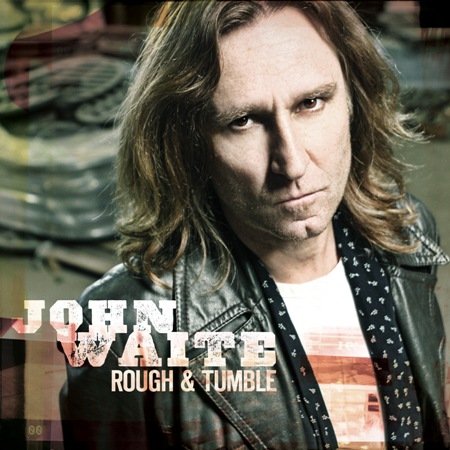
JOHN WAITE – ROUGH & TUMBLE

John Waite’s newest album, Rough & Tumble is simply awesome. His signature voice is as strong as ever, and his lyrics are quite impressive. I’ve always been a fan of his music, everything from The Babys to Bad English, and, of course, his amazing solo albums. My favorite track from this album is “Evil.” It has a killer guitar riff and a funky groove that will get you moving around the room in no time. But don’t take my word for it, check out the video below.

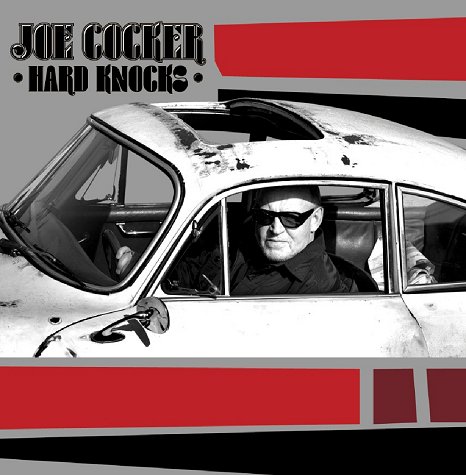
JOE COCKER – HARD KNOCKS

Joe Cocker has a legendary voice and a unique stage presence. His latest album, Hard Knocks, is filled with a wide variety of music, and it’s all good. One of my favorite tracks is “Thankful” because it’s a soulful number that builds to an outstanding climax featuring a choir and Cocker’s signature scream. As you’ll see from the video below, it’s a spine-chilling song about the importance of being grateful.

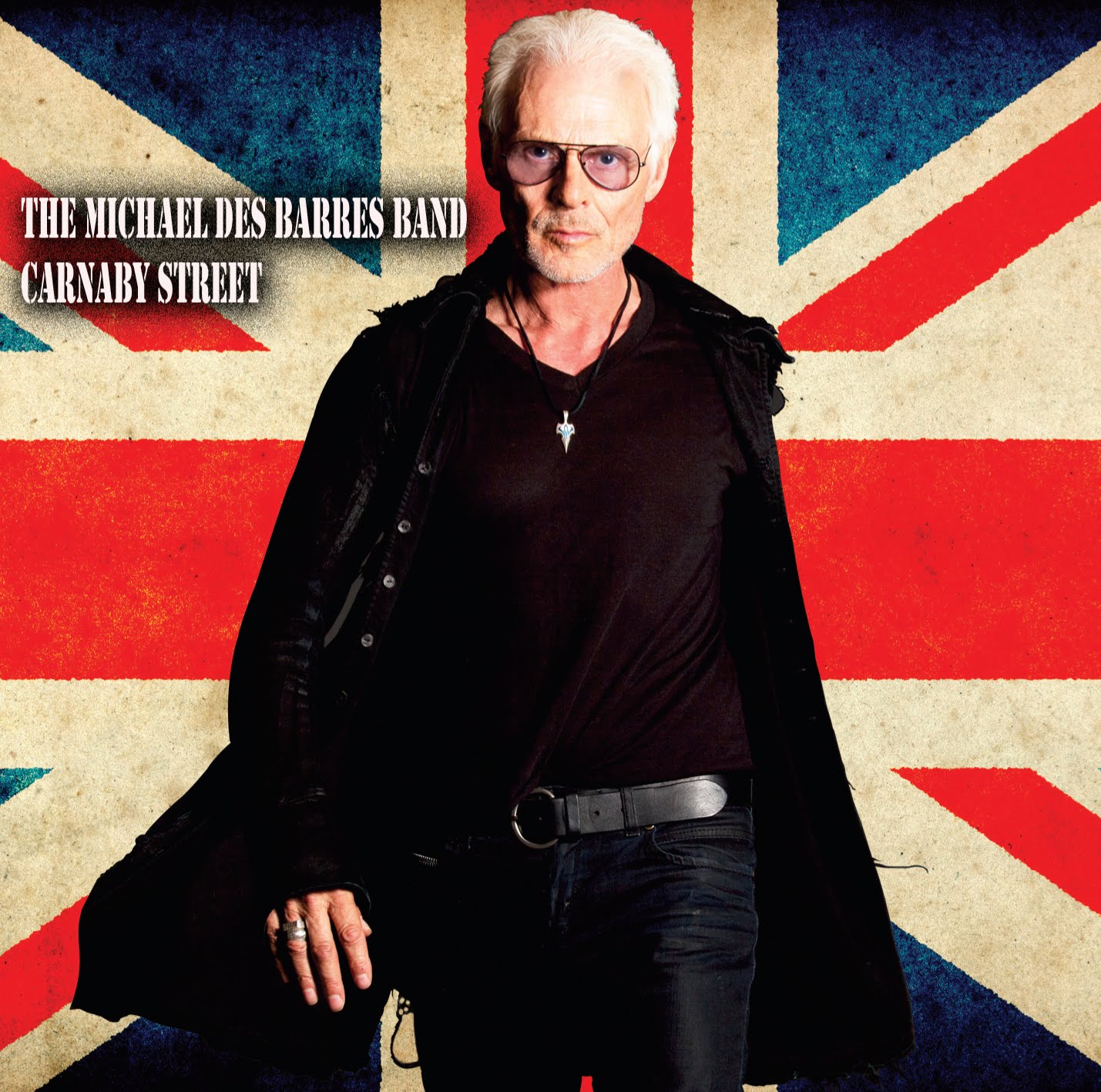
MICHAEL DES BARRES BAND – CARNABY STREET

For those of you that read my recent post about Murdoc, you know how I admire the talented Michael Des Barres. Well, his new band just released its first album, Carnaby Street, and it’s excellent. Listening to it conjures up visions of Rod Stewart and The Rolling Stones. If you like no-nonsense rock n’ roll, then this album is for you. While there are many great tracks, one of my favorites is “Please Stay.” It’s a slow, soulful number that’s full of emotion. Below is a live version of the song.