At ThrillerFest VIII, I was lucky enough to meet Thomas B. Sawyer, the former head writer for one of my all-time favorite TV shows: Murder, She Wrote. In addition to working in television, Tom has written several books, as well as a musical drama. Below is my interview with Sawyer about his exceptional career. I hope you enjoy it.
Growing up, did you always want to be a writer?
In a way, yes. My childhood ambition/fixation was to draw and write a realistic syndicated daily newspaper comic strip, telling a continuous story. There are almost none of those today, but they were big when I was a kid. My hero was Milton Caniff, who drew and wrote such strips as Terry & the Pirates and Steve Canyon. I started freelancing as a comic-book artist (writing a few) in Manhattan at age 20, moving on to advertising, where I became a successful illustrator. Along the way, I realized that doing a daily strip was not for me, so I began making short films, and fell in love with directing. I studied with Lee Strasberg, directed off-off Broadway, and directed/produced TV commercials for major ad agencies.
What led you to the television industry?
I moved from NY to the LA area to try breaking into movies – as a director. My plan, produce and direct a low-budget comedy as a calling-card. My writer fell out as soon as I arrived on the Coast, so I wrote it myself. Then, the financing fell through, so I bankrolled it, shot it, and began screenings in hope of finding a distributor – and getting my money back. By then, I’d begun to network with people in the biz, and would invite them to screening as well. One was a multiple Emmy-winning writer/director/producer, Lila Garrett. She approached me at the end of a screening: “Tom, you should be writing for television.”
Truthfully, I had never even thought about that, totally focused as I was on directing movies. I asked her how I might get started. Her response, with a shrug: “I’ve got a production deal. If you get an idea, call me.” Two weeks later, I phoned her with a one-line pitch: “A gang-comedy on a tacky used-car lot in the valley.” She said: “That’s great. You’ll write it and I’ll produce it.”
Another two weeks, my first gig in Hollywood: I was writing a comedy pilot for CBS. Incidentally, it was several years before I realized that is not the way it works for most people.
How did you become involved in Murder, She Wrote?
I became a writer for Murder, She Wrote (MSW) before it began to air, the result of my agent sending show creator Peter Fischer a non-mystery series pilot script I’d written for CBS, a one-hour WWII drama titled Cody’s War. Peter ‘saw’ something in it – presumably, that I could write scenes that worked – and he gave me a ‘blind assignment’ to write an episode. Meaning, I had to first come up with a story that was acceptable. He invited me to come in and view the pilot, and to me, anyway, Angela Lansbury’s specialness, her presence, was awesome. As was the prospect – the honor and privilege, really – of writing for her.
MSW looked to me like a hit, and I said so. In response to my question about the approach, the show’s style, Peter explained that he envisioned it as “sort of” in the mold of traditional Agatha Christie puzzle mysteries. Which prompted – with no hesitation: “Peter, I have to tell you, when I was a kid I read a couple of Christies and one or two locked-room mysteries, you know, where they gather the suspects in the drawing-room at the end? They bored the shit out of me, and I won’t write that for you.” His response: “Okay. What will you write?” “I’ll write The Maltese Falcon.” Peter replied without missing a beat: “That’ll be fine.” And – on reflection – I realize that that was my signal contribution to the show. With few exceptions, over the next 12 seasons, in each episode we did a play about a bunch of interesting characters in conflict with each other. And someone is murdered.
What was it like working with Angela Lansbury?
The absolute best. Angela was – and still is – a total professional, without vanity, generous to other actors. My only frustration was that the character of Jessica Fletcher, as originally conceived, used such a tiny fraction of Angela’s incredible range as an actress. But in re-examining her movies, I observed that she played irate-and-pissed-off better than almost any actor in the world. So I contrived, in each episode, to give her at least one moment when another character would say the equivalent of: “Ms. Fletcher, I don’t have time for this, so get outta my office.” And Jessica would get her back up – and the show would immediately take on that energy.

Meeting Tom Sawyer at ThrillerFest VIII.
Murder, She Wrote regularly featured popular guest stars. Which guest stars did you enjoy working with the most and why?
Jerry Orbach tops the list. Jerry played a recurring character, PI Harry McGraw, which we eventually spun off into a series (The Law & Harry McGraw). Jerry, a major Broadway musical star, was a great guy, and a delight to work with. Oh, there were so many others, too: Len Cariou, Anne Meara, Lorna Luft, Milton Berle, Bobby Morse, Buddy Hackett, Steve Lawrence… The list is endless.
How did your role on the Murder, She Wrote team evolve over the years, and what was it like when the show came to an end?
I was on staff, then off, doing other shows, and pilots and film scripts, plus the McGraw spinoff, but continuing to write for MSW. And then, after 7 seasons, Fischer departed, and I was asked to take over as Head Writer/Showrunner, which I did – and enjoyed enormously – for the next 5 seasons.
It was sad when CBS pulled the plug. We were still one of the top shows, but had become a casualty of demographics. We were on opposite ABC’s Lois & Clark, which had 1/3 fewer viewers. But, of a more advertiser-desirable age-group, they were able to charge more for commercials.
Our final episode: “Death By Demographics,” was about the murder of a broadcaster.
What is the TV script-writing process like, and how many revisions are made before shooting a scene?
A lot depends on the type of show. Comedies involve a lot of meetings in the “Writers’ Room.” Dramas, less so. And while I’ve written finished shooting scripts for action-adventure shows in as little as four days, teleplays for MSW took several months. Plus – unlike many theatrical movies – in TV, once the script is written, that’s what is shot.
The Writers Guild dictates that the TV episode writer do two drafts of the story (outline), and two drafts of the script. After that, the show’s staff writers have to make any necessary changes. Thus, it is in the interest of those staffers to work closely with the freelance writer, holding his/her hand along the way, so that final script is as close to shootable as possible.
You’ve written a musical drama (Jack) and a novel (The Sixteenth Man) about John F. Kennedy. What inspired you to base these two works on the former U.S. President?
I regard his loss as one of the major tragedies this country has experienced. JFK’s passion was without equal. Moreover, I find his life and family fascinating (operatic, really, hence, Jack), and the truth about his assassination never revealed (thus, my take on it, The Sixteenth Man).
How does writing novels compare to writing for television and theater?
In novels the writer really gets the chance to know the characters far more intimately. Though in the case of Jack, the writing process – and getting to know the characters went on for years. More than five in fact, before we figured out who Jack Kennedy was.
Your conspiracy thriller, No Place to Run, was focused on the U.S. government’s involvement in the 9/11 terrorist attacks. What inspired the premise? And did the sensitive subject matter lead to any interesting encounters with the government or law enforcement officials?
I gradually became convinced that 9/11 was known to be in work, and was abetted/permitted to happen because our government (as in: the MICC Complex) needed an event that would cause the public to put up with another war. I’m fully aware that once history is written, it becomes part of the public’s comfort-zone, but in writing that book, I figured if I could make as many as a dozen people think (re-think, actually), I had succeeded.
It did not provoke any encounters with government or law enforcement, but I was invited to post my take on it at a very interesting website, patriotsquestion911.com, where I found myself in some amazing company. I have since appeared on panels with a number of them. But getting the book published wasn’t easy. The head of one of the major houses in NY said to my agent: “I really like Tom’s writing, but I’m offended by his premise.”
 You teach an online course about writing fiction and wrote the book Fiction Writing Demystified. How has writing for television influenced and helped what you produce as an author?
More than anything else, TV taught me that the number one requirement of any writer, (novelist, historian, ad copywriter, clergyman, you-name-it), no matter how lofty the goal, is to know – and never forget — that we are Entertainers.
Simply put, unless we entertain, one’s audience isn’t going to stay with us until The End.
Are there any authors in particular that you read regularly and draw inspiration from?
Absolutely. Moreover, these hold up for me on rereading. John O’Hara, Dashiell Hammett, Raymond Chandler, Donald Westlake, Elmore Leonard, Irwin Shaw, and Eric Ambler.
What do you think is currently the best-written show on television?
For me – and they’re inconsistent, a tossup between Blue Bloods and The Good Wife. The all-time best? The Sopranos.
Are you working on any exciting new projects?
Yes. I just finished my first non-stand alone thriller (w/humor), Cross Purposes. It features a New York PI, Barney Moon. Barney, a permanent fish-out-of-water, hates Los Angeles, is stuck there, and he doesn’t drive. I’m also completing my memoir, Who Knew…?

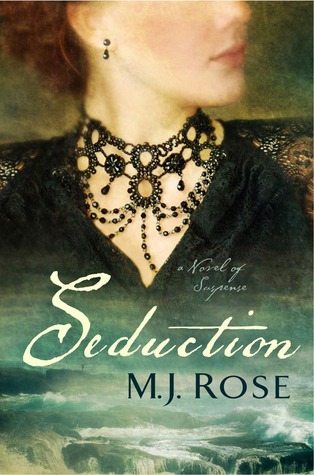 I recently read my first book by M.J. Rose, Seduction, and its compelling, suspenseful narrative kept me turning pages from start to finish. Rose’s ability to effortlessly switch between two storylines, filled with rich dialogue and palpable characters, kept me coming back for more. I was completely invested in Jac L’Etoile’s story arch, and I love how it intersected with Victor Hugo’s. Seduction was bursting with historical detail that kept me engrossed in the characters’ world, and the conclusion left me completely satisfied. If you’re trying to decide what to read next, I highly recommend you check out Seduction.